 Preview
 Send
Send Share
Share
 Details

 Download
 Similars
 X-Ray
X-Ray Diaporama
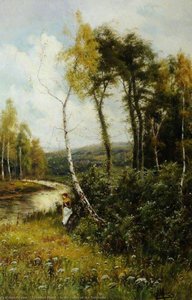
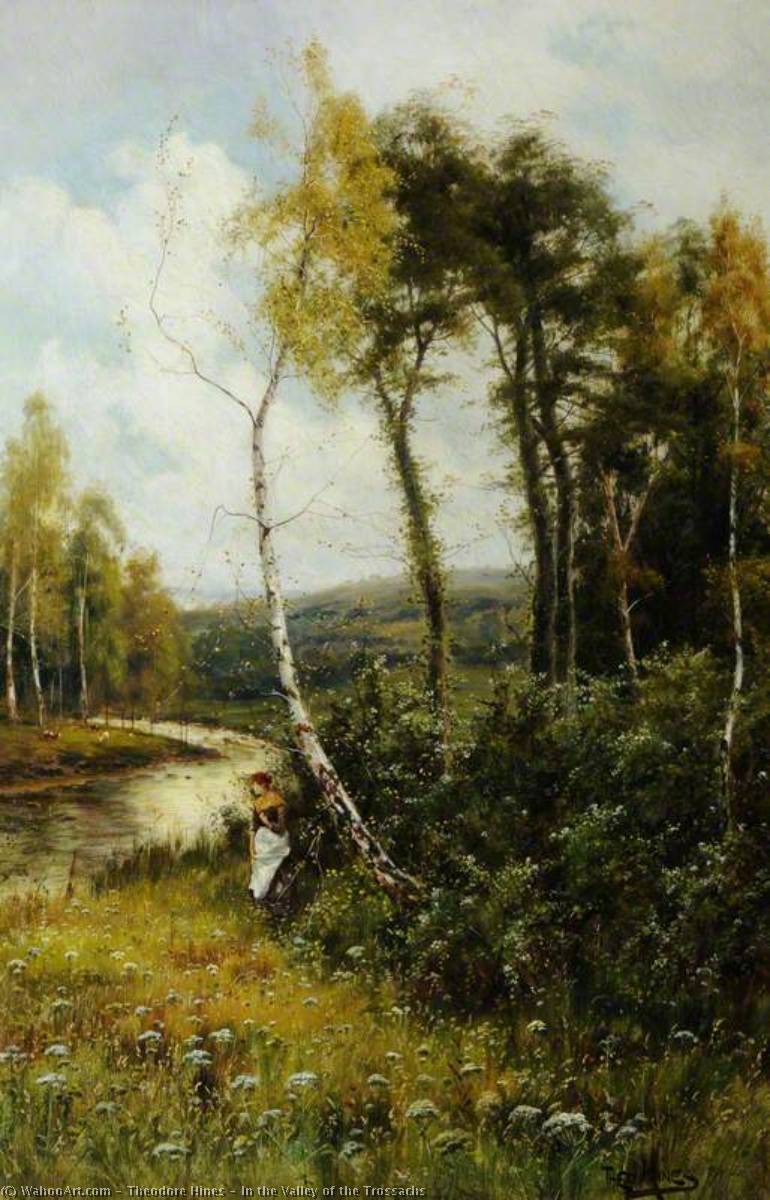
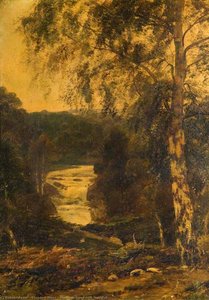
In the Valley of the Trossachs
 1889
1889 76.0 x 51.0 cm
 Read More
Giclée / Art Print
Museum-quality giclée or canvas print with fast production and flexible finish options. ( Buy Hand Made Painting Buy Image)




































Pick from our preset sizes that match the artwork's original proportions.

You may enter your own dimensions to fit a specific frame or space. If your selected size does not match the original image's proportions, we will either crop the artwork or extend the image with a mirrored or solid-fill edge. A digital mockup will be sent for your approval before production begins.
Please note that the on-screen preview does not reflect the actual cropping or extension. Only the mockup will accurately show the final composition.
While custom sizes are available, we recommend selecting a dimension from the predefined list to preserve the original proportions.
Worldwide Delivery () in 2 weeks instead of standard 4/5 weeks. (26 August)

Free Worldwide Express Shipping

High-Quality Linen Canvas

Full Shipping Insurance

Customs Tax Refund Guarantee

True Color Matching Guarantee

60-Day Return Policy (Defects Only)

100% Money-Back Guarantee

Bulk Discount Offer
 Glass option is only available in size under 110 CM

In the Valley of the Trossachs
Giclée / Art Print
Reproduction Size
-


Total Price
$ 63
Related Artworks







Artist Biography
Theodore Hines: Capturing the Soul of Scotland
Theodore Hines (1860 – 1889) emerged as a singular voice in American watercolor painting during the late Victorian era, dedicating his artistic endeavors to meticulously documenting the breathtaking beauty of the Scottish Highlands and Trossachs. Though relatively unknown today compared to contemporaries like Frederic Church or Albert Bierstadt, Hines’s work possesses a quiet dignity and profound sensitivity that distinguishes it from grand landscapes celebrating imperial ambition—instead offering intimate glimpses into the natural world imbued with spiritual contemplation.
Born in Cincinnati, Ohio, Hines received his formative artistic training at Kenyon College, where he honed his skills in drawing and painting before embarking on a transformative journey to Scotland in 1886. This voyage would profoundly impact his artistic vision and inspire him to produce some of his most celebrated watercolors. He was not merely aiming for accurate representation; Hines sought to convey the emotional essence of these landscapes—the misty mornings, the rugged peaks, and the tranquil lochs—reflecting a burgeoning interest in Romanticism's emphasis on sublime experience and communion with nature.
Mastery of Light and Atmosphere
Hines’s technique was characterized by painstaking observation combined with masterful brushwork. He favored layering thin washes of color to build up tonal gradations that captured the subtle nuances of light and atmosphere. Unlike many of his peers who employed dramatic, sweeping vistas, Hines often opted for compositions that prioritized intricate detail—capturing individual trees, weathered rocks, and the gentle ripples on a water’s surface—creating scenes that felt remarkably alive and immediate.
His palette leaned heavily toward muted greens, blues, and browns, mirroring the subdued and often moody hues of the Scottish Highlands themselves. Influenced by the atmospheric mastery of artists like Turner and Constable, Hines absorbed their techniques for rendering perspective through haze and conveying mood through color. His ability to manipulate the transparency of watercolor allowed him to recreate the damp, heavy air of the Trossachs, making the viewer feel as though they were standing amidst the Highland mist.
A Legacy of Intimate Landscapes
The brevity of Hines’s life—concluding in 1889 at the age of twenty-nine—meant that his body of work remains a precious, concentrated window into a specific moment of late 19th-century landscape art. His contributions to the watercolor medium are marked by several key characteristics:
- Emotional Resonance: A departure from purely topographical recording in favor of capturing the "feeling" of a place.
- Technical Precision: The use of delicate washes to achieve complex atmospheric effects and light play.
- Subject Focus: An intimate dedication to the specific geography of the Scottish Trossachs and Loch Katrine.
While his career was tragically short, the historical significance of Theodore Hines lies in his ability to bridge the gap between American training and the European Romantic tradition. His works serve as a poignant reminder of a period when artists sought to find the divine within the quietest corners of the natural world, leaving behind a legacy of serene, evocative beauty that continues to captivate those who seek solace in the landscape.
theodore hines
1860 - 1889
Quick Facts
- Artistic Movement Or Style: Romantic Painting
- Date Of Birth: 1860
- Full Name: theodore hines
- Nationality: American
- Notable Artworks:
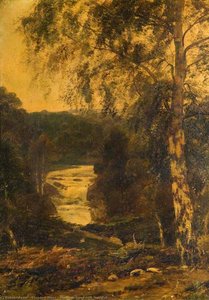
- Mountain Scene with Waterfall
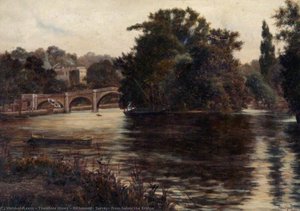
- Richmond, Surrey, from below the Bridge
- Landscape with a Church in a Valley