 Preview
 Send
Send Share
Share
 Details

 Download
 Similars
 X-Ray
X-Ray Diaporama
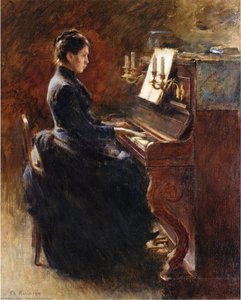
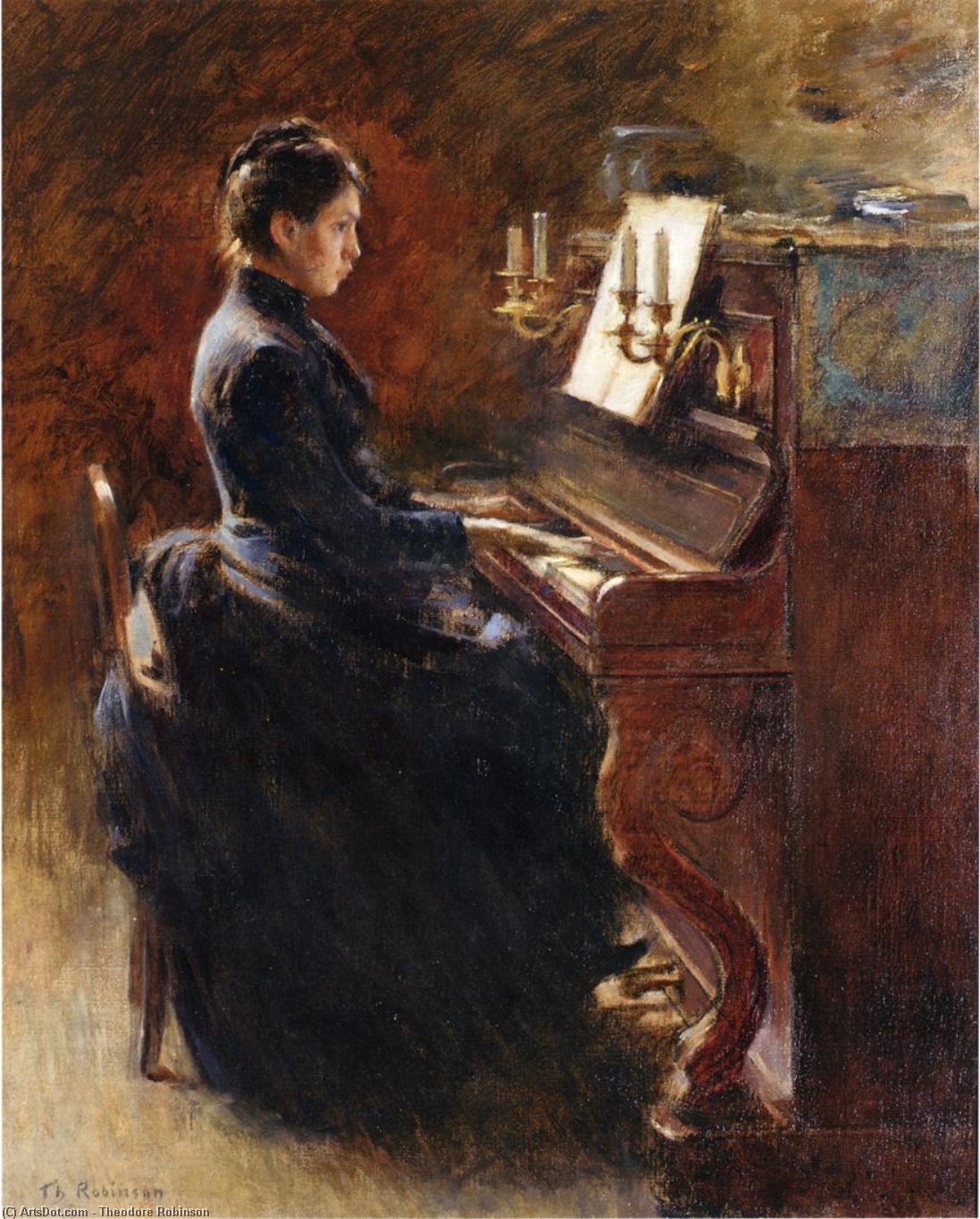
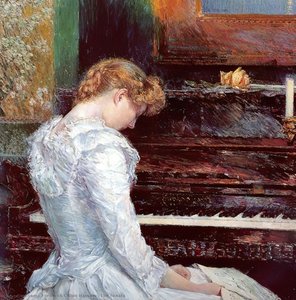
Girl at Piano


 Read More
Hand Made Oil Reproduction
Hand-painted oil on canvas in your size and frame, made to order by our artists. ( Buy Print Buy Image)




P118B $10

P118H $10

P118W $10

P438Z $10

P508JH $12

P508YH $12

P805H $10

P805Z $10

P919BZ $10

P919G $10

P919XJ $10

P959ZH $10

P968JZ $12

W106C $8

W218G $10

W218JH $8

W218Y $10

W307PJ $10

W316G $10

W316PJ $8

W316Y $10

W398PJ $8

W4111J $10

W500HY $15

W500JH $15

W692G $12

W849H $8

W940BG $15

W953PJ $8




Pick from our preset sizes that match the artwork's original proportions.

You may enter your own dimensions to fit a specific frame or space. If your selected size does not match the original image's proportions, we will either crop the artwork or extend the painting with additional hand-painted elements. A digital mockup will be sent for your approval before production begins.
Please note that the on-screen preview does not reflect the actual cropping or extension. Only the mockup will accurately show the final composition.
While custom sizes are available, we recommend selecting a dimension from the predefined list to preserve the original proportions.
After order, ArtsDot.com team will email client for instructions and provide a mockup preview
Worldwide Delivery () in 3/4 weeks instead of standard 5 weeks. (16 August). No compromise on quality.

Free Worldwide Express Shipping

High-Quality Linen Canvas

Full Shipping Insurance

Customs Tax Refund Guarantee

True Color Matching Guarantee

60-Day Return Policy (Defects Only)

100% Money-Back Guarantee

Bulk Discount Offer
 Glass option is only available in size under 110 CM

Girl at Piano
Reproduction Medium
Reproduction Size
-


Total Price
$ 263
Artwork Description
A Moment Frozen in Light: The Intimacy of Theodore Robinson’s Girl at Piano
In the quiet corners of art history, few works capture the delicate intersection of domesticity and profound introspection quite like Theodore Robinson’s 1887 masterpiece, Girl at Piano. This evocative oil on canvas serves as a window into a private world, inviting the viewer to step into a dimly lit room where time seems to have slowed to the rhythm of a single, lingering note. The painting depicts a young woman seated at her piano, her gaze lifted upward in a moment of deep contemplation or perhaps caught in the ethereal resonance of a melody only she can hear. It is a scene that transcends mere portraiture, offering instead a poetic meditation on the beauty found within solitude and the quiet dignity of everyday life.
The technical brilliance of Robinson lies in his ability to manipulate light, a skill honed through his close connection to the French Impressionist movement. As an American pioneer who breathed the same artistic air as Claude Monet, Robinson brings a sophisticated understanding of luminosity to this piece. The room is bathed in a soft, warm glow, likely emanating from a nearby lamp that casts gentle shadows across the subject’s face and clothing. His brushstrokes are both bold and expressive, utilizing a delicate play of light and shadow to create texture and depth. This mastery of chiaroscuro does not merely illuminate the scene; it creates an atmosphere of profound coziness and intimacy, making the viewer feel like an unobserved guest in this serene sanctuary.
The Impressionist Soul and Historical Resonance
To understand the emotional weight of Girl at Piano, one must consider Robinson’s place within the broader tapestry of late 19 Permian art. Moving between the traditional foundations learned in New York and the revolutionary light-studies of France, Robinson developed a style that was uniquely his own—a synthesis of American sensibility and European innovation. In this work, we see the hallmarks of Impressionism not through frantic movement, but through the careful observation of how light interacts with domestic objects. The presence of a simple chair, a nearby table, and a solitary book suggests a life of intellectual and artistic enrichment, grounding the ethereal musical moment in a tangible, lived reality.
For the discerning collector or interior designer, this painting offers more than just aesthetic pleasure; it provides an emotional anchor for a space. The muted palette and tranquil subject matter make it an ideal centerpiece for rooms designed for relaxation, study, or sophisticated conversation. Whether displayed in a sun-drenched gallery or a moody, library-style setting, the painting’s ability to evoke calmness and serenity remains undiminished. Owning a high-quality reproduction of this work allows one to bring a piece of 19th-century elegance into a modern home, preserving the legacy of an artist who truly mastered the art of capturing the soul within the light.
Related Artworks
Artist Biography
A Pioneer of American Light: The Life and Art of Theodore Robinson
Theodore Robinson, a name perhaps less immediately recognizable than those of Monet or Renoir, nevertheless occupies a pivotal position in the story of American art. Born in rural Vermont in 1852, his journey was one of persistent artistic seeking, culminating in a unique synthesis of European Impressionism and distinctly American sensibilities. His life, though tragically cut short at the age of forty-four, left an enduring legacy as a key figure in bringing the shimmering light and broken color of France to a new generation of American painters. Robinson’s early years were marked by frequent relocation; his family moved to Wisconsin when he was just three years old, and he briefly studied art in Chicago before venturing east to New York City in 1874. There, he enrolled at the National Academy of Design and the Art Students League, laying a foundation in traditional techniques that would later be brilliantly transformed by his experiences abroad. These formative years were also shaped by practical necessity; Robinson often supplemented his artistic pursuits with teaching positions, a task he found draining due to chronic asthma which plagued him throughout his life.
From Realism to the Allure of Giverny
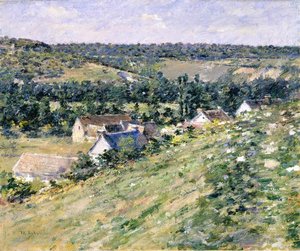
Robinson’s initial artistic inclinations leaned towards realism, mirroring the prevailing tastes of the time. He favored scenes of quiet domesticity and agrarian life, depicting figures engaged in everyday activities with a meticulous attention to detail. However, a turning point arrived in 1884 when he embarked on an extended stay in France. It was here, in the idyllic countryside surrounding Paris, that his artistic vision underwent a profound shift. He settled in Giverny, becoming intimately acquainted with Claude Monet and absorbing the principles of Impressionism firsthand. This wasn’t merely a stylistic adoption; it was a complete reimagining of how light, color, and atmosphere could be captured on canvas. Monet's guidance proved invaluable, encouraging Robinson to embrace a more spontaneous approach, focusing on the fleeting effects of light and shadow rather than precise representation. The influence is palpable in works like *Giverny 1*, *Giverny 2*, and *Giverny 3*, where dappled sunlight filters through trees, creating an ethereal quality that transcends mere depiction. He didn’t simply copy Monet; he filtered the Impressionist aesthetic through his own American lens, retaining a sense of structure and form that distinguished his work from its French counterparts.
A Bridge Between Worlds: Sharing the Vision
Robinson's significance extends beyond his individual paintings; he served as a crucial conduit between the European avant-garde and the burgeoning American art scene. His position in Giverny placed him at the center of an American artistic colony, allowing him to share his newfound knowledge and enthusiasm with fellow painters like Julian Alden Weir and John Henry Twachtman. He became a passionate advocate for Impressionism, tirelessly demonstrating its techniques and principles to those who sought his guidance. This role as a mentor and interpreter was particularly important in a time when American art was still largely dominated by academic traditions. His influence is evident in the work of many artists who visited Giverny, helping to establish an American Impressionist style that was both indebted to French innovations and uniquely its own. He brought back not just techniques but also a philosophy – a way of seeing and responding to the world around him.
Later Years and Lasting Legacy
Returning to America in 1892, Robinson sought to apply his Impressionist vision to the landscapes of his native country. He worked alongside Weir and Twachtman at Cos Cob, Connecticut, a thriving art colony, and painted scenes along the canals of New York State before eventually settling in Vermont, hoping to recreate a Giverny-like environment closer to home. However, his health continued to deteriorate, and he faced increasing financial hardship. His final years were marked by isolation and struggle, culminating in his death in 1896. Ironically, many of his paintings remained unsold during his lifetime, only gaining recognition after his passing. Today, Theodore Robinson’s work is held in major museum collections, including the Metropolitan Museum of Art, a testament to his enduring artistic merit. His meticulous diaries, preserved at the Frick Art Reference Library, offer invaluable insights into his creative process and intellectual life.
A Lasting Impression
Theodore Robinson’s contribution to American art lies not only in the beauty of his paintings but also in his role as a catalyst for change. He was a bridge between cultures, a passionate advocate for innovation, and a gifted artist who helped shape the course of American Impressionism. His work embodies a delicate balance between observation and interpretation, realism and abstraction, European influence and American identity. He demonstrated that it was possible to embrace the radical innovations of Impressionism without sacrificing one’s artistic voice or cultural heritage. His paintings continue to captivate viewers with their luminous quality and evocative atmosphere, reminding us of the power of art to transform our perception of the world around us. Robinson's legacy is a testament to the enduring appeal of light, color, and the pursuit of artistic truth.
- Notable Works: Giverny 1, Giverny 2, Giverny 3, La débâcle (1892)
- Influences: Claude Monet, John La Farge, Carolus-Duran, Jean-Léon Gérôme
- Artistic Movement: American Impressionism
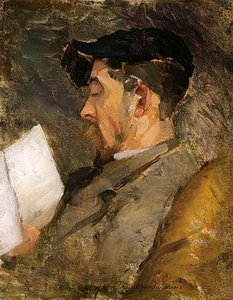
Theodore Robinson
1852 - 1896 , United States of America
Quick Facts
- Artistic Movement Or Style: Impressionism
- Artists Or Movements Influenced By This Artist: ['American Impressionism']
- Artists Who Influenced This Artist: ['Claude Monet']
- Date Of Birth: 1852
- Date Of Death: 1896
- Full Name: Theodore Robinson
- Nationality: American
- Notable Artworks:
- Giverny 1
- Giverny 2
- Giverny 3
- La débâcle
- Place Of Birth: Irasburg, USA
Related Articles
Capturing a Nation's Light: Exploring the American Impressionist Movement
Explore the captivating world of American Impressionism! Discover key artists, techniques & its lasting impact on art history. Find museum-quality reproductions and expert guidance at ArtsDot.
Frederick Childe Hassam: American Impressionism's Chronicler of Light & Modern Life
Explore the captivating world of Frederick Childe Hassam, a pioneer of American Impressionism. Discover his iconic paintings capturing light, urban life & coastal beauty. Learn about his legacy and influence on American art history.

Cézanne's Masterpieces: 25 Iconic Artworks to Transform Your Space
Journey through 25 iconic artworks by Paul Cézanne – a master of Impressionism and Post-Impressionism. Explore his landscapes, still lifes, and the stories behind these timeless masterpieces. Discover museum-quality reproductions & curated decor at ArtsDot.com.
Grant Wood & American Regionalism: Identity, Myth & the Rural Landscape
Explore the world of Grant Wood & American Regionalism with ArtsDot. Discover the symbolism behind 'American Gothic', recurring themes, and the movement's lasting impact on art history. High-quality reproductions available.
Herman Armour Webster: Capturing Atmospheric Light in American Impressionism
Explore the captivating world of Herman Armour Webster, an American Impressionist master. Discover his Parisian influences, unique style, and lasting legacy with ArtsDot.