

 Preview
 Send
Send Share
Share
 Details

 Download
 Similars
 X-Ray
X-Ray Diaporama
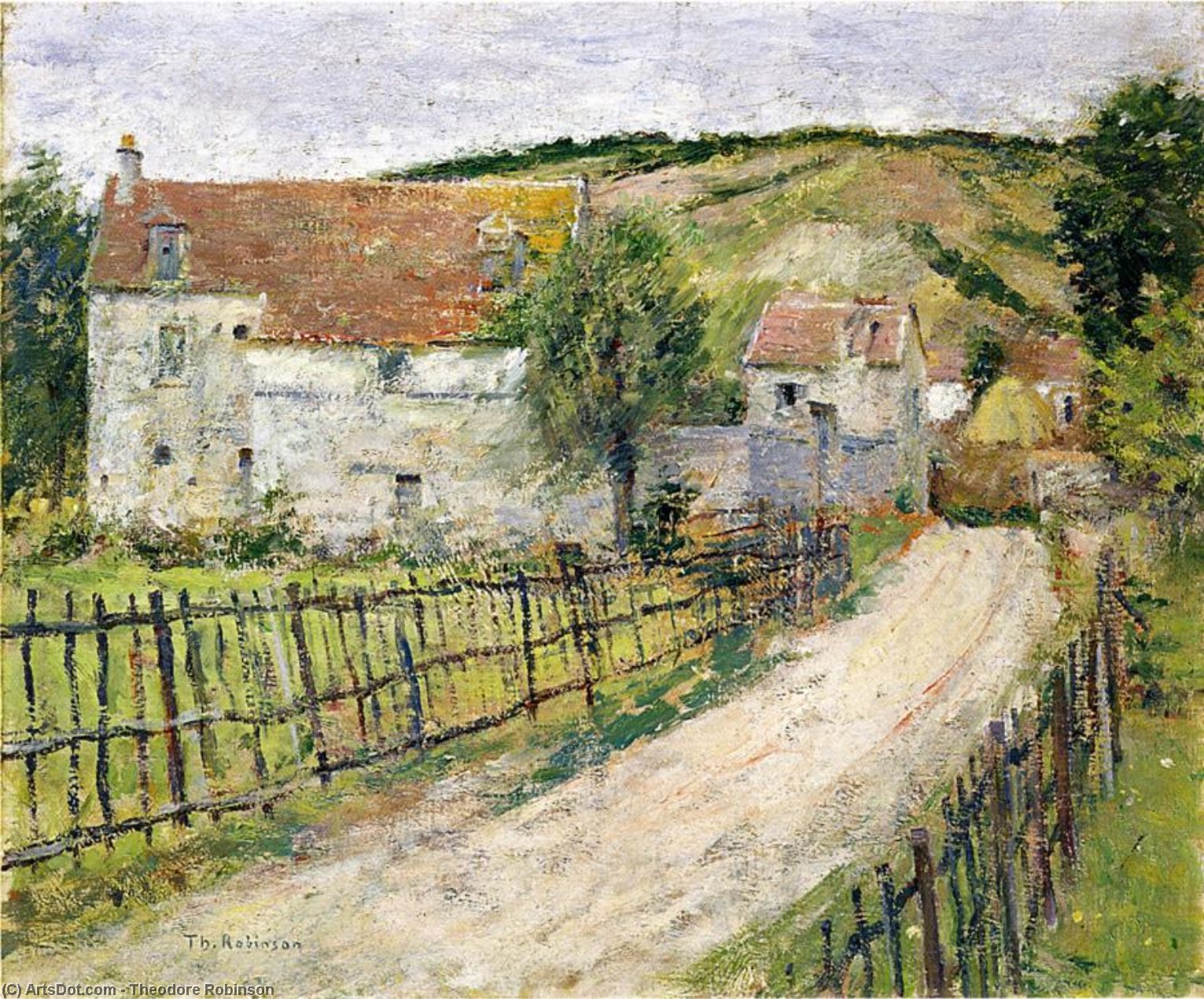
The Old Mills of Brookville (also known as Vieux Moulin)


 Read More
Purchase a high-resolution, enhanced digital image, far superior to the online preview.
Each file is meticulously prepared by our in-house specialists using advanced tools and expert manual retouching. We ensure every image has exceptional clarity, precise color accuracy, and fine detail.
The final file is delivered via email within 72 hours, optimized for immediate use in professional, editorial, and print environments. This is the same quality trusted by top-tier design studios, publishers, and galleries.
Digital Image
Download a high-resolution file for personal display, printing, and creative projects. ( Buy Print Buy Hand Made Painting)
Included in Every Digital Image Order
Expert Digital Delivery, Guaranteed
When you choose ArtsDot.com, you're not just getting an image - you're receiving a professionally enhanced digital artwork, crafted with precision and backed by a satisfaction guarantee. Here's everything that comes with your order, automatically:

Fast Email Delivery
Your high-resolution digital image file will be emailed to you within 72 hours of ordering - ready for immediate use.

AI-Enhanced Digital File
Your artwork is professionally optimized using advanced AI tools and manual editing, ensuring maximum detail, clarity, and color accuracy.

Free Lifetime Re-Delivery
Accidentally deleted or lost your file? No worries - we'll resend it to you anytime, free of charge.

No Import Fees - Ever
Enjoy your artwork instantly with zero customs, duties, or delivery fees - digital downloads are always tax-free.

Color Accuracy Guarantee
We ensure your digital image reflects the original colors as closely as possible using professional tools and color management.

60-Day Satisfaction Guarantee
If you're not satisfied with your digital image, we'll revise it or refund 100% within 60 days - no questions asked.

100% Money-Back Guarantee
Not satisfied? Get a full refund within 60 days of receiving your digital file - no questions asked.

Bulk Order Discounts
Buy 3 images, save 10% - Buy 5, save 15% - Buy 10+, save 20%. Great for creative projects, galleries, and agencies.
The Old Mills of Brookville (also known as Vieux Moulin) – A Symphony of Light and Rural Tranquility
The painting “The Old Mill (Vieux Moulin)” by Theodore Robinson, completed in 1892, transcends mere depiction; it’s an immersive experience of a bygone era captured with Impressionistic brilliance. Currently residing at the Metropolitan Museum of Art in New York City—a testament to American artistic ambition—this oil on canvas offers more than just a visual feast; it invites contemplation on themes of industry, nature's rhythm, and the quiet beauty of rural life. ### Artistic Style and Technique: Embracing Impressionism’s Essence Robinson’s approach aligns perfectly with the burgeoning Impressionist movement that was reshaping European art at the time. Unlike academic realism, which prioritized meticulous detail and accurate representation, Robinson sought to convey atmosphere and emotion through loose brushstrokes and vibrant color palettes—techniques championed by artists like Monet and Renoir. The painting's surface is characterized by visible marks of paint, creating a textured effect that captures the dappled sunlight filtering through the wheat fields surrounding Brookville. This deliberate disregard for photographic precision underscores Robinson’s commitment to capturing the subjective experience of perceiving the natural world. Soft brushstrokes blend seamlessly together, producing an ethereal luminescence that dominates the composition and imbues it with a palpable sense of serenity. ### Historical Context: Giverny's Influence and the Dawn of Modern Landscape Painting Robinson’s artistic journey was profoundly shaped by his friendship with Claude Monet, whom he visited in Giverny, France, in 1885. Monet’s groundbreaking series depicting stacks of grain, rows of poplars, and Rouen Cathedral served as a crucial inspiration for Robinson, demonstrating the power of Impressionism to distill complex visual information into emotionally resonant images. The painting itself reflects this influence—specifically, its depiction of the old Moulin de Chennevières, one of Brookville’s three gristmills. These mills were integral to the village's economy and daily life, symbolizing the cyclical nature of agricultural labor and seasonal change. Robinson meticulously rendered these elements, emphasizing their interplay with light and color to convey a profound connection between humanity and the environment. ### Key Elements: Composition and Symbolism Within Rural Landscape The painting’s composition is carefully considered, guiding the viewer's gaze across the scene. A prominent house situated near the top left corner anchors the image, while a smaller dwelling appears on the right side—representing human habitation amidst the expansive countryside. Dominating the lower edge of the canvas is a weathered fence, delineating the boundary between cultivated land and wildness. The barn, positioned on the far right, adds depth to the landscape and reinforces the theme of agricultural productivity. Beyond their literal representation, these elements carry symbolic weight—the house symbolizing stability and permanence, the fence representing separation yet also connection to nature, and the barn embodying sustenance and prosperity. ### Emotional Impact: Capturing Tranquility and Reverence for Nature’s Beauty “The Old Mill” succeeds in evoking a powerful emotional response – one of quiet contemplation and reverence for the sublime beauty of the natural world. Robinson's masterful use of color—particularly warm yellows and oranges—creates an inviting atmosphere, drawing the viewer into the scene. The diffused light enhances the sense of tranquility, transporting us back to a time when rural life was simpler and more attuned to the rhythms of the seasons. Ultimately, this painting stands as a poignant reminder of the enduring power of Impressionism to capture not just what we see but also how we feel—a testament to Robinson’s artistic vision and his ability to translate profound emotion into visual splendor. ### Availability of Reproductions: Bringing Artistic Inspiration Home For those captivated by Theodore Robinson's evocative style, reproductions of “The Old Mill” are readily available at https://ArtsDot.com/. Skilled artists meticulously recreate this masterpiece using traditional oil painting techniques, ensuring that the original’s luminous quality and textural richness are faithfully preserved. This allows art enthusiasts to experience the beauty of Brookville—and Robinson's artistic genius—within their own homes.Related Artworks
Artist Biography
A Pioneer of American Light: The Life and Art of Theodore Robinson
Theodore Robinson, a name perhaps less immediately recognizable than those of Monet or Renoir, nevertheless occupies a pivotal position in the story of American art. Born in rural Vermont in 1852, his journey was one of persistent artistic seeking, culminating in a unique synthesis of European Impressionism and distinctly American sensibilities. His life, though tragically cut short at the age of forty-four, left an enduring legacy as a key figure in bringing the shimmering light and broken color of France to a new generation of American painters. Robinson’s early years were marked by frequent relocation; his family moved to Wisconsin when he was just three years old, and he briefly studied art in Chicago before venturing east to New York City in 1874. There, he enrolled at the National Academy of Design and the Art Students League, laying a foundation in traditional techniques that would later be brilliantly transformed by his experiences abroad. These formative years were also shaped by practical necessity; Robinson often supplemented his artistic pursuits with teaching positions, a task he found draining due to chronic asthma which plagued him throughout his life.
From Realism to the Allure of Giverny
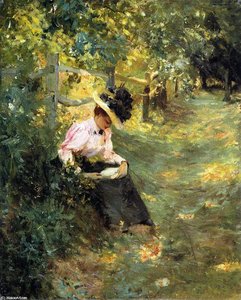
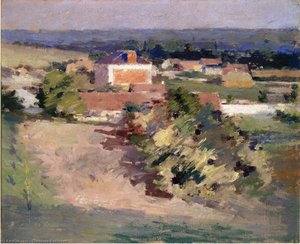
Robinson’s initial artistic inclinations leaned towards realism, mirroring the prevailing tastes of the time. He favored scenes of quiet domesticity and agrarian life, depicting figures engaged in everyday activities with a meticulous attention to detail. However, a turning point arrived in 1884 when he embarked on an extended stay in France. It was here, in the idyllic countryside surrounding Paris, that his artistic vision underwent a profound shift. He settled in Giverny, becoming intimately acquainted with Claude Monet and absorbing the principles of Impressionism firsthand. This wasn’t merely a stylistic adoption; it was a complete reimagining of how light, color, and atmosphere could be captured on canvas. Monet's guidance proved invaluable, encouraging Robinson to embrace a more spontaneous approach, focusing on the fleeting effects of light and shadow rather than precise representation. The influence is palpable in works like *Giverny 1*, *Giverny 2*, and *Giverny 3*, where dappled sunlight filters through trees, creating an ethereal quality that transcends mere depiction. He didn’t simply copy Monet; he filtered the Impressionist aesthetic through his own American lens, retaining a sense of structure and form that distinguished his work from its French counterparts.
A Bridge Between Worlds: Sharing the Vision
Robinson's significance extends beyond his individual paintings; he served as a crucial conduit between the European avant-garde and the burgeoning American art scene. His position in Giverny placed him at the center of an American artistic colony, allowing him to share his newfound knowledge and enthusiasm with fellow painters like Julian Alden Weir and John Henry Twachtman. He became a passionate advocate for Impressionism, tirelessly demonstrating its techniques and principles to those who sought his guidance. This role as a mentor and interpreter was particularly important in a time when American art was still largely dominated by academic traditions. His influence is evident in the work of many artists who visited Giverny, helping to establish an American Impressionist style that was both indebted to French innovations and uniquely its own. He brought back not just techniques but also a philosophy – a way of seeing and responding to the world around him.
Later Years and Lasting Legacy
Returning to America in 1892, Robinson sought to apply his Impressionist vision to the landscapes of his native country. He worked alongside Weir and Twachtman at Cos Cob, Connecticut, a thriving art colony, and painted scenes along the canals of New York State before eventually settling in Vermont, hoping to recreate a Giverny-like environment closer to home. However, his health continued to deteriorate, and he faced increasing financial hardship. His final years were marked by isolation and struggle, culminating in his death in 1896. Ironically, many of his paintings remained unsold during his lifetime, only gaining recognition after his passing. Today, Theodore Robinson’s work is held in major museum collections, including the Metropolitan Museum of Art, a testament to his enduring artistic merit. His meticulous diaries, preserved at the Frick Art Reference Library, offer invaluable insights into his creative process and intellectual life.
A Lasting Impression
Theodore Robinson’s contribution to American art lies not only in the beauty of his paintings but also in his role as a catalyst for change. He was a bridge between cultures, a passionate advocate for innovation, and a gifted artist who helped shape the course of American Impressionism. His work embodies a delicate balance between observation and interpretation, realism and abstraction, European influence and American identity. He demonstrated that it was possible to embrace the radical innovations of Impressionism without sacrificing one’s artistic voice or cultural heritage. His paintings continue to captivate viewers with their luminous quality and evocative atmosphere, reminding us of the power of art to transform our perception of the world around us. Robinson's legacy is a testament to the enduring appeal of light, color, and the pursuit of artistic truth.
- Notable Works: Giverny 1, Giverny 2, Giverny 3, La débâcle (1892)
- Influences: Claude Monet, John La Farge, Carolus-Duran, Jean-Léon Gérôme
- Artistic Movement: American Impressionism
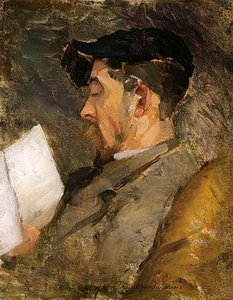
Theodore Robinson
1852 - 1896 , United States of America
Quick Facts
- Artistic Movement Or Style: Impressionism
- Artists Or Movements Influenced By This Artist: ['American Impressionism']
- Artists Who Influenced This Artist: ['Claude Monet']
- Date Of Birth: 1852
- Date Of Death: 1896
- Full Name: Theodore Robinson
- Nationality: American
- Notable Artworks:
- Giverny 1
- Giverny 2
- Giverny 3
- La débâcle
- Place Of Birth: Irasburg, USA

