 Preview
 Send
Send Share
Share
 Details

 Download
 Similars
 X-Ray
X-Ray Diaporama
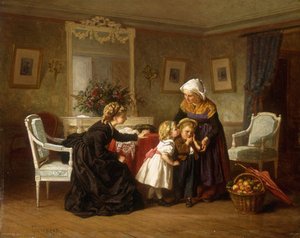
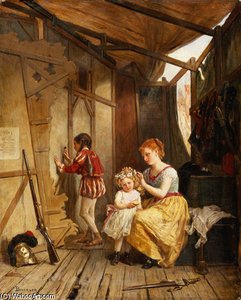
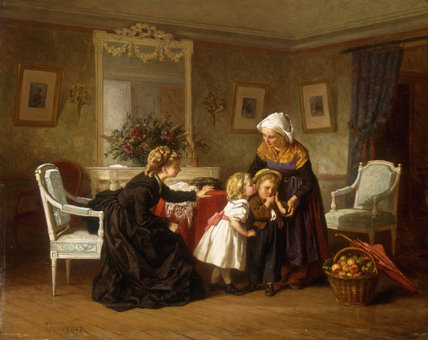
The Kiss
 Read More
Hand Made Oil Reproduction
Hand-painted oil on canvas in your size and frame, made to order by our artists. ( Buy Print Buy Image)




































Pick from our preset sizes that match the artwork's original proportions.

You may enter your own dimensions to fit a specific frame or space. If your selected size does not match the original image's proportions, we will either crop the artwork or extend the painting with additional hand-painted elements. A digital mockup will be sent for your approval before production begins.
Please note that the on-screen preview does not reflect the actual cropping or extension. Only the mockup will accurately show the final composition.
While custom sizes are available, we recommend selecting a dimension from the predefined list to preserve the original proportions.
After order, ArtsDot.com team will email client for instructions and provide a mockup preview
Worldwide Delivery () in 3/4 weeks instead of standard 5 weeks. (17 August). No compromise on quality.

Free Worldwide Express Shipping

High-Quality Linen Canvas

Full Shipping Insurance

Customs Tax Refund Guarantee

True Color Matching Guarantee

60-Day Return Policy (Defects Only)

100% Money-Back Guarantee

Bulk Discount Offer
 Glass option is only available in size under 110 CM

The Kiss
Reproduction Medium
Reproduction Size
-


Total Price
$ 263
Related Artworks
Artist Biography
The Quiet Observer: The Life and Legacy of Théophile Emmanuel Duverger
In the bustling, often turbulent landscape of nineteenth-century French art, where grand historical narratives and dramatic political allegories frequently commanded the spotlight, there existed a more intimate, tender vision. Théophile Emmanuel Duverger, born in Bordeaux in 1821, carved out a profound space for himself not through spectacle, but through the meticulous and soulful observation of the everyday. A painter who emerged from humble beginnings, Duverger did not rely on the prestige of formal academies to define his voice. Instead, he was an artist shaped by the world around him, a self-taught master who found his greatest inspiration in the rhythmic simplicity of rural life and the quiet dignity of the human spirit.
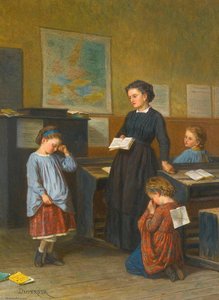
His artistic journey was one of profound autodidactic devotion. Without the structured guidance of a traditional atelier, Duverger honed his craft through an intense, almost meditative study of nature and the works of established masters. He looked toward Gustave Courbet and Jean-François Millet, finding in their realism a blueprint for how to depict the peasantry with unflinching honesty and emotional depth. This influence is palpable in his ability to transform a simple scene of labor or a domestic moment into something monumental. His technique, characterized by subtle tonal gradations and a masterful command of light and shadow, allowed him to breathe life into the textures of fabric, the weathered skin of a laborer, and the soft glow of a classroom afternoon.
From Portraiture to the Heart of Genre Painting
Duverger’s early career at the Paris Salon, which began in 1846, saw him establishing himself as a sensitive portraitist. He possessed a remarkable ability to capture the likenesses of women with a delicate touch, imbuing his subjects with a sense of character and quiet grace. However, as his artistic maturity blossomed, his focus shifted from the individual portrait toward the broader tapestry of genre painting. He became a chronicler of the French countryside, turning his gaze toward the families, children, and workers who formed the backbone of rural society.
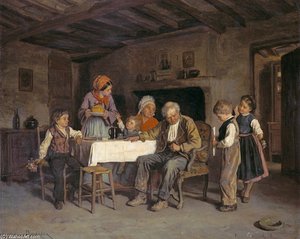
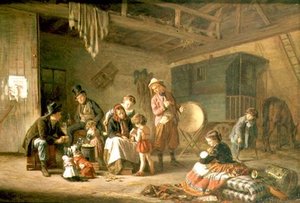
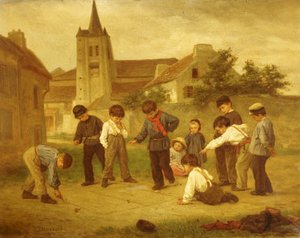
This transition marked the true flowering of his talent. In works such as The Lesson and The Card Game or The Puppet Show, Duverger invites the viewer into a nostalgic, almost sacred space where time seems to slow down. His paintings are not merely depictions of events; they are atmospheric explorations of childhood innocence, familial bonds, and the dignity of toil. He had a unique gift for capturing the "small" moments—a child's focused gaze during a lesson or the shared laughter of a game—and elevating them to the level of high art through his evocative use of light and composition.
Recognition, Accolades, and Enduring Significance
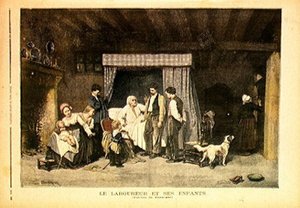
The Parisian art establishment, which could often be exclusionary toward self-taught artists, eventually recognized the undeniable merit of Duverger’s vision. His dedication to the realism of the human condition earned him prestigious accolades at the Paris Salon, including a third-class medal in 1861 and subsequent honors in 1863 and 1865. Perhaps the most significant testament to his impact was the state's acquisition of his masterpiece, "The Worker and His Children" (*Le laboureur et ses enfants*), for the Musée du Luxembourg. This work remains a cornerstone of his legacy, embodying the very essence of his style: a powerful, monumental celebration of the working class that resonates with both technical brilliance and profound empathy.
As we look back on the life of Théophile Emmanuel Duverger, we see an artist who found greatness in the ordinary. His significance lies in his ability to bridge the gap between the raw realism of the mid-century masters and a more sentimental, nostalgic beauty that captured the heart of a changing France. Through his eyes, the simple acts of rural life were transformed into enduring symbols of human resilience and grace, ensuring his place in the pantheon of painters who taught us to find the extraordinary within the everyday.
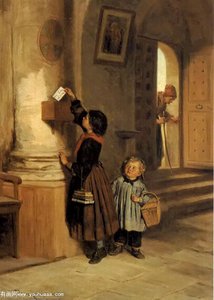
Théophile Emmanuel Duverger
1821 - 1898 , France
Quick Facts
- Artistic Movement Or Style: Genre Painting
- Artists Who Influenced This Artist:
- Gustave Courbet
- Jean-François Millet
- Date Of Birth: March 17, 1821
- Full Name: Théophile Emmanuel Duverger
- Nationality: French
- Notable Artworks:
- The Worker and His Children
- La Le ccedil on Le Chat A Pair
- Place Of Birth: Bordeaux, France