

 Preview
 Send
Send Share
Share
 Details

 Download
 Similars
 X-Ray
X-Ray Diaporama
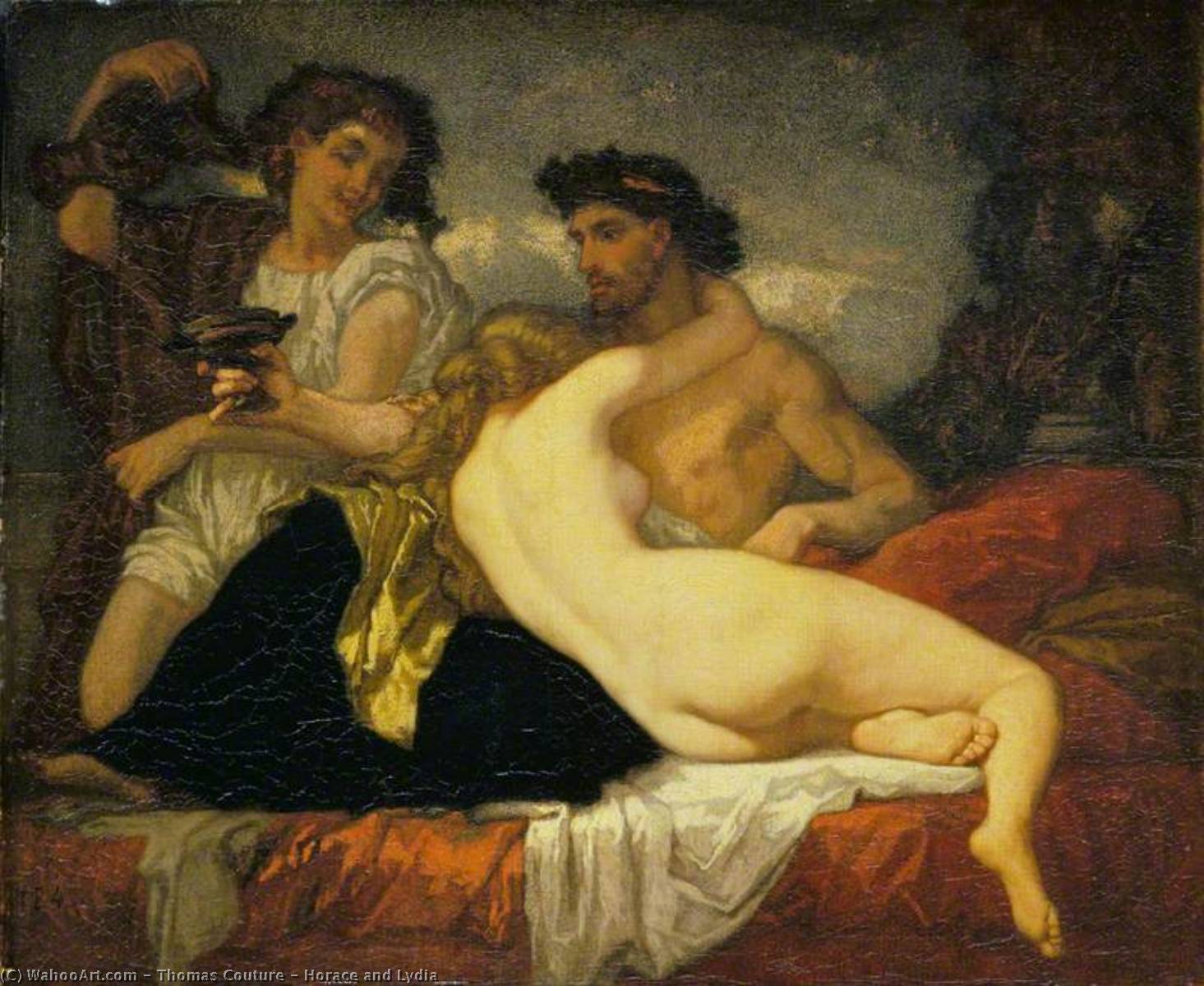
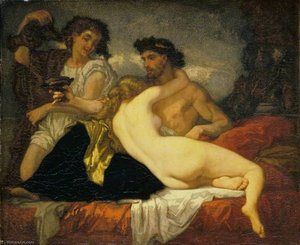
Horace and Lydia
 Oil On Canvas
- WallArt
- Romanticism
 1843
1843- 19th Century
 38.0 x 46.0 cm
 The Wallace Collection
 Read More
Purchase a high-resolution, enhanced digital image, far superior to the online preview.
Each file is meticulously prepared by our in-house specialists using advanced tools and expert manual retouching. We ensure every image has exceptional clarity, precise color accuracy, and fine detail.
The final file is delivered via email within 72 hours, optimized for immediate use in professional, editorial, and print environments. This is the same quality trusted by top-tier design studios, publishers, and galleries.
Digital Image
Download a high-resolution file for personal display, printing, and creative projects. ( Buy Print Buy Hand Made Painting)
Included in Every Digital Image Order
Expert Digital Delivery, Guaranteed
When you choose ArtsDot.com, you're not just getting an image - you're receiving a professionally enhanced digital artwork, crafted with precision and backed by a satisfaction guarantee. Here's everything that comes with your order, automatically:

Fast Email Delivery
Your high-resolution digital image file will be emailed to you within 72 hours of ordering - ready for immediate use.

AI-Enhanced Digital File
Your artwork is professionally optimized using advanced AI tools and manual editing, ensuring maximum detail, clarity, and color accuracy.

Free Lifetime Re-Delivery
Accidentally deleted or lost your file? No worries - we'll resend it to you anytime, free of charge.

No Import Fees - Ever
Enjoy your artwork instantly with zero customs, duties, or delivery fees - digital downloads are always tax-free.

Color Accuracy Guarantee
We ensure your digital image reflects the original colors as closely as possible using professional tools and color management.

60-Day Satisfaction Guarantee
If you're not satisfied with your digital image, we'll revise it or refund 100% within 60 days - no questions asked.

100% Money-Back Guarantee
Not satisfied? Get a full refund within 60 days of receiving your digital file - no questions asked.

Bulk Order Discounts
Buy 3 images, save 10% - Buy 5, save 15% - Buy 10+, save 20%. Great for creative projects, galleries, and agencies.
Collectible Description
A Moment Suspended in Crimson Hues
Thomas Couture’s Horace and Lydia, painted in 1843, invites the viewer into an intimate tableau steeped in the rich, enveloping warmth of red. This is not merely a portrait; it is a carefully constructed moment of repose, a scene where conversation seems to linger just beyond the reach of the eye. The composition centers around three figures gathered within what appears to be a richly appointed domestic space. A man reclines upon a bed, his head gently supported in the lap of one woman, while another stands nearby, completing a triangle of human connection. The pervasive red color scheme saturates the scene, lending an immediate sense of passion, depth, and luxurious enclosure that speaks volumes about the emotional undercurrents at play.
Bridging Eras: Style and Technique
Couture himself stood at a fascinating crossroads in art history, a painter whose career spanned the transition from the lingering echoes of Romanticism toward the emerging clarity of Realism. In this work, one can observe his mastery of both traditions. While the subject matter—the languid interaction between the figures—carries a certain narrative flourish reminiscent of earlier romantic sensibilities, the rendering of the forms and the palpable atmosphere suggest an increasing commitment to observable reality. The technique is lush; Couture employs visible brushwork that gives texture to the draperies, the skin tones, and even the scattered objects like the wine glass and the decorative vases. This attention to material detail grounds the emotional drama in a tangible, believable space.
Symbolism of Intimacy and Leisure
The arrangement of objects within the room—the bowl on one side, the glassware near another—suggests that this gathering is one of cultivated leisure or perhaps even post-celebration intimacy. The reclining man, supported by the gentle presence of the woman beneath him, evokes themes of dependency, comfort, and storytelling. The interaction between the three figures feels charged with unspoken dialogue; are they confidantes? Lovers? Friends sharing a secret moment? Couture masterfully uses these subtle gestures to populate the space with symbolic weight. The richness of the setting itself acts as a backdrop to human emotion, suggesting that in moments of deep connection, the world can narrow down to just this circle of warmth and whispered exchange.
Bringing Salon Life Home
For the collector or designer seeking an artwork that breathes narrative into a room, Horace and Lydia offers profound depth. Its palette, dominated by deep reds and warm earth tones, makes it an exceptional focal point for drawing-room décor or a richly paneled study. Owning a reproduction of this piece allows one to curate not just a wall hanging, but an entire atmosphere—one steeped in the sophisticated drama of 19th-century Parisian life. It speaks to a time when art celebrated both high emotion and meticulous observation, making it a timeless conversation starter that promises depth with every glance.
Related Artworks

Artist Biography
A Rebel in the Atelier: The Life and Legacy of Thomas Couture
Born in 1815 in Senlis, France, Thomas Couture emerged as a pivotal figure bridging Romanticism and Realism—a painter who dared to challenge academic convention while simultaneously mastering its techniques. His early life saw a relocation to Paris with his family, where he initially pursued studies at the École des Arts et Métiers before gravitating towards the prestigious École des Beaux-Arts. However, Couture’s path wasn't paved with immediate acceptance; he faced repeated rejection in the competition for the Prix de Rome, an honor that would have secured a coveted residency at the Académie de France in Rome. Rather than accepting defeat, these setbacks fueled his conviction that the established system itself was flawed, prompting him to forge his own artistic path and eventually establish an independent atelier—a haven for those seeking an alternative to traditional instruction.The Decadence of Empires and a New Artistic Vision
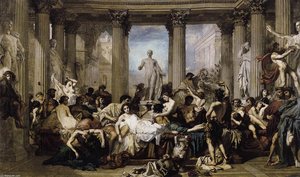
Couture’s breakthrough arrived with *Romans During the Decadence* (1847), a monumental work that ignited both praise and controversy at the Paris Salon. This painting wasn't merely a historical depiction; it was a scathing social commentary, inspired by the satirical writings of Juvenal, portraying the moral decay and opulent excess within Roman society. The scene pulsates with a sense of unrestrained indulgence, figures draped in luxurious fabrics amidst classical ruins—a deliberate juxtaposition meant to mirror the perceived decadence of contemporary French society under the Second Republic. Couture’s masterful use of tonal contrasts, employing rich dark hues punctuated by striking highlights, further intensified the dramatic impact and symbolic weight of the composition. The painting's success cemented his reputation as a leading artist and established him as a formidable force within the art world. It was more than just technical skill; it was a bold statement about the state of civilization itself.A Teacher of Titans: Shaping Future Generations
Beyond his own artistic achievements, Couture’s influence extended profoundly through his role as an educator. He opened his atelier to a diverse group of aspiring artists, rejecting the rigid constraints of the École des Beaux-Arts and fostering an environment of experimentation and critical thinking. Among his most celebrated pupils were names that would become synonymous with modern art: Édouard Manet, whose revolutionary approach to painting owed much to Couture’s emphasis on tonal values and expressive brushwork; Henri Fantin-Latour, renowned for his still lifes and portraits of fellow artists; Pierre Puvis de Chavannes, a pioneer of Symbolism; and John La Farge, an innovator in stained glass. Couture’s teaching methods were unconventional, encouraging students to develop their individual voices while grounding them in the fundamentals of draftsmanship and composition. He championed “quick painting,” anticipating techniques later embraced by the Impressionists, and stressed the importance of direct observation from life.Later Years and Enduring Influence
In 1860, disillusioned with the Parisian art scene, Couture retreated to his hometown of Senlis, where he continued to teach and paint. He codified his artistic philosophy in *Méthode et entretiens d'atelier* (Method and Workshop Interviews), published in 1867—a treatise that offered a radical critique of academic dogma and advocated for a more intuitive and expressive approach to art-making. This work, later translated into English as *Conversations on Art Methods*, provided invaluable insights into his pedagogical principles and artistic beliefs. Though he faced criticism throughout his career for challenging established norms, Couture’s impact on the development of modern art is undeniable. He fostered a generation of artists who dared to break free from convention, paving the way for the radical innovations that would define the late 19th and early 20th centuries. His legacy endures not only through his own compelling paintings but also through the enduring influence he exerted on some of the most important figures in art history.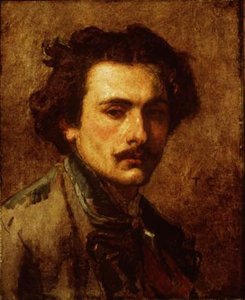
Thomas Couture
1815 - 1879 , France
Quick Facts
- Artistic Movement Or Style: Romanticism & Realism
- Artists Or Movements Influenced By This Artist:
- Édouard Manet
- Henri Fantin-Latour
- Pierre Puvis de Chavannes
- Artists Who Influenced This Artist:
- Antoine-Jean Gros
- Paul Delaroche
- Date Of Birth: Dec 21, 1815
- Date Of Death: March 30, 1879
- Full Name: Thomas Couture
- Nationality: French
- Notable Artworks:
- Romans During the Decadence
- The Duel After Masked Ball
- A Lawyer Going to Court
- Place Of Birth: Senlis, France

