

 Preview
 Send
Send Share
Share
 Details

 Download
 Similars
 X-Ray
X-Ray Diaporama
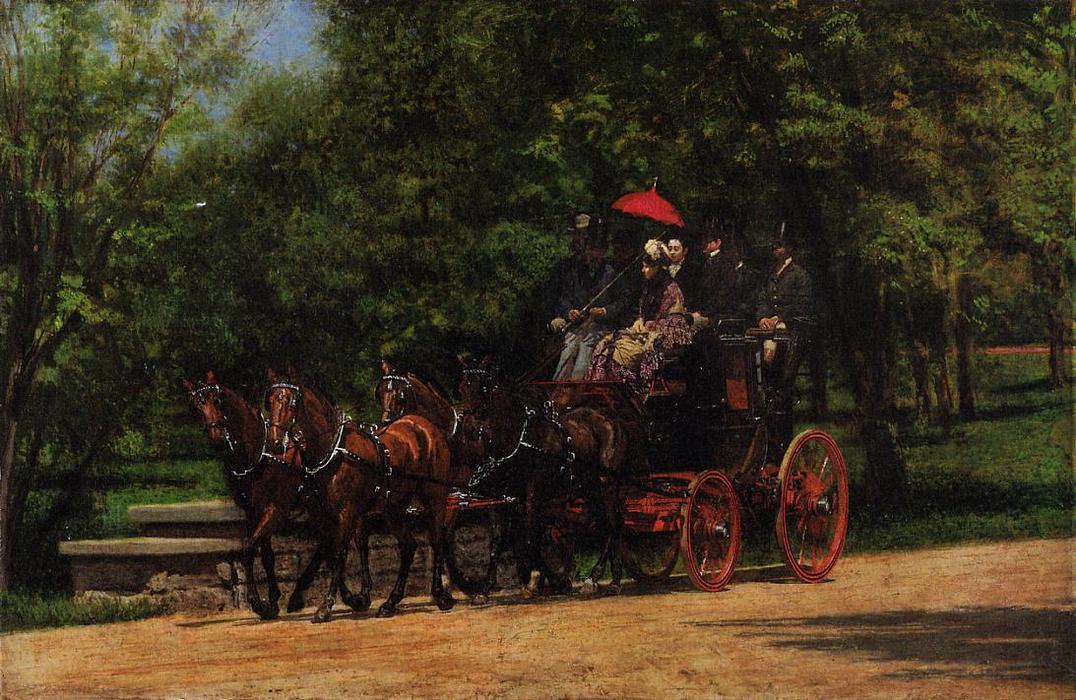
A May Morning in the Park (also known as The Fairman Rogers Four-in-Hand)


 Read More
Purchase a high-resolution, enhanced digital image, far superior to the online preview.
Each file is meticulously prepared by our in-house specialists using advanced tools and expert manual retouching. We ensure every image has exceptional clarity, precise color accuracy, and fine detail.
The final file is delivered via email within 72 hours, optimized for immediate use in professional, editorial, and print environments. This is the same quality trusted by top-tier design studios, publishers, and galleries.
Digital Image
Download a high-resolution file for personal display, printing, and creative projects. ( Buy Print Buy Hand Made Painting)
Included in Every Digital Image Order
Expert Digital Delivery, Guaranteed
When you choose ArtsDot.com, you're not just getting an image - you're receiving a professionally enhanced digital artwork, crafted with precision and backed by a satisfaction guarantee. Here's everything that comes with your order, automatically:

Fast Email Delivery
Your high-resolution digital image file will be emailed to you within 72 hours of ordering - ready for immediate use.

AI-Enhanced Digital File
Your artwork is professionally optimized using advanced AI tools and manual editing, ensuring maximum detail, clarity, and color accuracy.

Free Lifetime Re-Delivery
Accidentally deleted or lost your file? No worries - we'll resend it to you anytime, free of charge.

No Import Fees - Ever
Enjoy your artwork instantly with zero customs, duties, or delivery fees - digital downloads are always tax-free.

Color Accuracy Guarantee
We ensure your digital image reflects the original colors as closely as possible using professional tools and color management.

60-Day Satisfaction Guarantee
If you're not satisfied with your digital image, we'll revise it or refund 100% within 60 days - no questions asked.

100% Money-Back Guarantee
Not satisfied? Get a full refund within 60 days of receiving your digital file - no questions asked.

Bulk Order Discounts
Buy 3 images, save 10% - Buy 5, save 15% - Buy 10+, save 20%. Great for creative projects, galleries, and agencies.
Collectible Description
A Window Into Rural Tranquility: Examining Thomas Eakins’ “The Fairman Rogers Four-in-Hand”
“The Fairman Rogers Four-in-Hand,” painted by Thomas Eakins in 1879, transcends mere depiction; it embodies a profound meditation on stillness and observation within the everyday rhythms of rural life. More than just capturing a picturesque scene—a gentleman’s carriage journey accompanied by four horses—Eakins achieved something far more ambitious: he froze time itself, presenting us with an exquisitely rendered tableau that invites contemplation and rewards careful scrutiny. Located prominently at the Philadelphia Museum of Art, this oil on canvas masterpiece continues to fascinate viewers decades after its creation. ### Artistic Style and Composition – Precision Meets Impressionistic Light Eakins’s signature style is characterized by uncompromising realism—a commitment to anatomical accuracy and meticulous detail that distinguishes him from many of his contemporaries. However, unlike purely objective representations, “The Fairman Rogers Four-in-Hand” subtly incorporates elements of impressionism. Notice how Eakins skillfully employs light and shadow to sculpt the forms of the horses and carriage occupants, creating a palpable sense of depth and dimensionality. The composition is deliberately restrained, focusing intently on the central figure—Fairman Rogers himself—and his companions, guiding the viewer’s gaze towards the core subject matter. This careful arrangement underscores Eakins's belief that art should strive for truthfulness while simultaneously conveying emotion. ### Historical Context – Philadelphia Society and Scientific Inquiry Painted during a period of burgeoning scientific inquiry in America—particularly within the medical profession—the artwork reflects Eakins’s fascination with dissecting the human body and understanding its mechanics. The carriage journey itself symbolizes not merely leisure but also social status and the pursuit of knowledge, mirroring the intellectual climate of Philadelphia at the time. Eakins meticulously researched horse anatomy using newly invented stop motion photographs to ensure unparalleled accuracy—a bold departure from conventional artistic practices that prioritized idealized beauty over scientific observation. This dedication to realism speaks volumes about Eakins’s worldview and his desire to portray life as it truly is, rather than as it wished to appear. ### Symbolism – The Stillness of Observation and the Dignity of Labor Beyond its technical brilliance, “The Fairman Rogers Four-in-Hand” resonates with symbolic significance. The stillness of the horses’ legs—a deliberate choice by Eakins—represents a pause in movement, inviting viewers to contemplate the beauty of quiet contemplation. Simultaneously, it underscores the dignity of labor—the purposeful activity of those involved in maintaining the carriage and ensuring its smooth operation. The two umbrellas positioned strategically within the frame serve as visual anchors, directing attention towards the central figures and reinforcing the painting’s serene atmosphere. ### Emotional Impact – A Moment Preserved in Time Ultimately, “The Fairman Rogers Four-in-Hand” succeeds in capturing a fleeting moment of idyllic rural tranquility—a scene imbued with warmth, sophistication, and an understated appreciation for the natural world. Eakins's masterful technique elevates this simple tableau into a timeless masterpiece, prompting viewers to consider not only what is seen but also how it feels. It’s a painting that lingers in the memory long after viewing, reminding us of the power of art to transform our perception of reality and evoke profound emotional responses.- Artist: Thomas Eakins
- Born Year: 1844
- Death Year: 1916
- Birth City: Philadelphia
- Birth Country: United States of America
- Museum Purchase
- Susan Macdowell Eakins (1851-1938), by inheritance from the artist
- Clarence W. Cranmer, Philadelphia, PA
- Saint Louis Art Museum, purchased from Clarence W. Cranmer
Related Artworks
Artist Biography
A Life Devoted to Reality
Thomas Cowperthwait Eakins, born in Philadelphia on July 25, 1844, stands as a monumental figure in American art—a painter of unflinching realism who dedicated his life to capturing the essence of human experience. He wasn’t merely interested in *representing* the world; he sought to dissect it, understand its anatomy, both physical and psychological, and then reconstruct it on canvas with an honesty that often bordered on provocation. Eakins's path was not one of immediate acclaim, but rather a slow burn of dedication, controversy, and ultimately, enduring recognition as perhaps the most profound realist in 19th and early 20th-century American art. His Philadelphia wasn’t a city of grand landscapes or romantic ideals; it was a world of doctors, rowers, hunters, and everyday individuals—and these were his subjects, rendered with an almost scientific precision.Early Influences and Artistic Formation
Eakins's upbringing fostered both intellectual curiosity and artistic inclination. His father, Benjamin Eakins, a writing master and calligrapher, instilled in him a love of discipline and meticulous observation. This foundation was further strengthened by his education at Central High School and the Pennsylvania Academy of the Fine Arts, where he excelled in drawing and anatomy—a fascination that would permeate his entire oeuvre. However, it was his time in Europe, particularly under the tutelage of Jean-Léon Gérôme in Paris, that truly shaped his artistic approach. Gérôme’s emphasis on precise draftsmanship and historical accuracy resonated with Eakins's own inclinations, but he quickly moved beyond mere imitation. A sojourn in Spain further refined his understanding of light, shadow, and the power of direct observation. He wasn’t content to simply copy Old Masters; he wanted to understand *how* they achieved their effects, and then apply that knowledge to his own unique vision. This period was crucial in solidifying his commitment to painting directly from life, a practice that would define his career.The Pursuit of Truth: Themes and Techniques
Eakins’s work is characterized by an unwavering commitment to realism—a refusal to idealize or romanticize his subjects. His portraits, numbering several hundred, are not flattering representations designed to appease the sitter; they are penetrating studies of character, revealing both strength and vulnerability. He painted individuals engaged in their professions – surgeons at work in *The Gross Clinic*, rowers straining against the current in *Max Schmitt in a Single Scull*—capturing not just their physical appearance but also the intensity of their focus and the demands of their craft. This dedication to truth extended to his technique. Eakins was fascinated by motion, and he employed innovative methods to capture it accurately. He studied anatomy meticulously, often dissecting cadavers to understand the underlying structure of the human body. He even experimented with photography, using it as a tool for analyzing movement and achieving greater accuracy in his paintings. His use of chiaroscuro—the dramatic contrast between light and dark—further enhanced the sense of realism and psychological depth in his work.Controversy and Legacy
Despite his artistic brilliance, Eakins’s career was marked by controversy. His insistence on painting directly from life, often including nude models, clashed with the conservative sensibilities of Victorian Philadelphia. His teaching methods at the Pennsylvania Academy were equally unconventional; he emphasized the importance of studying the human form from life and encouraged his students to challenge traditional artistic conventions. This led to friction with his colleagues and ultimately resulted in his forced resignation in 1886. Personal scandals further damaged his reputation during his lifetime, leaving him largely ostracized by the art establishment. However, Eakins remained undeterred, continuing to paint and teach privately until his health began to fail. After his death in 1916, his work gradually gained recognition, and he is now celebrated as a pivotal figure in American art history. His unflinching realism, his dedication to anatomical accuracy, and his profound understanding of the human condition continue to inspire artists and captivate audiences today. He left behind not just paintings, but a legacy of artistic integrity and a relentless pursuit of truth—a testament to the power of observation and the enduring beauty of the human form.Key Works and Enduring Influence
Several works stand as hallmarks of Eakins’s genius. *Max Schmitt in a Single Scull* (1871), with its masterful depiction of movement and light, is arguably his most iconic painting. *The Gross Clinic* (1875)*, though controversial at the time for its unflinching portrayal of surgery, remains a powerful testament to the dedication and skill of medical professionals. *William Rush and His Model* (1908) showcases his later style, blending portraiture with allegorical elements. Beyond these specific paintings, Eakins’s influence can be seen in the work of countless artists who followed him—those who sought to capture the world around them with honesty, precision, and a deep understanding of the human spirit. His commitment to realism paved the way for later movements such as Ashcan School and continues to resonate with contemporary artists today. He remains a vital force in American art, a reminder that true artistry lies not in imitation or embellishment, but in the courageous pursuit of truth.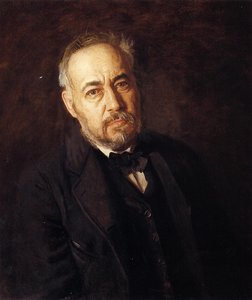
Thomas Eakins
1844 - 1916 , United States of America
Quick Facts
- Artistic Movement Or Style: Realism
- Artists Or Movements Influenced By This Artist: ['American Realism']
- Artists Who Influenced This Artist: ['Jean-Léon Gérôme']
- Date Of Birth: July 25, 1844
- Date Of Death: June 25, 1916
- Full Name: Thomas Eakins
- Nationality: American
- Notable Artworks:
- Max Schmitt in a Single Scull
- The Gross Clinic
- The Swimming Hole
- The Agnew Clinic
- Place Of Birth: Philadelphia, USA

