 Preview
 Send
Send Share
Share
 Details

 Download
 Similars
 X-Ray
X-Ray Diaporama
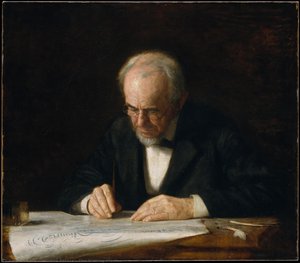
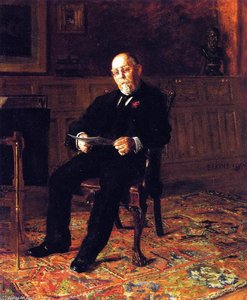
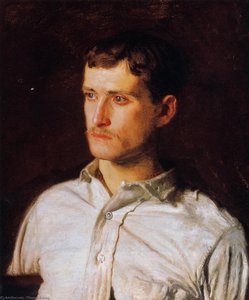
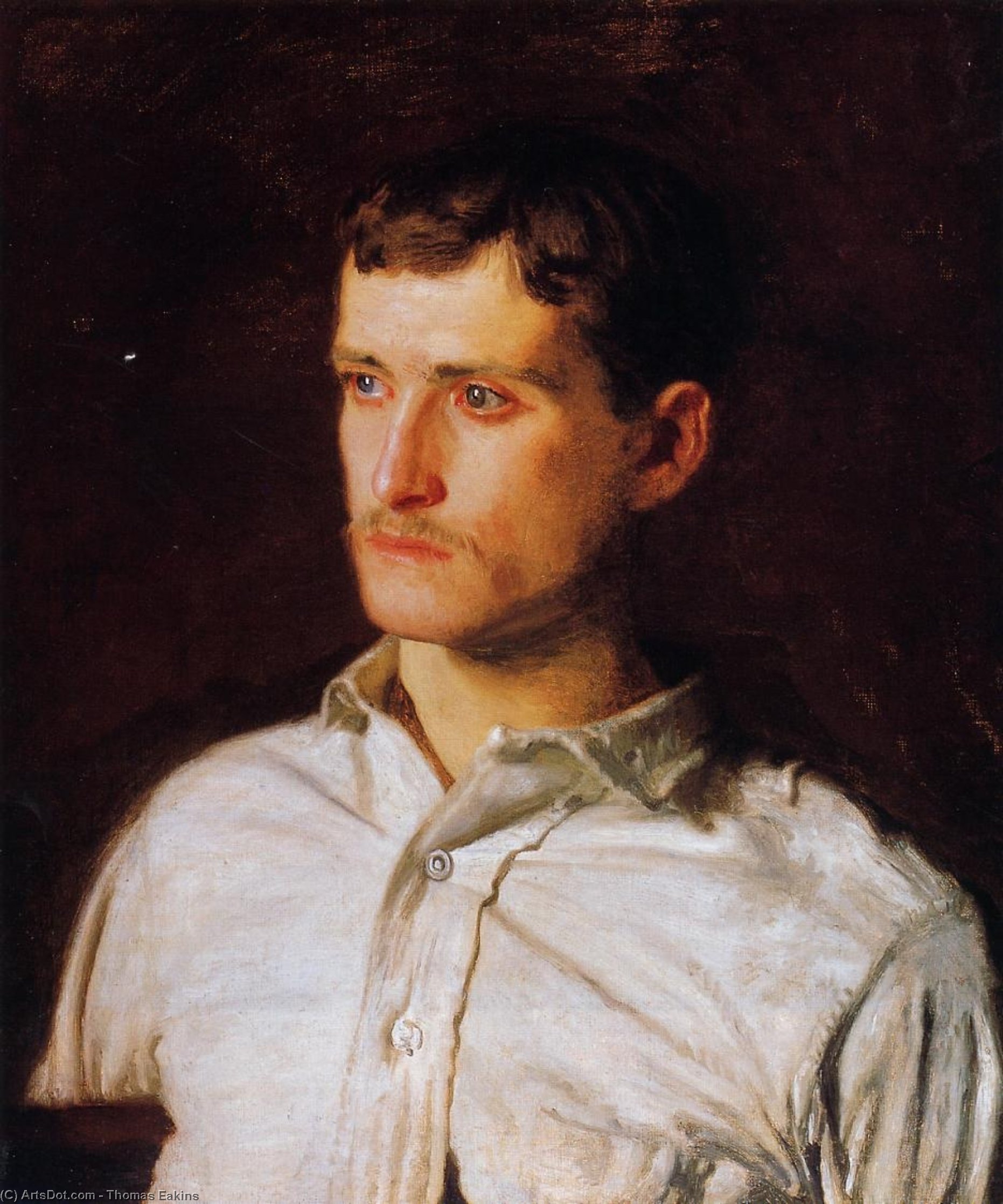
Portrait of Douglass Morgan Hall


 Read More
Hand Made Oil Reproduction
Hand-painted oil on canvas in your size and frame, made to order by our artists. ( Buy Print Buy Image)




P118B $10

P118H $10

P118W $10

P438Z $10

P508JH $12

P508YH $12

P805H $10

P805Z $10

P919BZ $10

P919G $10

P919XJ $10

P959ZH $10

P968JZ $12

W106C $8

W218G $10

W218JH $8

W218Y $10

W307PJ $10

W316G $10

W316PJ $8

W316Y $10

W398PJ $8

W4111J $10

W500HY $15

W500JH $15

W692G $12

W849H $8

W940BG $15

W953PJ $8




Pick from our preset sizes that match the artwork's original proportions.

You may enter your own dimensions to fit a specific frame or space. If your selected size does not match the original image's proportions, we will either crop the artwork or extend the painting with additional hand-painted elements. A digital mockup will be sent for your approval before production begins.
Please note that the on-screen preview does not reflect the actual cropping or extension. Only the mockup will accurately show the final composition.
While custom sizes are available, we recommend selecting a dimension from the predefined list to preserve the original proportions.
After order, ArtsDot.com team will email client for instructions and provide a mockup preview
Worldwide Delivery () in 3/4 weeks instead of standard 5 weeks. (16 August). No compromise on quality.

Free Worldwide Express Shipping

High-Quality Linen Canvas

Full Shipping Insurance

Customs Tax Refund Guarantee

True Color Matching Guarantee

60-Day Return Policy (Defects Only)

100% Money-Back Guarantee

Bulk Discount Offer
 Glass option is only available in size under 110 CM

Portrait of Douglass Morgan Hall
Reproduction Medium
Reproduction Size
-


Total Price
$ 263
Artwork Description
A Portrait Steeped in Reality: Exploring Eakins's "Portrait of Douglass Morgan Hall"
The Philadelphia Museum of Art houses a painting that transcends mere representation—Thomas Eakins’s “Portrait of Douglass Morgan Hall,” completed in 1889, is an immersive experience into the heart of American realism. More than just capturing a likeness, Eakins sought to distill the very essence of his subject, Douglass Morgan Hall, a prominent physician and figure within Philadelphia society, transforming him into a symbol of intellect and quiet contemplation.The Artist's Vision: Anatomical Precision Meets Psychological Depth
Eakins’s reputation rested upon his unwavering commitment to anatomical accuracy combined with an astute understanding of human psychology—a duality brilliantly realized in this portrait. Unlike the idealized depictions prevalent during his era, Eakins eschewed romantic embellishments, opting instead for a brutally honest portrayal of Hall's physicality. The meticulous rendering of musculature and bone structure isn’t merely scientific; it serves as a conduit to convey Hall’s inner state—a gaze directed outwards, hinting at profound introspection and an awareness of the complexities of human existence. This stylistic choice reflects Eakins’s broader belief that art should illuminate not just what is seen but also what is felt.Technique: Bold Brushstrokes and Subtle Light
Eakins's technique—characterized by bold brushstrokes layered upon one another—creates a palpable sense of depth and texture, drawing the viewer into Hall’s world. The artist skillfully manipulated light and shadow to sculpt Hall’s face, emphasizing contours and highlighting subtle nuances of expression. This masterful use of chiaroscuro isn’t simply decorative; it underscores Eakins's intention to evoke emotion—a quiet solemnity that speaks volumes about Hall’s character and his engagement with the world around him. The muted color palette contributes to this atmosphere of understated elegance, prioritizing tonal harmony over vibrant hues.Historical Context: Philadelphia Society Under Observation
“Portrait of Douglass Morgan Hall” emerged during a period of significant social change in Philadelphia—a city grappling with industrialization, urbanization, and burgeoning scientific inquiry. Eakins’s depiction of Hall reflects this intellectual climate, portraying him as an individual attuned to the advancements of medicine and science while simultaneously acknowledging the burdens of responsibility inherent in his profession. The painting serves as a snapshot of American society at its finest—a testament to ambition, intellect, and a dedication to elevating human understanding.Symbolism: Beyond Appearance – An Echo of Inner Reflection
The portrait’s symbolism extends far beyond its surface appearance. Hall's gaze—fixed on an unseen point beyond the canvas—represents not merely observation but also contemplation—a yearning for knowledge and a recognition of life’s inherent mysteries. The red background, though subdued in tone, adds a touch of formality and prestige to the composition, subtly reinforcing Hall’s status as a respected physician within Philadelphia's elite circles. Ultimately, Eakins invites us to consider what lies beneath the surface—the unspoken thoughts and emotions that shape our perceptions of ourselves and others.Emotional Impact: A Moment Frozen in Time
“Portrait of Douglass Morgan Hall” lingers in the memory long after viewing—a testament to Eakins’s ability to capture a profound emotional resonance. The painting evokes feelings of quiet dignity, intellectual curiosity, and contemplative melancholy—elements that resonate deeply with viewers who appreciate art's capacity to transcend mere visual pleasure and engage us on an existential level. It is this enduring impact—this invitation to ponder the human condition—that secures Eakins’s place as one of America’s greatest artistic innovators.- For exquisite reproductions of “Portrait of Douglass Morgan Hall,” explore ArtsDot.com. Crafted with traditional methods and premium materials, these prints honor Eakins's legacy.
- Discover more about Thomas Eakins’s artistic journey at Philadelphia Museum of Art.
Related Artworks


Artist Biography
A Life Devoted to Reality
Thomas Cowperthwait Eakins, born in Philadelphia on July 25, 1844, stands as a monumental figure in American art—a painter of unflinching realism who dedicated his life to capturing the essence of human experience. He wasn’t merely interested in *representing* the world; he sought to dissect it, understand its anatomy, both physical and psychological, and then reconstruct it on canvas with an honesty that often bordered on provocation. Eakins's path was not one of immediate acclaim, but rather a slow burn of dedication, controversy, and ultimately, enduring recognition as perhaps the most profound realist in 19th and early 20th-century American art. His Philadelphia wasn’t a city of grand landscapes or romantic ideals; it was a world of doctors, rowers, hunters, and everyday individuals—and these were his subjects, rendered with an almost scientific precision.Early Influences and Artistic Formation
Eakins's upbringing fostered both intellectual curiosity and artistic inclination. His father, Benjamin Eakins, a writing master and calligrapher, instilled in him a love of discipline and meticulous observation. This foundation was further strengthened by his education at Central High School and the Pennsylvania Academy of the Fine Arts, where he excelled in drawing and anatomy—a fascination that would permeate his entire oeuvre. However, it was his time in Europe, particularly under the tutelage of Jean-Léon Gérôme in Paris, that truly shaped his artistic approach. Gérôme’s emphasis on precise draftsmanship and historical accuracy resonated with Eakins's own inclinations, but he quickly moved beyond mere imitation. A sojourn in Spain further refined his understanding of light, shadow, and the power of direct observation. He wasn’t content to simply copy Old Masters; he wanted to understand *how* they achieved their effects, and then apply that knowledge to his own unique vision. This period was crucial in solidifying his commitment to painting directly from life, a practice that would define his career.The Pursuit of Truth: Themes and Techniques
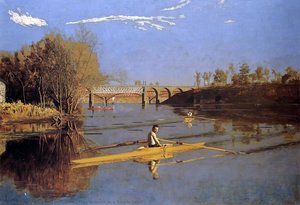
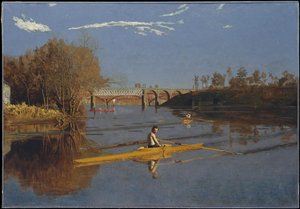
Eakins’s work is characterized by an unwavering commitment to realism—a refusal to idealize or romanticize his subjects. His portraits, numbering several hundred, are not flattering representations designed to appease the sitter; they are penetrating studies of character, revealing both strength and vulnerability. He painted individuals engaged in their professions – surgeons at work in *The Gross Clinic*, rowers straining against the current in *Max Schmitt in a Single Scull*—capturing not just their physical appearance but also the intensity of their focus and the demands of their craft. This dedication to truth extended to his technique. Eakins was fascinated by motion, and he employed innovative methods to capture it accurately. He studied anatomy meticulously, often dissecting cadavers to understand the underlying structure of the human body. He even experimented with photography, using it as a tool for analyzing movement and achieving greater accuracy in his paintings. His use of chiaroscuro—the dramatic contrast between light and dark—further enhanced the sense of realism and psychological depth in his work.Controversy and Legacy
Despite his artistic brilliance, Eakins’s career was marked by controversy. His insistence on painting directly from life, often including nude models, clashed with the conservative sensibilities of Victorian Philadelphia. His teaching methods at the Pennsylvania Academy were equally unconventional; he emphasized the importance of studying the human form from life and encouraged his students to challenge traditional artistic conventions. This led to friction with his colleagues and ultimately resulted in his forced resignation in 1886. Personal scandals further damaged his reputation during his lifetime, leaving him largely ostracized by the art establishment. However, Eakins remained undeterred, continuing to paint and teach privately until his health began to fail. After his death in 1916, his work gradually gained recognition, and he is now celebrated as a pivotal figure in American art history. His unflinching realism, his dedication to anatomical accuracy, and his profound understanding of the human condition continue to inspire artists and captivate audiences today. He left behind not just paintings, but a legacy of artistic integrity and a relentless pursuit of truth—a testament to the power of observation and the enduring beauty of the human form.Key Works and Enduring Influence
Several works stand as hallmarks of Eakins’s genius. *Max Schmitt in a Single Scull* (1871), with its masterful depiction of movement and light, is arguably his most iconic painting. *The Gross Clinic* (1875)*, though controversial at the time for its unflinching portrayal of surgery, remains a powerful testament to the dedication and skill of medical professionals. *William Rush and His Model* (1908) showcases his later style, blending portraiture with allegorical elements. Beyond these specific paintings, Eakins’s influence can be seen in the work of countless artists who followed him—those who sought to capture the world around them with honesty, precision, and a deep understanding of the human spirit. His commitment to realism paved the way for later movements such as Ashcan School and continues to resonate with contemporary artists today. He remains a vital force in American art, a reminder that true artistry lies not in imitation or embellishment, but in the courageous pursuit of truth.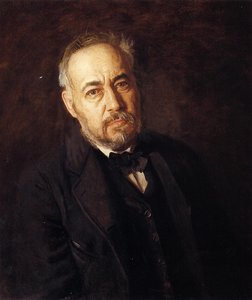
Thomas Eakins
1844 - 1916 , United States of America
Quick Facts
- Artistic Movement Or Style: Realism
- Artists Or Movements Influenced By This Artist: ['American Realism']
- Artists Who Influenced This Artist: ['Jean-Léon Gérôme']
- Date Of Birth: July 25, 1844
- Date Of Death: June 25, 1916
- Full Name: Thomas Eakins
- Nationality: American
- Notable Artworks:
- Max Schmitt in a Single Scull
- The Gross Clinic
- The Swimming Hole
- The Agnew Clinic
- Place Of Birth: Philadelphia, USA
Related Articles
Thomas Eakins: Realism, Anatomy & the American Spirit – A Comprehensive Exploration of Life and Legacy
Explore the life & legacy of Thomas Eakins, a pivotal American Realist painter. Discover his groundbreaking techniques, anatomical precision, and iconic works like 'The Gross Clinic.' A comprehensive guide for art enthusiasts.
American Realism's Defining Works: 10 Masterpieces for Your Home
Explore 10 defining American Realism masterpieces – Hopper, Homer & more. Discover the stories behind these iconic paintings and bring timeless art to your home with ArtsDot's museum-quality reproductions. Explore the full collection online.

Grant Wood & American Regionalism: Identity, Myth & the Rural Landscape
Explore the world of Grant Wood & American Regionalism with ArtsDot. Discover the symbolism behind 'American Gothic', recurring themes, and the movement's lasting impact on art history. High-quality reproductions available.
Edward Hopper's Masterpieces: 25 Iconic Paintings & Their Enduring Legacy | ArtsDot
Explore 25 iconic Edward Hopper paintings & their stories. Discover American realism, urban loneliness, and timeless beauty through his masterpieces. Find museum-quality art reproductions & curated decor ideas at ArtsDot.com.
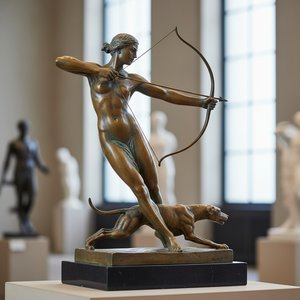
Paul Manship: Reassessing the Master of American Art Deco Sculpture
Explore the captivating world of Paul Manship, a leading figure in American Art Deco sculpture. Discover his iconic works like Prometheus, influence on modernism, and investment potential. Expert insights for collectors.