 Preview
 Send
Send Share
Share
 Details

 Download
 Similars
 X-Ray
X-Ray Diaporama
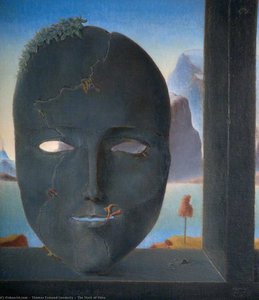
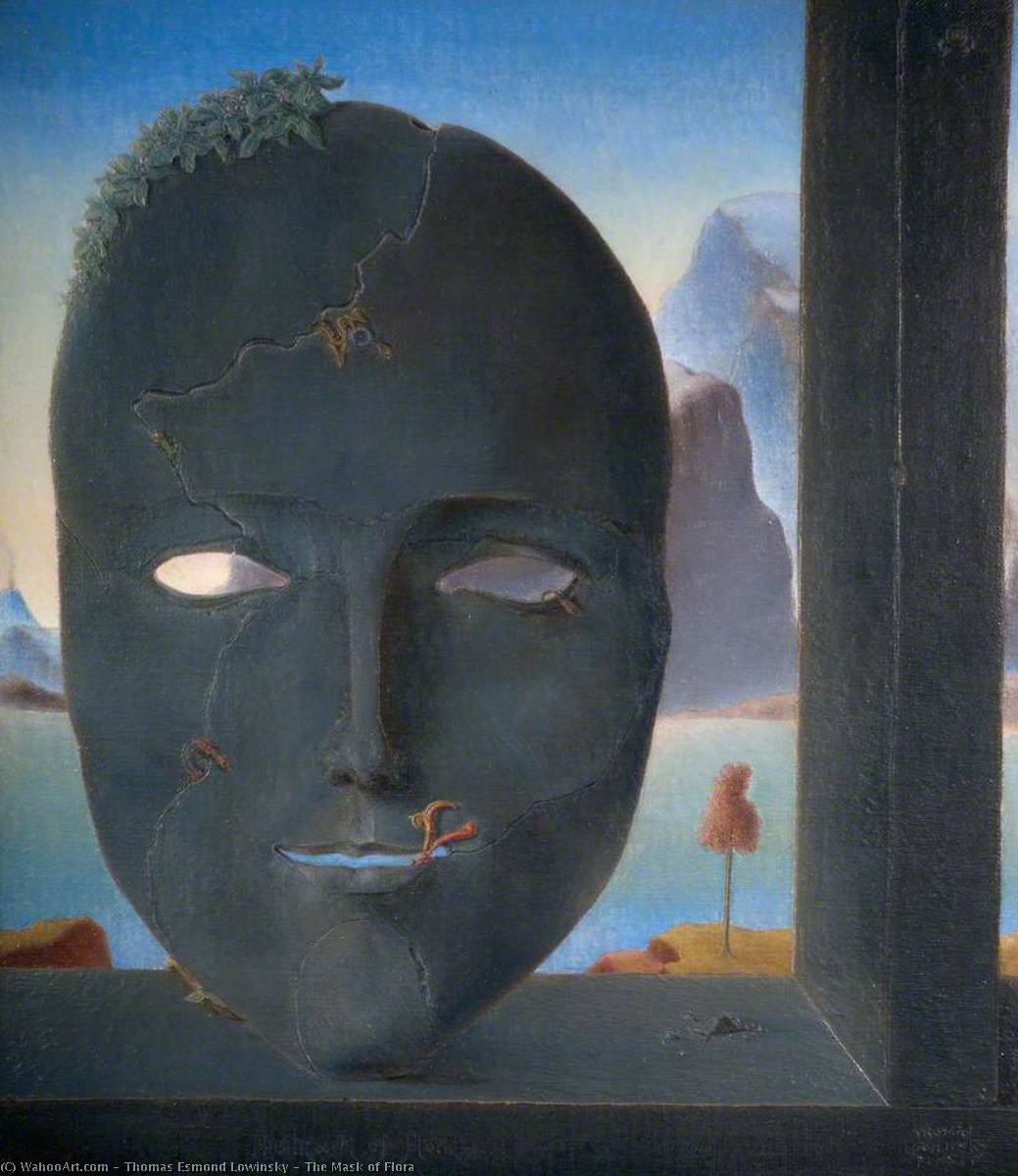
The Mask of Flora
 31.0 x 28.0 cm
 Wolverhampton Art Gallery
 Read More
Hand Made Oil Reproduction
Hand-painted oil on canvas in your size and frame, made to order by our artists. ( Buy Print Buy Image)




































Pick from our preset sizes that match the artwork's original proportions.

You may enter your own dimensions to fit a specific frame or space. If your selected size does not match the original image's proportions, we will either crop the artwork or extend the painting with additional hand-painted elements. A digital mockup will be sent for your approval before production begins.
Please note that the on-screen preview does not reflect the actual cropping or extension. Only the mockup will accurately show the final composition.
While custom sizes are available, we recommend selecting a dimension from the predefined list to preserve the original proportions.
After order, ArtsDot.com team will email client for instructions and provide a mockup preview
Worldwide Delivery () in 3/4 weeks instead of standard 5 weeks. (25 August). No compromise on quality.

Free Worldwide Express Shipping

High-Quality Linen Canvas

Full Shipping Insurance

Customs Tax Refund Guarantee

True Color Matching Guarantee

60-Day Return Policy (Defects Only)

100% Money-Back Guarantee

Bulk Discount Offer
 Glass option is only available in size under 110 CM

The Mask of Flora
Reproduction Medium
Reproduction Size
-


Total Price
$ 263
Related Artworks


Artist Biography
A Visionary of Shadow and Light: The Life of Thomas Esmond Lowinsky
In the tapestry of early twentieth-century British art, few threads are as intricately woven with both classical precision and surrealist dreamscapes as those left by Thomas Esmond Lowinsky. Born on March 2, 1892, in the vibrant landscape of Hyderabad, India, Lowinsky carried within him a complex heritage of Hungarian and South African descent. This cosmopolitan origin, paired with an upbringing that moved from the warmth of India to the prestigious halls of England, instilled in him a unique perspective—one that allowed him to bridge the gap between the tangible world and the realms of mythic imagination. His journey through the elite educational corridors of Eton College and Trinity College, Oxford, provided a foundation of humanist scholarship that would later manifest in his profound psychological depth and symbolic complexity.
The true crucible of Lowinsky’s technical mastery, however, was the Slade School of Fine Art, where he studied between 1912 and 1914. It was here that his meticulous approach to anatomy and perspective began to coalesce with a burgeoning interest in the evocative power of color. Yet, his artistic development was not merely an academic pursuit; it was interrupted by the harrowing realities of the Great War. Serving in France during World War I, Lowinsky experienced a period of profound upheaval that many believe contributed to the haunting, introspective quality found in his later works. Upon his return, he did not merely seek to replicate reality but to explore its hidden, often unsettling, dimensions.
The Duality of Portraiture and Fantasy
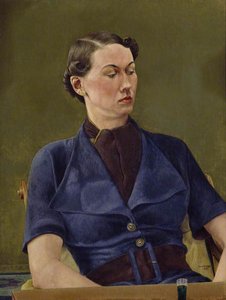
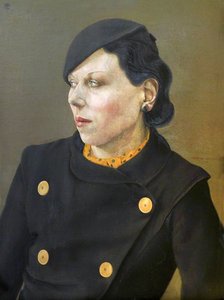
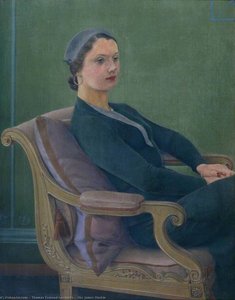
Lowinsky’s oeuvre is a captivating study in duality, oscillating between the grounded realism of portraiture and the ethereal whispers of fantasy. As a member of the New English Art Club (NEAC) from 1926 to 1942, he aligned himself with a movement dedicated to revitalizing British landscape and figure painting through a lens of renewed vigor. His portraits are far more than mere likenesses; they are psychological excavations. In works such as 'Miss Avril Turner', the viewer is invited into a space of Victorian elegance and quiet introspection, where every brushstroke serves to reveal the sitter's inner life.
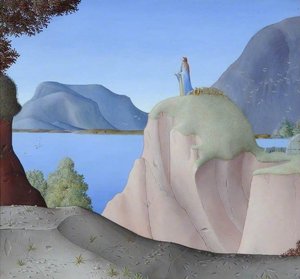
Beyond the human face, Lowinsky’s imagination wandered into the territory of the symbolic. He possessed a rare ability to infuse landscapes with a sense of mythic weight, creating scenes that felt as though they were plucked from the pages of an ancient, forgotten legend. This talent for narrative illustration extended beyond the canvas and into the literary world, where he provided evocative illustrations for works such as Edith Sitwell’s 'Elegy on Dead Fashion'. His ability to translate poetic sentiment into visual form solidified his reputation as an artist capable of capturing the ephemeral essence of thought and emotion.
Legacy and Artistic Significance
The life of Thomas Esmond Lowinsky was marked by a relentless pursuit of aesthetic truth, a journey that saw him hold significant solo exhibitions, including a landmark one-man show at the Leicester Galleries in 1926. His marriage to Ruth Jeanette Hirsch, a noted food writer and society hostess, also placed him within a vibrant intellectual circle that embraced the burgeoning surrealist movements of the era. While his work remained rooted in the technical discipline of the Renaissance masters, his spirit was undeniably modern, dancing on the edge of the subconscious.
Though his life was tragically short, ending in 1947 at the age of fifty-five, the impact of his vision remains palpable. Lowinsky’s significance lies in his refusal to choose between the seen and the unseen. He mastered the art of the memento mori, reminding his audience that beneath the surface of every portrait and within the depths of every landscape, there lies a world of profound mystery waiting to be uncovered. Today, his works serve as enduring windows into an era of transition, where classical tradition met the fractured, beautiful complexity of the modern soul.
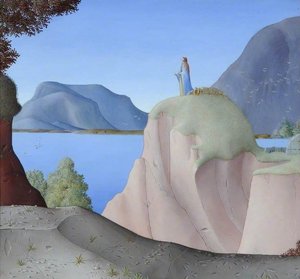
thomas esmond lowinsky
1892 - 1947
Quick Facts
- Artistic Movement Or Style: Victorian Portraiture
- Artists Or Movements Influenced By This Artist: ['Classical Themes Art']
- Artists Who Influenced This Artist: ['Renaissance painters']
- Date Of Birth: March 2, 1892
- Date Of Death: April 24, 1947
- Full Name: Thomas Esmond Lowinsky
- Nationality: British
- Notable Artworks:
- Miss Avril Turner
- Sappho
- Place Of Birth: India