 Preview
 Send
Send Share
Share
 Details

 Download
 Similars
 X-Ray
X-Ray Diaporama
Johann Christian Fisher
 Oil On Canvas
- WallArt
- Romanticism
 1780
1780- Early Modern
 228.0 x 150.0 cm
 Royal Collection
 Read More
Hand Made Oil Reproduction
Hand-painted oil on canvas in your size and frame, made to order by our artists. ( Buy Print Buy Image)




P118B $10

P118H $10

P118W $10

P438Z $10

P508JH $12

P508YH $12

P805H $10

P805Z $10

P919BZ $10

P919G $10

P919XJ $10

P959ZH $10

P968JZ $12

W106C $8

W218G $10

W218JH $8

W218Y $10

W307PJ $10

W316G $10

W316PJ $8

W316Y $10

W398PJ $8

W4111J $10

W500HY $15

W500JH $15

W692G $12

W849H $8

W940BG $15

W953PJ $8




Pick from our preset sizes that match the artwork's original proportions.

You may enter your own dimensions to fit a specific frame or space. If your selected size does not match the original image's proportions, we will either crop the artwork or extend the painting with additional hand-painted elements. A digital mockup will be sent for your approval before production begins.
Please note that the on-screen preview does not reflect the actual cropping or extension. Only the mockup will accurately show the final composition.
While custom sizes are available, we recommend selecting a dimension from the predefined list to preserve the original proportions.
After order, ArtsDot.com team will email client for instructions and provide a mockup preview
Worldwide Delivery () in 3/4 weeks instead of standard 5 weeks. (22 August). No compromise on quality.

Free Worldwide Express Shipping

High-Quality Linen Canvas

Full Shipping Insurance

Customs Tax Refund Guarantee

True Color Matching Guarantee

60-Day Return Policy (Defects Only)

100% Money-Back Guarantee

Bulk Discount Offer
 Glass option is only available in size under 110 CM

Johann Christian Fisher
Reproduction Medium
Reproduction Size
-


Total Price
$ 263
Artwork Description
A Symphony of Solitude: The Soul of Johann Christian Fisher
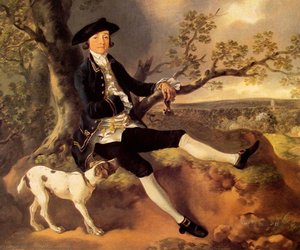
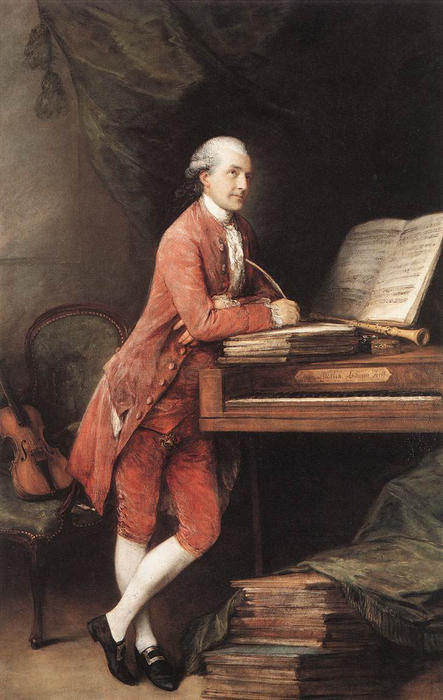
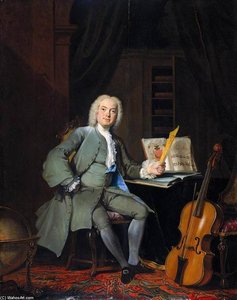
In the quietude of an eighteenth-century study, Thomas Gainsborough captures more than just a likeness; he captures a state of being. Johann Christian Fisher is not merely a portrait of a man, but a profound meditation on the beauty of introspection. As we gaze upon this 1780 masterpiece, we find ourselves drawn into a moment of suspended animation, where the bustle of the outside world fades into the background, leaving only the soft resonance of a piano and the weight of deep thought. The subject, seated at his instrument, is bathed in a gentle, ethereal light that seems to emanate from within the room itself, illuminating a scene of domestic tranquility and intellectual pursuit.
Gainsborough, a master of the Romantic era, eschews the theatricality often found in contemporary portraiture. Instead, he invites the viewer into a private sanctuary. The composition is a delicate dance between the human figure and his environment. Clad in rich, red clothing that provides a warm focal point amidst a sea of muted tones, Fisher appears lost in a musical or philosophical reverie. His posture—hands resting near his chin—suggests a mind wandering through melodies or complex ideas, a sentiment echoed by the scattered books that surround him. These volumes are not mere props; they are symbols of erudition and the relentless pursuit of knowledge, anchoring the sitter within the intellectual ferment of his time.
Mastery of Light and Texture
The technical brilliance of this work lies in Gainsborough’s ability to breathe life into oil on canvas through sophisticated glazing techniques. By applying thin, translucent layers of paint over a foundational base, the artist achieved a luminous quality that allows light to penetrate the surface, creating a sense of depth and atmospheric warmth. This method is particularly evident in the way the soft light interacts with the textures of the room—the smooth wood of the piano, the weathered paper of the books, and the heavy fabric of Fisher's attire. The palette, dominated by earthy browns, creams, and deep ochres, creates a harmonious and soothing atmosphere that is essential to the painting's emotional impact.
For the discerning collector or interior designer, this piece offers an unparalleled sense of serenity and sophistication. The way Gainsborough blends colors with such ease and fluidity lends the work a rhythmic quality, much like the music being played in the scene itself. It is a painting that does not demand attention through loud colors or dramatic gestures but earns it through subtle nuance and a masterful command of shadow. To hang a reproduction of this caliber is to introduce a sense of timelessness and intellectual grace into a space, making it an ideal centerpiece for libraries, studies, or elegant living areas where conversation and contemplation are encouraged.
A Legacy of Emotional Resonance
Beyond its aesthetic merits, Johann Christian Fisher serves as a window into the psychological portraiture movement. During a period of significant social reform and intellectual awakening, Gainsborough sought to explore the complexities of human character. He moved beyond the outward trappings of status to reveal the inner world of his subjects. In this portrait, we see the intersection of the personal and the universal—the individual's private moment of reflection becomes a shared experience of human vulnerability and strength.
The emotional resonance of the piece lies in its ability to evoke nostalgia and peace. It reminds us of a time when the pace of life allowed for profound stillness. Whether you are an art lover moved by the historical significance of the British landscape and portrait schools, or a decorator seeking to infuse a room with a sense of quiet dignity, this work stands as a testament to the enduring power of the human spirit in repose. It is a masterpiece that continues to whisper its stories of music, literature, and the quiet beauty found in the moments when we are most alone with our thoughts.
Related Artworks
Artist Biography
A Suffolk Beginning: The Early Life and Artistic Awakening
The story of Thomas Gainsborough, one of Britain’s most celebrated artists, unfolds not within the confines of a grand academy or bustling metropolis, but in the tranquil market town of Sudbury, Suffolk. Born in 1727, the youngest son of John Gainsborough, a weaver and wool merchant, young Thomas displayed an innate artistic sensibility from a remarkably early age. While his siblings pursued more conventional paths, Thomas’s world rapidly became consumed by drawing and painting – miniature self-portraits and delicate landscapes blossoming from his hand even before he reached ten years old. This precocious talent wasn't merely a childhood pastime; it was the burgeoning of a vision that would reshape British art. His father, recognizing this unique gift, encouraged its development, setting young Thomas on a path diverging sharply from the family trade. The Suffolk countryside itself became his first studio, imbuing his later works with a deep and abiding love for the natural world – a characteristic that would distinguish him throughout his career. This early immersion in landscape wasn’t simply about replicating what he saw; it was about *feeling* the essence of the English countryside, an emotional resonance that would permeate his canvases for decades to come.London and the Shaping of a Style: Influences and Early Commissions
In 1740, at the age of thirteen, Gainsborough journeyed to London, embarking on formal artistic training under Hubert Gravelot, a French engraver renowned for his elegant rococo style. This exposure proved pivotal, introducing him to refined techniques and fashionable aesthetics. However, it was his association with William Hogarth and the St Martin’s Lane Academy that truly began to mold his artistic identity. Initially influenced by Hogarth's narrative approach, Gainsborough soon charted his own course, developing a distinctive style characterized by its lightness of touch, fluid brushwork, and subtle color palettes. He absorbed lessons from various masters, yet resisted strict adherence to any single school, forging a path that blended observation with imagination. Returning to Sudbury after marrying Margaret Burr in 1746, Gainsborough established himself as a portraitist for the local gentry. This period honed his skills in capturing likenesses and character, but it was during his subsequent move to Ipswich, and later Bath, that he began attracting a more sophisticated clientele – individuals who appreciated not just accurate representation, but also artistic flair and emotional depth.Bath and Beyond: Portraiture, Landscape, and Royal Patronage
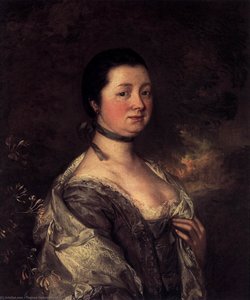
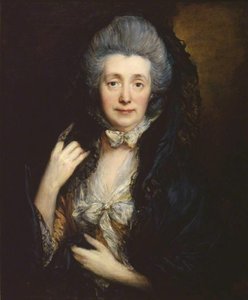
The years spent in Bath (1759-1774) marked a significant turning point in Gainsborough’s career. The city was a hub of fashionable society, providing him with ample opportunities to paint portraits of the wealthy and influential. He quickly gained renown for his ability to capture not only physical resemblance but also the personality and social standing of his sitters. His portraits weren't merely depictions; they were statements about identity and status. However, even amidst the demands of portraiture, Gainsborough never abandoned his passion for landscape painting. In fact, he often seamlessly integrated landscapes into his portraits, creating compositions that celebrated both human subjects and the beauty of the natural world. This innovative approach – a hallmark of his style – set him apart from many of his contemporaries. The culmination of his success came with his move to London in 1774, where he established a studio on Pall Mall and became a founding member of the Royal Academy. He also secured royal patronage, becoming a favorite painter of King George III and Queen Charlotte, further solidifying his position as one of Britain’s leading artists. Mrs. Thomas Gainsborough, painted in 1785, exemplifies this period – an elegant portrait showcasing rococo style and muted tones.A Legacy of Innovation: Enduring Appeal and Influence
Thomas Gainsborough died in 1788, leaving behind a body of work that continues to captivate audiences today. His influence on subsequent generations of British artists is undeniable. He liberated portraiture from rigid formality, infusing it with spontaneity and emotional resonance. His loose brushwork and atmospheric effects paved the way for the Impressionists, while his lyrical landscapes inspired artists like John Constable, who deeply admired Gainsborough’s ability to capture the spirit of the English countryside. Gainsborough's legacy extends beyond technique; it lies in his profound understanding of human character and his unwavering commitment to artistic expression. He wasn’t simply a painter of portraits or landscapes; he was a storyteller, a poet of light and color, and a visionary who transformed British art.Exploring Gainsborough's World Today
Fortunately, the opportunity to experience Gainsborough’s genius firsthand remains readily available. Gainsborough’s House, in his birthplace of Sudbury, stands as a testament to his life and work, offering visitors an intimate glimpse into his early influences and artistic development. Christchurch Mansion in Ipswich houses a significant collection of Gainsborough paintings alongside works by Constable and other masters. Numerous museums across the United Kingdom and internationally display his masterpieces, including the National Gallery in London and the Metropolitan Museum of Art in New York. His work continues to be studied, analyzed, and celebrated, ensuring that his artistic vision will endure for generations to come. The enduring appeal of Gainsborough’s art lies not only in its technical brilliance but also in its timeless beauty and emotional depth – qualities that resonate with viewers across centuries. His paintings are a testament to the power of observation, imagination, and the enduring allure of the English landscape.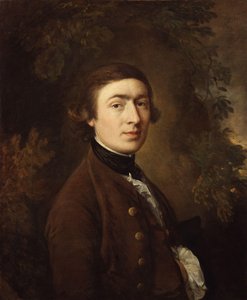
Thomas Gainsborough
1727 - 1788 , United Kingdom
Quick Facts
- Artistic Movement Or Style: Rococo, Portraiture
- Artists Or Movements Influenced By This Artist:
- John Constable
- Impressionists
- Artists Who Influenced This Artist:
- Hubert Gravelot
- William Hogarth
- Date Of Birth: 1727
- Date Of Death: 1788
- Full Name: Thomas Gainsborough
- Nationality: British
- Notable Artworks:
- Mrs. Thomas Gainsborough
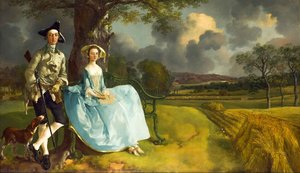
- Mr and Mrs Andrews
- Place Of Birth (City And Country): Sudbury, UK
Related Articles

Baroque Drama: Bringing Opulence & Emotion into Contemporary Interiors
Explore the opulent world of Baroque interior design! Discover key elements, modern applications & how to bring dramatic elegance into your home with 's authentic reproductions.

The Dramatic Flourish: Exploring the Baroque Movement's Enduring Legacy in Art History
Explore the dramatic world of Baroque art! Discover iconic artists like Caravaggio & Rubens, defining techniques, and its lasting impact on art history. Expert insights for collectors & enthusiasts at ArtsDot.

Baroque Masterpieces: 10 Paintings That Defined an Era |
Journey through the drama & grandeur of Baroque art! Explore 10 masterpieces by Caravaggio, Rembrandt, Rubens & more. Discover stunning oil paintings, rich colors & timeless stories. Find museum-quality reproductions at .
Thomas Hudson: A Study in 18th-Century Portraiture & British Artistic Identity
Explore the life & work of Thomas Hudson, a leading 18th-century British portraitist. Discover his mastery of the 'Grand Manner,' influential style, and lasting impact on British art. Learn about his notable portraits like Judge William Noel & Alexander Van Aken.

The Visceral Stage: Exploring Dramatic Narratives & Emotional Intensity in Baroque Art
Explore the dramatic world of Baroque art! Discover iconic masters like Caravaggio & Rembrandt, their techniques, and the movement's lasting impact. Expert insights for collectors & enthusiasts at ArtsDot.