


 Preview
 Send
Send Share
Share
 Details

 Download
 Similars
 X-Ray
X-Ray Diaporama
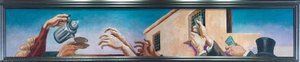
The Arts of Life in America: Unemployment, Radical Protest, Speed
 Acrylic On Canvas
- WallArt
- Regionalist Realism
 19th Century
 81.0 x 448.0 cm
 Chrysler Museum of Art
 Read More
Purchase a high-resolution, enhanced digital image, far superior to the online preview.
Each file is meticulously prepared by our in-house specialists using advanced tools and expert manual retouching. We ensure every image has exceptional clarity, precise color accuracy, and fine detail.
The final file is delivered via email within 72 hours, optimized for immediate use in professional, editorial, and print environments. This is the same quality trusted by top-tier design studios, publishers, and galleries.
Digital Image
Download a high-resolution file for personal display, printing, and creative projects. ( Buy Print Buy Hand Made Painting)
Included in Every Digital Image Order
Expert Digital Delivery, Guaranteed
When you choose ArtsDot.com, you're not just getting an image - you're receiving a professionally enhanced digital artwork, crafted with precision and backed by a satisfaction guarantee. Here's everything that comes with your order, automatically:

Fast Email Delivery
Your high-resolution digital image file will be emailed to you within 72 hours of ordering - ready for immediate use.

AI-Enhanced Digital File
Your artwork is professionally optimized using advanced AI tools and manual editing, ensuring maximum detail, clarity, and color accuracy.

Free Lifetime Re-Delivery
Accidentally deleted or lost your file? No worries - we'll resend it to you anytime, free of charge.

No Import Fees - Ever
Enjoy your artwork instantly with zero customs, duties, or delivery fees - digital downloads are always tax-free.

Color Accuracy Guarantee
We ensure your digital image reflects the original colors as closely as possible using professional tools and color management.

60-Day Satisfaction Guarantee
If you're not satisfied with your digital image, we'll revise it or refund 100% within 60 days - no questions asked.

100% Money-Back Guarantee
Not satisfied? Get a full refund within 60 days of receiving your digital file - no questions asked.

Bulk Order Discounts
Buy 3 images, save 10% - Buy 5, save 15% - Buy 10+, save 20%. Great for creative projects, galleries, and agencies.
Collectible Description
Thomas Hart Benton’s “The Arts of Life in America” – A Chronicle of Turbulent Progress
“The Arts of Life in America,” painted by Thomas Hart Benton between 1937 and 1938, is more than just a mural; it's a visceral embodiment of the anxieties and aspirations simmering beneath the surface of 1930s America. Measuring an imposing 81 x 448 cm, this monumental work, originally intended for the Whitney Museum of American Art, captures a pivotal moment in the nation’s history – a collision of industrial progress, social unrest, and the burgeoning spirit of regionalism. Benton, deeply rooted in the Midwestern landscape and acutely aware of its struggles, doesn't offer a romanticized vision of America; instead, he presents a raw, unflinching portrayal of its contradictions.
- Subject Matter: The scene unfolds with arresting immediacy. A chaotic rally dominates the central space, depicting striking workers confronting authority – a direct reflection of the labor disputes and economic hardships gripping the nation during the Great Depression.
- Composition: Benton’s masterful use of perspective and dynamic lines draws the viewer into the heart of the action. The frenetic movement of cars, trains, and planes in the background underscores the relentless pace of industrialization, while the figures themselves are arranged with a deliberate theatricality, reminiscent of classical history painting but firmly rooted in American vernacular.
- Technique: Benton’s signature style – characterized by bold brushstrokes, flattened perspective, and vibrant color—is powerfully evident here. He employs a technique known as “American Gothic” influenced by European Expressionism, creating a sense of urgency and emotional intensity.
Symbolic Layers & Historical Context
The mural’s symbolism is layered and deliberately provocative. The central rally isn't simply a depiction of a labor dispute; it represents the broader struggle between tradition and modernity, between rural values and urban aspirations. The figures surrounding the conflict are not passive observers but active participants, each contributing to the narrative of social upheaval. The inclusion of a man reading a book amidst the chaos suggests the importance of education and critical thought in navigating this turbulent period.
Painted during the Great Depression, “The Arts of Life in America” reflects the anxieties and uncertainties of the era. Benton’s unflinching portrayal of social unrest aligns with the broader artistic movement of Regionalism, which sought to celebrate American identity—particularly that of the heartland—rather than emulate European styles. The eventual sale of the mural after its installation in the Whitney Museum underscores the controversial nature of Benton's work and his willingness to challenge established norms.
Emotional Impact & Artistic Legacy
Benton’s masterpiece possesses a remarkable emotional power, capturing both the excitement and the terror inherent in moments of social transformation. The raw energy of the scene—the shouting voices, the clenched fists, the desperate faces—transports the viewer directly into the heart of the conflict. The painting's enduring appeal lies not only in its historical significance but also in its timeless exploration of human nature – our capacity for both violence and compassion, our struggle to define our place in a rapidly changing world.
Thomas Hart Benton’s “The Arts of Life in America” remains a powerful testament to the artist's vision and his profound understanding of the American spirit. Its dynamic composition, bold technique, and evocative symbolism continue to resonate with audiences today, solidifying its place as one of the most important works of Regionalist art.
Reproduction Details
ArtsDot offers a meticulously crafted hand-painted reproduction of “The Arts of Life in America,” ensuring that you possess an authentic representation of this iconic artwork. Each reproduction is created using archival quality materials and traditional painting techniques, faithfully capturing the nuances of Benton’s original style. Available in sizes up to 81 x 448 cm, this stunning piece will undoubtedly become a focal point of any interior space, sparking conversation and inspiring contemplation.
Related Artworks

Artist Biography
A Midwestern Voice: The Life and Art of Thomas Hart Benton
Born in Neosho, Missouri, in 1889, Thomas Hart Benton emerged as a pivotal figure in American art, a painter who dedicated his life to capturing the essence of the nation’s spirit—particularly that of its heartland. His story is one of rebellion against societal expectations and a passionate embrace of distinctly American themes. Unlike many artists of his generation drawn to European modernism, Benton resolutely turned inward, seeking inspiration in the landscapes, people, and stories of the United States. This commitment placed him at the forefront of the Regionalist movement, alongside Grant Wood and John Steuart Curry, shaping a uniquely American artistic identity during a period of profound social and economic change. His father, Maecenas Benton, was a lawyer and congressman, intending for his son to follow a path in politics; however, young Thomas possessed an irrepressible creative spirit that led him away from the halls of power and toward the world of art. This divergence began with work as a cartoonist for the *Joplin American* newspaper, a formative experience that honed his observational skills and instilled a love for visual storytelling.From Paris to Regionalism: The Development of a Style
Benton’s formal artistic education took him first to the Art Institute of Chicago and then to Paris in 1909, where he studied at the Académie Julian. While exposed to European artistic traditions, he found himself increasingly disillusioned with their detachment from American life. A period of experimentation followed his return to the United States, marked by a search for a visual language that could authentically express his connection to the land and its people. This quest led him through various styles—from impressionism to synchromism—before culminating in the distinctive Regionalist aesthetic he would become known for. His figures became fluid and sculpted, imbued with a sense of dynamism and vitality. He wasn’t merely depicting scenes; he was conveying the energy and rhythm of American life. This stylistic evolution wasn't simply an artistic choice but a deliberate rejection of European dominance and an assertion of American cultural independence. He embraced naturalistic representation, focusing on everyday subjects—farmers, laborers, families—and portraying them with honesty and empathy.Murals and Masterpieces: Benton’s Artistic Achievements
Benton's artistic output was prolific and diverse, encompassing paintings, murals, prints, and illustrations. He is perhaps best known for his large-scale mural projects, which brought art directly into public spaces and made it accessible to a wider audience. The *America Today* murals, commissioned for the New School for Social Research in New York City (1930-31), stand as a monumental achievement—a sweeping panorama of American life during the Great Depression. These panels, now housed at the Metropolitan Museum of Art, depict scenes from across the country, capturing both the hardships and resilience of the American people. Beyond murals, his easel paintings like *The Sheepherder* and *Prodigal Son* demonstrate a mastery of composition, color, and narrative. He possessed an exceptional ability to imbue biblical or historical stories with contemporary relevance, grounding them in the realities of American experience. His work *City Building (Study for America Today)* exemplifies his dynamic style and raw energy. He wasn’t afraid to tackle complex social issues through his art, using it as a platform for commentary and critique.A Legacy of American Identity
Thomas Hart Benton's influence on American art is undeniable. He helped define a distinctly American artistic voice, one that celebrated the nation’s unique character and challenged prevailing European aesthetic norms. His Regionalist approach paved the way for future generations of artists to explore their own regional identities and cultural heritage. He was also a dedicated educator, teaching at institutions like the Art Students League of New York and the Kansas City Art Institute, mentoring numerous aspiring artists—including Jackson Pollock. Benton’s commitment to social realism and his willingness to engage with contemporary issues continue to resonate today. He left behind a body of work that serves as a powerful testament to the enduring spirit of America, its people, and its landscapes. His legacy extends beyond the canvas, inspiring artists to find their own voices and tell their own stories—rooted in the places they call home. He died in 1975, leaving behind a rich artistic heritage that continues to captivate and inspire audiences worldwide.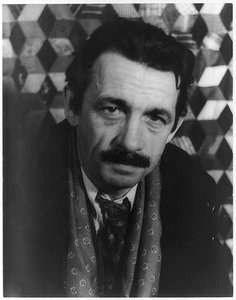
Thomas Hart Benton
1889 - 1975 , United States of America
Quick Facts
- Artistic Movement Or Style: Regionalism
- Date Of Birth: April 15, 1889
- Date Of Death: January 19, 1975
- Full Name: Thomas Hart Benton
- Nationality: American
- Notable Artworks:
- Prodigal Son I
- Flood
- City Building
- The Sheepherder
- Place Of Birth: Neosho, USA

