 Preview
 Send
Send Share
Share
 Details

 Download
 Similars
 X-Ray
X-Ray Diaporama
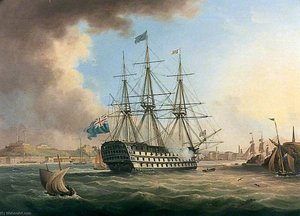
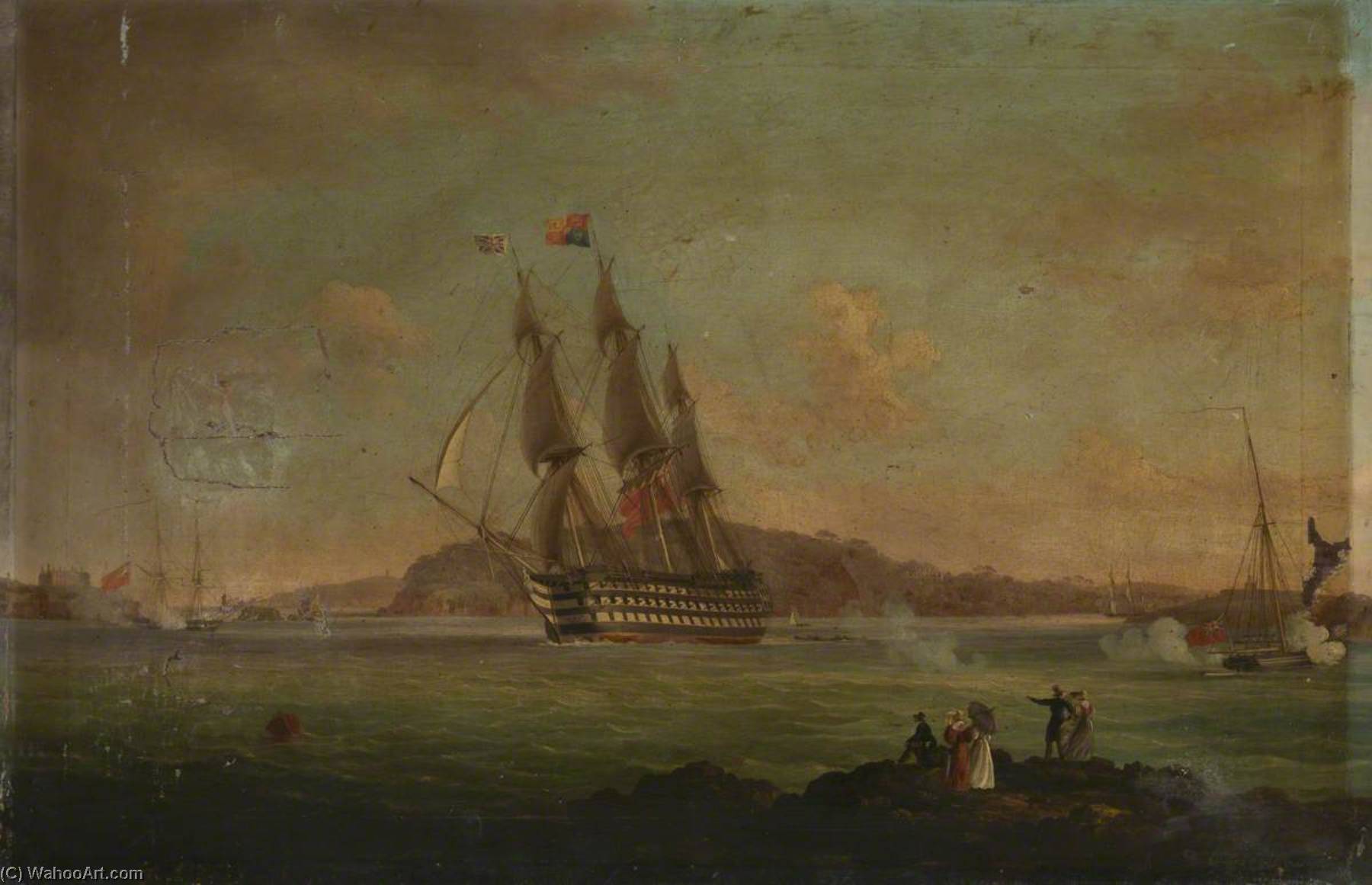
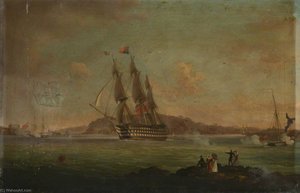
HMS 'Britannia' Sailing from the Hamoaze to Plymouth Sound, with the Duke of Clarence on Board as Lord High Admiral, 27 July 1828
 1828
1828 59.0 x 90.0 cm
 Read More
Giclée / Art Print
Museum-quality giclée or canvas print with fast production and flexible finish options. ( Buy Hand Made Painting Buy Image)




































Pick from our preset sizes that match the artwork's original proportions.

You may enter your own dimensions to fit a specific frame or space. If your selected size does not match the original image's proportions, we will either crop the artwork or extend the image with a mirrored or solid-fill edge. A digital mockup will be sent for your approval before production begins.
Please note that the on-screen preview does not reflect the actual cropping or extension. Only the mockup will accurately show the final composition.
While custom sizes are available, we recommend selecting a dimension from the predefined list to preserve the original proportions.
Worldwide Delivery () in 2 weeks instead of standard 4/5 weeks. (29 August)

Free Worldwide Express Shipping

High-Quality Linen Canvas

Full Shipping Insurance

Customs Tax Refund Guarantee

True Color Matching Guarantee

60-Day Return Policy (Defects Only)

100% Money-Back Guarantee

Bulk Discount Offer
 Glass option is only available in size under 110 CM

HMS 'Britannia' Sailing from the Hamoaze to Plymouth Sound, with the Duke of Clarence on Board as Lord High Admiral, 27 July 1828
Giclée / Art Print
Reproduction Size
-


Total Price
$ 63
Related Artworks









Artist Biography
A Legacy Carved in Salt and Spray
To gaze upon the works of Thomas Lyde Hornbrook is to be transported to an era when the sea was the lifeblood of empires and the horizon held both promise and peril. A master of maritime narrative, Hornbrook did not merely paint ships; he captured the very soul of the Victorian naval spirit. Born in the storied port of Plymouth, England, his connection to the ocean was far more than professional—it was ancestral. As the son of Richards Lyde Hornbrook, an officer in the Royal Marines, the sounds of rigging, the scent of brine, and the disciplined rhythm of naval life were the backdrop of his earliest memories. This deep-seated familiarity with maritime tradition allowed him to imbue his canvases with a level of authenticity that few of his contemporaries could replicate.
His artistic journey was marked by an extraordinary ascent into the highest echelons of British society. Around 1830, Hornbrook secured a position of immense prestige as the marine painter to the Duchess of Kent and her daughter, the future Queen Victoria. This royal patronage acted as a powerful catalyst, propelling his reputation far beyond the docks of Plymouth and into the grand galleries of London. Through this association, he gained access to influential circles that allowed him to exhibit at the prestigious Royal Academy, where his meticulous depictions of naval grandeur earned him widespread acclaim among both the aristocracy and the burgeoning middle class.
The Artistry of Motion and Light
Hornbrook’s technical prowess was defined by a remarkable ability to balance rigid realism with an expressive, atmospheric sensibility. While he possessed a keen eye for the structural complexities of naval architecture—rendering every mast, sail, and hull with exacting detail—he was equally adept at capturing the ephemeral qualities of the natural world. He utilized watercolor and oil with a sophisticated touch, employing light and color to evoke the shifting moods of the Atlantic. Whether depicting the tranquil waters of a sheltered harbor or the churning, turbulent seas of a naval engagement, his work possesses a palpable sense of movement.
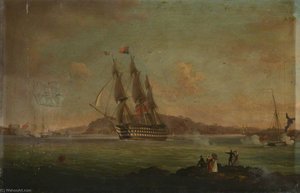
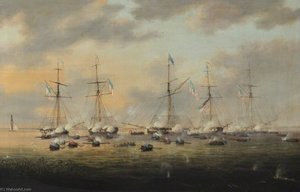
His compositions often focused on the drama of historical maritime events and the majestic presence of specific vessels. In works such as “HMS Pallas Entering Plymouth Harbour” and “HMS Pique Sailing from the Hamoaze to Plymouth Sound,” one can feel the weight of the ships and the rhythmic pulse of the tides. His talent extended to documenting the more chaotic aspects of naval life, such as the intense action seen in “British and American Gunboats in Action on Lake Borgne.” In these pieces, the interplay of smoke, light, and water creates a sensory experience that transcends mere documentation, turning historical record into high art.
A Lasting Impression on Maritime History
The significance of Thomas Lyde Hornbrook lies in his role as a visual chronicler of a transformative period in British history. His paintings serve as vital windows into the 19th-century maritime world, preserving the grandeur of the Royal Navy during its zenith. Beyond the technical skill displayed in his brushwork, his work carries a profound historical weight, capturing the transition from the age of sail to a more modern era of naval warfare and commerce.
Today, Hornbrook’s legacy continues to resonate through collections held in esteemed institutions, where his ability to evoke nostalgia and awe remains undiminished. He remains a foundational figure in the genre of marine painting, remembered not just as a painter of ships, but as an artist who understood the profound emotional connection between humanity and the vast, unpredictable sea. His life and work stand as a testament to a time when the mastery of the waves was mirrored by the mastery of the brush.
Quick Facts
- Artistic Movement Or Style: Marine Art
- Artists Or Movements Influenced By This Artist: ['Romanticism']
- Artists Who Influenced This Artist:
- William Turner
- John Constable
- Date Of Birth: May 6, 1780
- Date Of Death: August 17, 1855
- Full Name: Thomas Lyde Hornbrook
- Nationality: British
- Notable Artworks:
- HMS Pallas Entering Plymouth Harbour
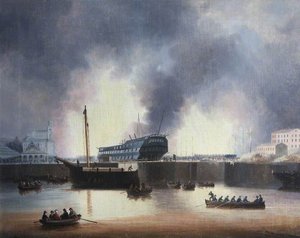
- Dockyard Fire, 1840
- Place Of Birth: Plymouth, England