

 Preview
 Send
Send Share
Share
 Details

 Download
 Similars
 X-Ray
X-Ray Diaporama
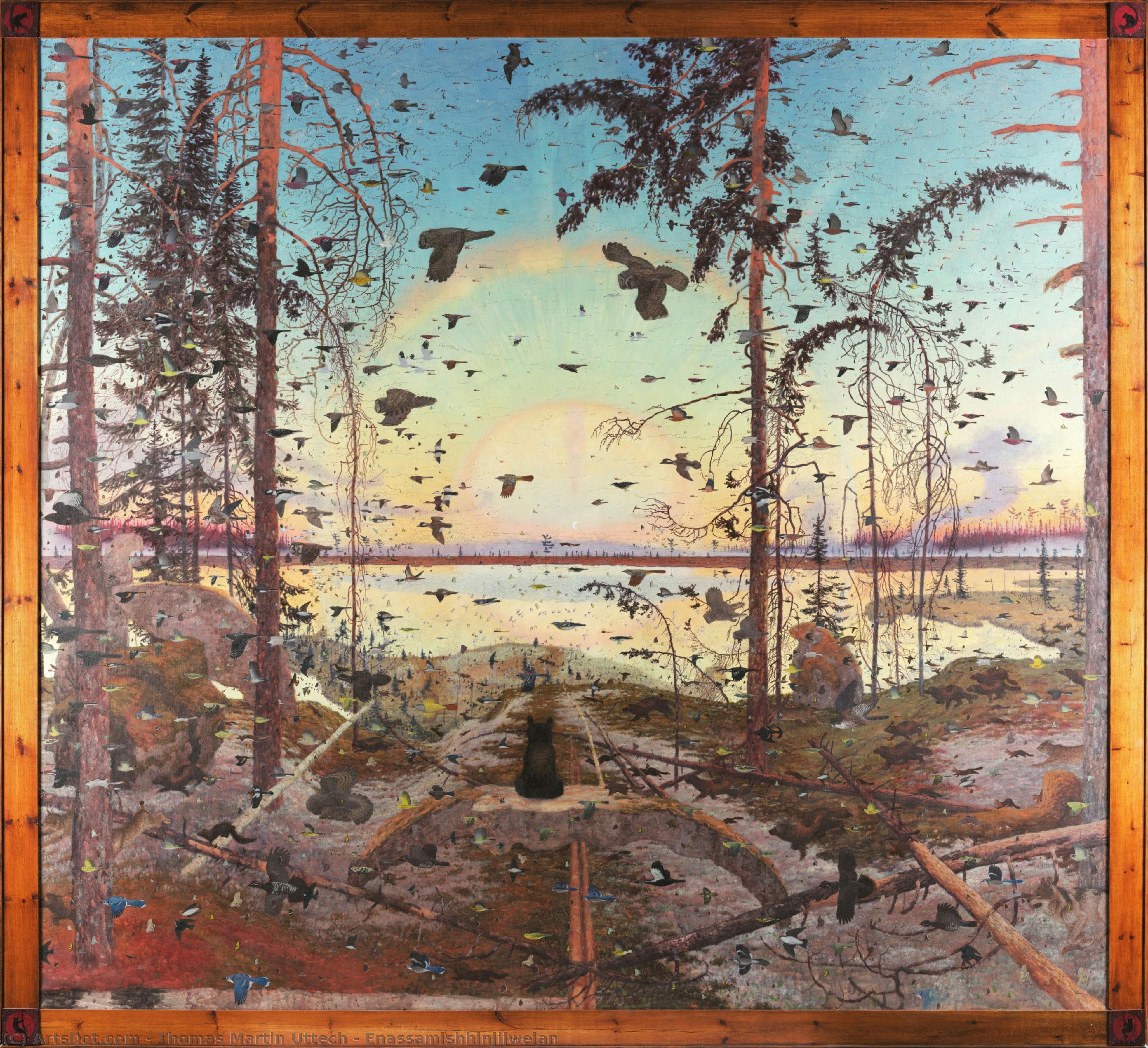
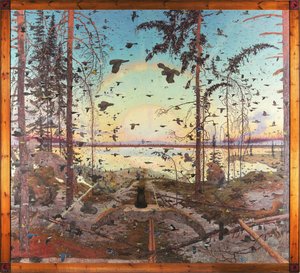
Enassamishhinjijweian
 Acrylic On Canvas
- WallArt
- Contemporary Landscape
 2009
2009 261.0 x 284.0 cm
 Crystal Bridges Museum of American Art
 Read More
Hand Made Oil Reproduction
Hand-painted oil on canvas in your size and frame, made to order by our artists. ( Buy Print Buy Image)




P118B $10

P118H $10

P118W $10

P438Z $10

P508JH $12

P508YH $12

P805H $10

P805Z $10

P919BZ $10

P919G $10

P919XJ $10

P959ZH $10

P968JZ $12

W106C $8

W218G $10

W218JH $8

W218Y $10

W307PJ $10

W316G $10

W316PJ $8

W316Y $10

W398PJ $8

W4111J $10

W500HY $15

W500JH $15

W692G $12

W849H $8

W940BG $15

W953PJ $8




Pick from our preset sizes that match the artwork's original proportions.

You may enter your own dimensions to fit a specific frame or space. If your selected size does not match the original image's proportions, we will either crop the artwork or extend the painting with additional hand-painted elements. A digital mockup will be sent for your approval before production begins.
Please note that the on-screen preview does not reflect the actual cropping or extension. Only the mockup will accurately show the final composition.
While custom sizes are available, we recommend selecting a dimension from the predefined list to preserve the original proportions.
After order, ArtsDot.com team will email client for instructions and provide a mockup preview
Worldwide Delivery () in 3/4 weeks instead of standard 5 weeks. (17 August). No compromise on quality.

Free Worldwide Express Shipping

High-Quality Linen Canvas

Full Shipping Insurance

Customs Tax Refund Guarantee

True Color Matching Guarantee

60-Day Return Policy (Defects Only)

100% Money-Back Guarantee

Bulk Discount Offer
 Glass option is only available in size under 110 CM

Enassamishhinjijweian
Reproduction Medium
Reproduction Size
-


Total Price
$ 263
Artwork Description
Related Artworks


Artist Biography
Ursula von Rydingsvard: Sculpting the Echoes of Experience
Born in Germany during a tumultuous period – 1942, a year etched in history by war and displacement – Ursula von Rydingsvard’s life has been profoundly shaped by experiences that resonate deeply within her art. Her early years were marked by instability and upheaval; she was born to Polish and Ukrainian peasant farmers who found themselves caught in the brutal machinery of Nazi occupation. This formative period, witnessing firsthand the horrors of forced labor and the constant movement between displacement camps, instilled a sense of vulnerability and resilience that would become central themes in her work. Immigration to Plainville, Connecticut, in 1950 offered a new beginning, yet the shadows of her past continued to inform her artistic vision. Von Rydingsvard’s journey into art wasn't a sudden decision but rather a gradual unfolding, nurtured by exposure to classical training and later, a deliberate rejection of the prevailing minimalist aesthetic that dominated the art world in the 1970s.
Her formal education began at Columbia University, where she earned a Master’s degree in Studio Art. It was there that she encountered the work of Robert Henri, whose emphasis on direct observation and emotional expression proved pivotal to her artistic development. However, it was her subsequent exploration of sculpture, particularly with cedar wood, that truly defined her unique style. She recognized within this seemingly humble material the potential for both monumental grandeur and quiet introspection – a duality mirroring the complexities of her own life experiences. Unlike many sculptors of her time who favored sleek, geometric forms, von Rydingsvard embraced irregularity, asymmetry, and an almost brutal honesty in her approach. This deliberate departure from prevailing trends established her as a singular voice within contemporary sculpture.
- Cedar’s Significance: Von Rydingsvard's choice of cedar is not arbitrary; it represents a connection to her family history, evoking the forests and landscapes of her childhood in Europe. The wood’s inherent qualities – its strength, its grain, its capacity for both growth and decay – resonate with themes of memory, loss, and resilience.
- Beyond Autobiography: While acknowledging the influence of her personal experiences, von Rydingsvard consistently resists a purely autobiographical approach to art. Her sculptures are often imbued with ambiguity, inviting viewers to project their own interpretations onto the work.
- Expanding Mediums: Throughout her career, she has experimented with a diverse range of materials – bronze, animal intestines (a particularly poignant choice given her early life), textiles, and delicate handmade paper – demonstrating a willingness to push boundaries and explore new possibilities.
The Sculptor’s Process & Philosophical Underpinnings
Von Rydingsvard's process is characterized by a meticulous attention to detail combined with an intuitive understanding of the materials she works with. She often begins with large, roughly hewn blocks of cedar, patiently shaping and manipulating them over extended periods. This slow, deliberate approach reflects her belief that art should be rooted in a deep connection to the material itself. Her sculptures are rarely finished in a polished or idealized manner; instead, they retain traces of their raw origins – evidence of the tools used, the marks left by her hands, and the inherent imperfections of the wood.
Philosophically, von Rydingsvard’s work engages with themes of memory, loss, and the passage of time. Her sculptures are not simply representations of objects or figures; they are embodiments of experience – echoes of past events and emotions. The monumental scale of many of her works creates a sense of awe and contemplation, inviting viewers to consider their own relationship to history and the enduring power of human memory. She frequently speaks about the importance of “listening” to the material, allowing it to guide her creative process and reveal its hidden potential.
Recognition & Legacy
Ursula von Rydingsvard’s work has garnered widespread recognition throughout her career. She is represented in over 30 museum collections internationally, including the National Gallery of Art in Washington D.C., and her sculptures have been exhibited extensively. Her achievements have been formally acknowledged with numerous awards, most notably the International Sculpture Center Lifetime Achievement Award in 2014 and the NMWA’s Lifetime Achievement Award for Excellence in the Arts in 2019. These accolades underscore her significant contribution to contemporary sculpture and her enduring influence on generations of artists.
Beyond her individual accomplishments, von Rydingsvard's work has contributed to a broader dialogue about the role of art in confronting difficult histories and exploring complex emotional landscapes. Her sculptures serve as powerful reminders of the human capacity for both suffering and resilience – qualities that are particularly relevant in our own time. She continues to live and work in New York City, Brooklyn, where she remains dedicated to her craft, shaping the echoes of experience into monumental works of art.
A Reflection on Displacement & Resilience
It’s crucial to understand that while many of her sculptures don't explicitly depict traumatic events, they are deeply informed by her early life. The fragmented forms, the sense of instability and movement, can be interpreted as reflections of displacement – both physical and emotional. The use of cedar, a wood associated with forests and stability, creates a poignant contrast to this underlying sense of vulnerability. Von Rydingsvard’s art is not simply about depicting the past; it's about grappling with its enduring presence in the present.
Her work stands as a testament to the power of art to transform personal experience into universal themes. Von Rydingsvard’s sculptures invite us to contemplate our own histories, our own vulnerabilities, and our capacity for resilience – qualities that are essential for navigating the complexities of the human condition.
thomas martin uttech
1942 - , United States of America
Quick Facts
- Artistic Movement Or Style: Abstract Sculpture
- Artists Or Movements Influenced By This Artist: ['Minimalism']
- Artists Who Influenced This Artist:
- Henry Moore
- Barbara Hepworth
- Date Of Birth: 1942
- Date Of Death: Living
- Full Name: Ursula von Rydingsvard
- Nationality: American
- Notable Artworks:
- Cedar Variations
- The Tree
- Roots
- Place Of Birth: Germany
Related Articles
Marianne North's Masterpieces: 25 Botanical Paintings That Bloom With Adventure | ArtsDot
Journey through the vibrant world of Marianne North’s botanical paintings! Explore 25 iconic artworks from this Victorian artist, celebrating exotic flora & travel. Find museum-quality reproductions and curated decor ideas at ArtsDot.com.

Grant Wood & American Regionalism: Identity, Myth & the Rural Landscape
Explore the world of Grant Wood & American Regionalism with ArtsDot. Discover the symbolism behind 'American Gothic', recurring themes, and the movement's lasting impact on art history. High-quality reproductions available.

American Realism's Defining Works: 10 Masterpieces for Your Home
Explore 10 defining American Realism masterpieces – Hopper, Homer & more. Discover the stories behind these iconic paintings and bring timeless art to your home with ArtsDot's museum-quality reproductions. Explore the full collection online.

American Regionalism: A Crucible of Identity – Exploring Themes of Place, Labor & Social Commentary
Explore American Regionalism's powerful depiction of the American heartland during the Great Depression. Discover Grant Wood, Thomas Hart Benton & more. Expert analysis & high-quality art reproductions at ArtsDot.

Echoes of Place: Regionalism & American Identity in Interwar Art
Explore the rise of American Regionalism in interwar art! Discover Grant Wood, Thomas Hart Benton & the movement's impact on American identity. Expert analysis & historical context.

