 Preview
 Send
Send Share
Share
 Details

 Download
 Similars
 X-Ray
X-Ray Diaporama
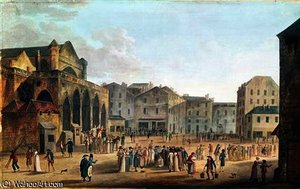
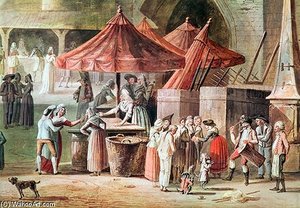
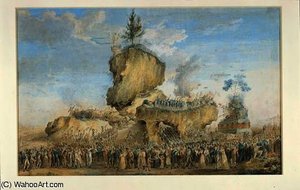
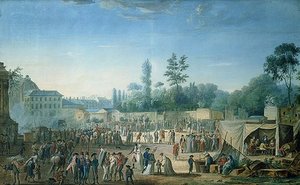
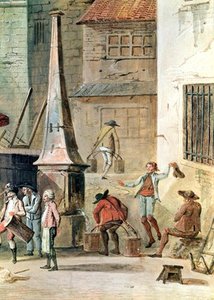
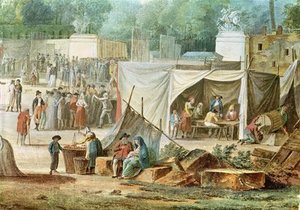
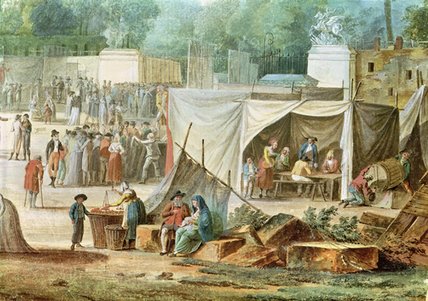
View Of The Tuileries
 Read More
Hand Made Oil Reproduction
Hand-painted oil on canvas in your size and frame, made to order by our artists. ( Buy Print Buy Image)




































Pick from our preset sizes that match the artwork's original proportions.

You may enter your own dimensions to fit a specific frame or space. If your selected size does not match the original image's proportions, we will either crop the artwork or extend the painting with additional hand-painted elements. A digital mockup will be sent for your approval before production begins.
Please note that the on-screen preview does not reflect the actual cropping or extension. Only the mockup will accurately show the final composition.
While custom sizes are available, we recommend selecting a dimension from the predefined list to preserve the original proportions.
After order, ArtsDot.com team will email client for instructions and provide a mockup preview
Worldwide Delivery () in 3/4 weeks instead of standard 5 weeks. (19 August). No compromise on quality.

Free Worldwide Express Shipping

High-Quality Linen Canvas

Full Shipping Insurance

Customs Tax Refund Guarantee

True Color Matching Guarantee

60-Day Return Policy (Defects Only)

100% Money-Back Guarantee

Bulk Discount Offer
 Glass option is only available in size under 110 CM

View Of The Tuileries
Reproduction Medium
Reproduction Size
-


Total Price
$ 488
Related Artworks
Artist Biography
Thomas Naudet: A Parisian Painter Caught in the Shadow of Revolution
The early 19th century witnessed a vibrant, yet turbulent, artistic landscape across Europe, and within that milieu emerged Thomas Naudet (1773-1810), a French painter whose career, tragically cut short by the Napoleonic Wars, nonetheless left behind a significant body of work reflecting both the Rococo elegance of his earlier years and the burgeoning Romanticism taking hold. Born in Paris, Naudet’s artistic journey began with a formal training that exposed him to the established styles of the time, but it was his relocation to Normandy – specifically, Cherbourg – where he established himself as a prominent figure, producing paintings that captured the essence of rural life and social interaction.
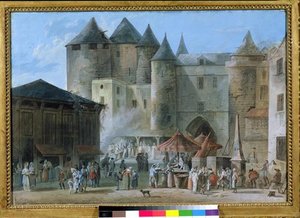
Naudet's early style is often characterized by a distinctly Rococo influence. His works from the 1790s and early 1800s frequently depict scenes of bustling markets – such as “The Place De L’apport-paris In Front Of The Grand” – brimming with activity, vibrant colors, and an almost theatrical quality. These paintings aren't merely representations of commerce; they are meticulously observed studies of human behavior, capturing the nuances of social interaction and the energy of daily life. He skillfully employed loose brushstrokes and a bright palette, hallmarks of the Rococo tradition, to create a sense of movement and immediacy within these crowded scenes. The detail with which he rendered fabrics, faces, and objects speaks to his keen eye for observation and his ability to translate visual information onto canvas.
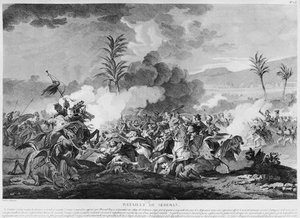
However, as the decade progressed, Naudet’s style began to evolve, subtly incorporating elements of Romanticism. This shift is particularly evident in his later works, notably “Battle Of Sediman On 8th October,” a dramatic depiction of a military engagement. While retaining some of the meticulous detail characteristic of his earlier work, this painting demonstrates a greater emphasis on emotion and atmosphere. The composition is more dynamic, with a heightened sense of drama and a darker palette reflecting the turmoil of war. The figures are rendered with a raw intensity that anticipates the emotional depth often associated with Romantic art.
Beyond his individual style, Naudet’s career was inextricably linked to the political and social upheavals of the time. He served as a porter at the Musée des Monuments Français under the Consulate and Empire, a role that exposed him to a vast collection of antiquities and artworks, undoubtedly influencing his artistic sensibilities. His involvement with the museum also provided him with valuable connections within the art world. However, his career was ultimately disrupted by the rise of Napoleon and the subsequent political instability. Despite this turbulent backdrop, Naudet continued to paint prolifically, producing a diverse range of subjects – landscapes, portraits, and scenes of rural life – reflecting both his artistic development and the changing social landscape of France.
The Legacy of Musée Thomas-Henry
Naudet’s most enduring legacy resides within the collection amassed at the Musée Thomas-Henry in Normandy. This privately owned gallery, established by Thomas Henry, became a significant repository for Naudet's work and that of other artists associated with the region. The museum offers a comprehensive overview of his artistic output, showcasing the breadth of his subject matter and stylistic evolution. The collection includes numerous paintings depicting rural scenes, portraits, and historical subjects, providing invaluable insights into the artist’s oeuvre.
Notably, the Musée Thomas-Henry also houses a substantial collection of prints by Naudet, demonstrating his skill as an engraver and publisher. These prints – often signed with his distinctive “Naudet marchand d'estampes au Louvre” signature – offer further evidence of his artistic versatility and his engagement with the printmaking industry. The museum’s holdings represent a crucial resource for scholars studying Naudet’s career and artistic development.
Connections to Other Artists
Thomas Naudet’s artistic journey was shaped by interactions with other prominent artists of his time. His association with Jean-Auguste-Dominique Ingres, particularly through the latter's portrait painting, reveals a fascinating exchange of ideas and techniques. Ingres, a leading figure in the Neoclassical movement, admired Naudet’s early Rococo style, while Naudet benefited from Ingres’s later influence as he moved towards a more Romantic aesthetic. The relationship between these two artists highlights the dynamic interplay of artistic styles and influences within 19th-century France.
Furthermore, his work demonstrates connections to other artists working in Normandy during this period, suggesting a shared artistic environment and a collective engagement with the region’s landscape and culture. Studying Naudet's paintings alongside those of his contemporaries provides valuable insights into the broader artistic context of 19th-century France.
A Tragic End
Thomas Naudet’s life was tragically cut short in 1810, just a few years after the end of the Napoleonic Wars. The exact circumstances surrounding his death remain somewhat obscure, but it is believed that he succumbed to illness shortly after returning to Paris. Despite his untimely demise, Naudet's artistic legacy continues to be appreciated for its skillful observation, vibrant colors, and evocative depictions of everyday life. His paintings offer a valuable window into the social and cultural landscape of early 19th-century France, reminding us of the enduring power of art to capture both the beauty and the turbulence of human experience.
thomas naudet
1773 - 1810
Quick Facts
- Artistic Movement Or Style: Rococo, French Painting
- Artists Or Movements Influenced By This Artist: ['Naudet, Charles']
- Artists Who Influenced This Artist: ['David']
- Date Of Birth: 1773
- Date Of Death: 1810
- Full Name: Thomas Naudet
- Nationality: French
- Notable Artworks:
- The Place De L’apport-paris
- Battle Of Sediman
- Place Of Birth: Paris, France