

 Preview
 Send
Send Share
Share
 Details

 Download
 Similars
 X-Ray
X-Ray Diaporama
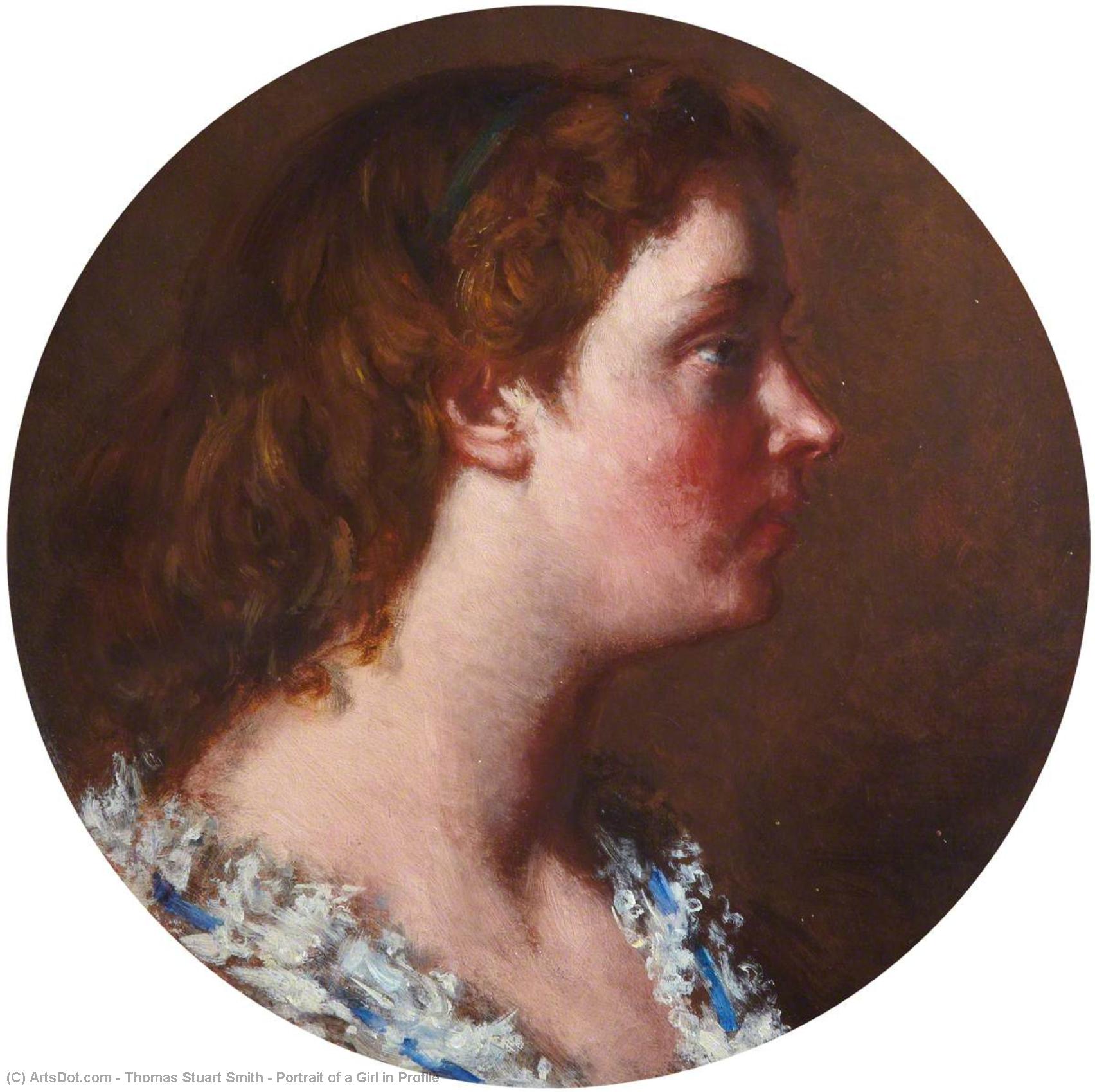
Portrait of a Girl in Profile
 Oil On Canvas
- WallArt
- Romanticism
 19th Century
 26.0 x 26.0 cm
 The Stirling Smith Art Gallery - Museum
 Read More
Purchase a high-resolution, enhanced digital image, far superior to the online preview.
Each file is meticulously prepared by our in-house specialists using advanced tools and expert manual retouching. We ensure every image has exceptional clarity, precise color accuracy, and fine detail.
The final file is delivered via email within 72 hours, optimized for immediate use in professional, editorial, and print environments. This is the same quality trusted by top-tier design studios, publishers, and galleries.
Digital Image
Download a high-resolution file for personal display, printing, and creative projects. ( Buy Print Buy Hand Made Painting)
Included in Every Digital Image Order
Expert Digital Delivery, Guaranteed
When you choose ArtsDot.com, you're not just getting an image - you're receiving a professionally enhanced digital artwork, crafted with precision and backed by a satisfaction guarantee. Here's everything that comes with your order, automatically:

Fast Email Delivery
Your high-resolution digital image file will be emailed to you within 72 hours of ordering - ready for immediate use.

AI-Enhanced Digital File
Your artwork is professionally optimized using advanced AI tools and manual editing, ensuring maximum detail, clarity, and color accuracy.

Free Lifetime Re-Delivery
Accidentally deleted or lost your file? No worries - we'll resend it to you anytime, free of charge.

No Import Fees - Ever
Enjoy your artwork instantly with zero customs, duties, or delivery fees - digital downloads are always tax-free.

Color Accuracy Guarantee
We ensure your digital image reflects the original colors as closely as possible using professional tools and color management.

60-Day Satisfaction Guarantee
If you're not satisfied with your digital image, we'll revise it or refund 100% within 60 days - no questions asked.

100% Money-Back Guarantee
Not satisfied? Get a full refund within 60 days of receiving your digital file - no questions asked.

Bulk Order Discounts
Buy 3 images, save 10% - Buy 5, save 15% - Buy 10+, save 20%. Great for creative projects, galleries, and agencies.
Collectible Description
An Intimate Encounter with the Past
In the quiet corners of the Stirling Smith Art Gallery, there exists a moment frozen in time, captured through the delicate brushwork of Thomas Stuart Smith. His Portrait of a Girl in Profile is not merely a depiction of a subject, but an invitation into a private, whispered history. The painting presents us with a young woman, her vibrant red hair serving as a warm, luminous focal point against the more muted tones of the composition. As she turns her head, her gaze seems to catch the viewer in a fleeting moment of recognition, bridging the gap between the nineteenth century and our contemporary world. This sense of immediate connection is what makes such a piece so profoundly captivating for those who seek art that breathes with life.
The technique employed by Smith reveals a masterly command over the medium of oil on canvas. There is a soft, almost ethereal quality to the way light interacts with the subject's features, particularly in the subtle highlights along her profile and the gentle texture of her hair. The inclusion of a delicate blue ribbon provides a striking chromatic contrast, a small but significant splash of color that draws the eye across the 26 x 26 cm surface. This meticulous attention to detail—the way the pigment builds to create depth and the careful blending of shadows—demonstrates the artist's ability to transform a small-scale work into an expansive emotional experience.
A Symphony of Romanticism and Domesticity
To understand this portrait, one must look toward the era in which Thomas Stuart Smith worked. Living through the transformative years of the Victorian period, Smith occupied a unique space between the grand, sweeping narratives of Romanticism and the tender, grounded observations of domestic life. This painting embodies that duality perfectly. While the profile view carries a certain classical, idealized elegance reminiscent of much older traditions, the subject matter feels deeply personal and intimate. It lacks the stiff formality often found in aristocratic portraiture, opting instead for a sense of quiet, everyday grace.
For the discerning collector or interior designer, this artwork offers a versatile elegance. Its compact dimensions make it an ideal choice for creating a curated gallery wall or as a singular, poignant accent in a sophisticated study or reading nook. The piece does not demand attention through sheer size, but rather commands respect through its nuanced beauty and historical weight. It serves as a timeless anchor, bringing a sense of heritage and soulful tranquility to any space it inhabits.
The Emotional Resonance of the Profile
There is an inherent mystery in the profile view; by obscuring part of the subject's face, Smith allows the viewer's imagination to complete the story. We are left to wonder about the thoughts behind that steady gaze and the life lived beyond the frame. This ambiguity creates a lasting emotional impact, fostering a sense of nostalgia and longing that is characteristic of the finest portraiture. The painting acts as a window into a lost world, offering a moment of stillness in an increasingly frenetic age.
Choosing a high-quality reproduction of this work allows one to possess not just a beautiful object, but a piece of artistic legacy. It is an opportunity to surround oneself with the warmth of Smith's vision—a vision that celebrates the quiet beauty found in the simple, the small, and the profoundly human.
Related Artworks



Artist Biography
The Quiet Grandeur of Thomas Stuart Smith
Thomas Stuart Smith (1815–1869) remains a singular and evocative figure in the tapestry of Scottish art history, a painter who possessed the rare ability to bridge the sweeping emotional heights of Romanticism with the tender, grounded intimacy of everyday observation. Born into a life shaped by unconventional circumstances—as the illegitimate nephew of Alexander Smith, whose estate at Glassing all near Dunblane provided a backdrop of intellectual and landed prestige—Smith’s early years were marked by a cosmopolitan breadth. His formative travels through France and his subsequent return to England allowed him to absorb the shifting currents of European aesthetics, fostering a perspective that was as much about scientific inquiry as it was about artistic passion.
His life and work were deeply embedded in the transformative atmosphere of the Victorian era. While many of his contemporaries sought to capture the monumental shifts of industrialization through heroic narratives, Smith turned his gaze inward and toward the hearth. He found profound meaning in the subtle nuances of domesticity, capturing Welsh interiors bathed in a soft, diffused light and kitchens brimming with the vibrant textures of fresh produce. His canvases served as windows into the human experience, where the psychological depth of a portrait was just as significant as the atmospheric weight of a landscape.
A Synthesis of Realism and Romanticism
The brilliance of Smith’s technique lies in his masterful synthesis of seemingly opposing movements. He was deeply moved by the Pre-Raphaelite Brotherhood, drawing inspiration from the meticulous botanical accuracy and atmospheric precision championed by masters such as John Everett Millais and William Holman Hunt. This influence is visible in his commitment to truthful observation; he approached the natural world with a keen eye for detail that honored the integrity of every leaf, shadow, and fabric fold.
Yet, beneath this layer of meticulous realism lay a heart steeped in Romanticism. Smith did not merely document reality; he sought to evoke mood. Through innovative experimentation with light and perspective, he infused his scenes with a sense of longing and sublime emotion. His work often oscillates between the following elements:
- The Intimate: A focus on the quiet, unobserved moments of daily life and social commentary.
- The Atmospheric: The use of light to create a sense of temporal depth and emotional resonance.
- The Observational: A rigorous dedication to the textures and botanical truths of the natural world.
Legacy and Philanthropic Spirit
Beyond his contributions to the canvas, Thomas Stuart Smith left an indelible mark on the cultural landscape of Scotland through his commitment to education and the preservation of art. His legacy is perhaps most tangibly felt through his role as the founder of the Stirling Smith Art Gallery and Museum. This act of philanthropy ensured that the beauty he sought to capture would remain accessible to future generations, cementing his name not just as a creator of images, but as a guardian of heritage.
In the history of nineteenth-century art, Smith stands as a bridge between eras. He navigated the transition from the grand, idealized visions of the early century to the more grounded, socially conscious realism that would define much of the later Victorian period. His ability to find the extraordinary within the ordinary continues to resonate, reminding us that the most profound truths are often found in the quietest corners of our existence.
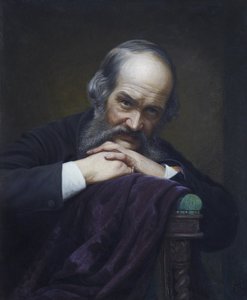
Thomas Stuart Smith
1815 - 1869
Quick Facts
- Artistic Movement Or Style: Romanticism
- Date Of Birth: 1815
- Date Of Death: 1869
- Full Name: Thomas Stuart Smith
- Nationality: Scottish
- Notable Artworks:
- Sun through the Mist
- Work in the Kitchen
- Place Of Birth: Scotland

