

 Preview
 Send
Send Share
Share
 Details

 Download
 Similars
 X-Ray
X-Ray Diaporama
 Stats
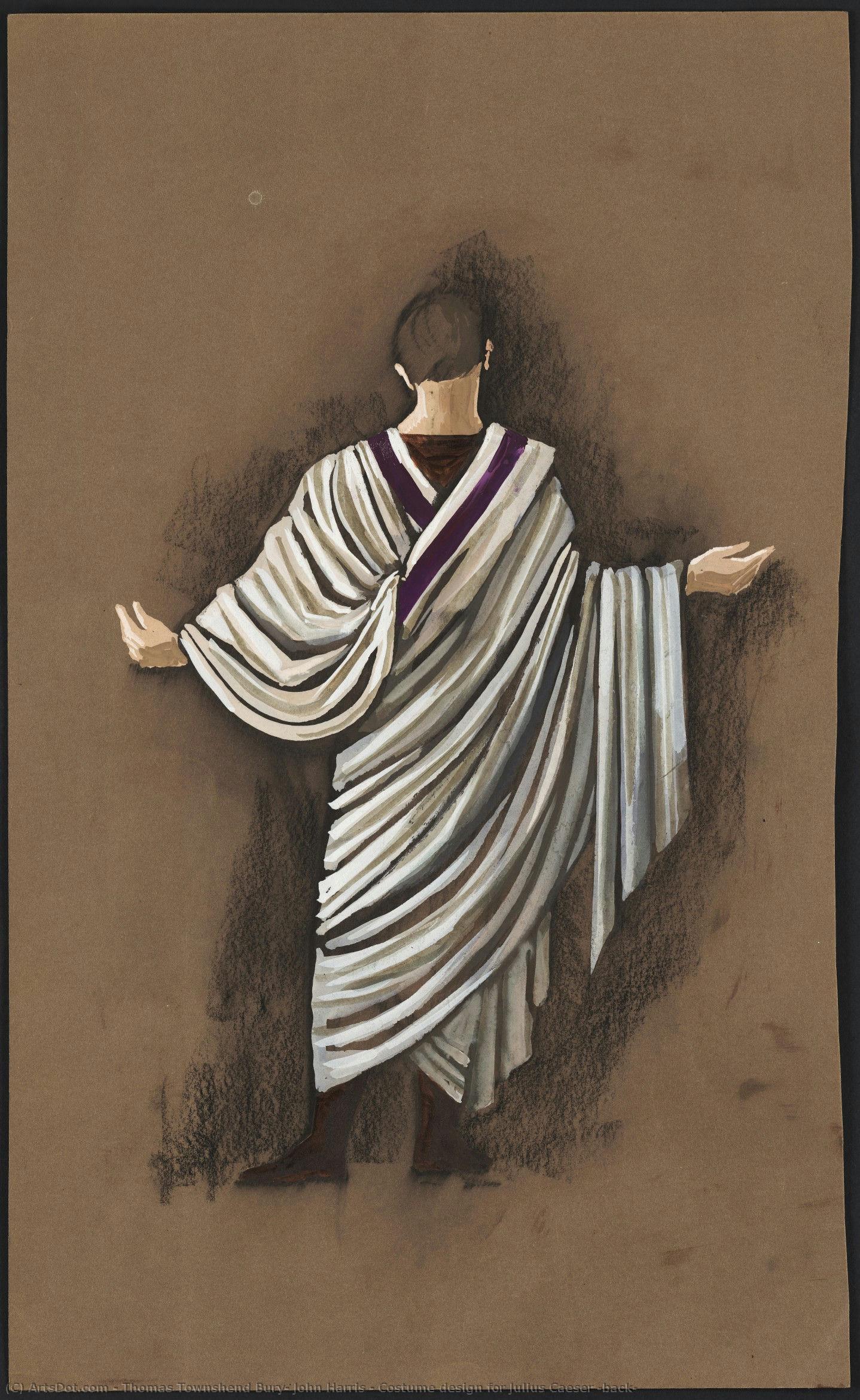
StatsCostume design for Julius Caeser (back)
 1963
1963 33.0 x 52.0 cm
 Royal Shakespeare Company
 Read More
Purchase a high-resolution, enhanced digital image, far superior to the online preview.
Each file is meticulously prepared by our in-house specialists using advanced tools and expert manual retouching. We ensure every image has exceptional clarity, precise color accuracy, and fine detail.
The final file is delivered via email within 72 hours, optimized for immediate use in professional, editorial, and print environments. This is the same quality trusted by top-tier design studios, publishers, and galleries.
Digital Image
Download a high-resolution file for personal display, printing, and creative projects. ( Switch to Print Buy Hand Made Painting)
Included in Every Digital Image Order
Expert Digital Delivery, Guaranteed
When you choose ArtsDot.com, you're not just getting an image - you're receiving a professionally enhanced digital artwork, crafted with precision and backed by a satisfaction guarantee. Here's everything that comes with your order, automatically:

Fast Email Delivery
Your high-resolution digital image file will be emailed to you within 72 hours of ordering - ready for immediate use.

AI-Enhanced Digital File
Your artwork is professionally optimized using advanced AI tools and manual editing, ensuring maximum detail, clarity, and color accuracy.

Free Lifetime Re-Delivery
Accidentally deleted or lost your file? No worries - we'll resend it to you anytime, free of charge.

No Import Fees - Ever
Enjoy your artwork instantly with zero customs, duties, or delivery fees - digital downloads are always tax-free.

Color Accuracy Guarantee
We ensure your digital image reflects the original colors as closely as possible using professional tools and color management.

100-Day Satisfaction Guarantee
If you're not satisfied with your digital image, we'll revise it or refund 100% within 100 days - no questions asked.

100% Money-Back Guarantee
Not satisfied? Get a full refund within 100 days of receiving your digital file - no questions asked.

Bulk Order Discounts
Buy 3 images, save 10% - Buy 5, save 15% - Buy 10+, save 20%. Great for creative projects, galleries, and agencies.
Related Artworks









Artist Biography
A Collaborative Vision: Thomas Townshend Bury & John Harris and the Rise of Railway Art
The mid-19th century was a period of unprecedented transformation in Britain, driven by the relentless expansion of the railway network. While celebrated engineers and industrialists often take center stage when recounting this era, it’s crucial to acknowledge the artists who visually documented – and actively promoted – this revolution. Among these figures stand Thomas Townshend Bury (1811-1882) and John Harris (1809-1894), a collaborative duo whose series of lithographs offered a compelling glimpse into the burgeoning world of rail travel. Their work wasn’t merely representational; it was a carefully constructed narrative designed to inspire confidence in, and generate excitement around, the London and South Western Railway.
Thomas Townshend Bury, a skilled landscape painter, possessed an eye for capturing the grandeur of the English countryside. John Harris, on the other hand, was a master lithographer – a relatively new medium at the time that allowed for detailed reproduction and wider dissemination of images. Their partnership proved remarkably fruitful. While biographical details about both artists remain somewhat scarce, their collaboration centered around a commission to produce prints showcasing the London and South Western Railway line, which connected London to Southampton. Published in 1837, these lithographs weren’t intended as independent artistic statements but rather as powerful tools for advertising and public relations.
Documenting Progress: The London & South Western Railway Series
The prints created by Bury and Harris were more than just picturesque scenes; they were carefully staged representations of progress. Bury's landscapes provided the scenic backdrop, while Harris’ lithographic skill brought a remarkable level of detail to the locomotives, stations, and tunnels that punctuated these vistas. Plate 5, “The Entrance to the Tunnel at Watford,” exemplifies this approach. The image doesn’t simply depict an engineering feat; it conveys a sense of dynamism and power. The tunnel entrance becomes a symbolic gateway to modernity, suggesting both the overcoming of geographical obstacles and the promise of faster, more efficient travel.
It's important to understand the context in which these prints were created. The railway was still a relatively new technology, and public perception wasn’t universally positive. Concerns about safety, environmental impact, and social disruption were widespread. Bury and Harris’ work directly addressed these anxieties by presenting the railway as a harmonious integration of human ingenuity and natural beauty. The scenes are often populated with figures – passengers, workers, and onlookers – who appear calm and optimistic, reinforcing the idea that rail travel was safe, convenient, and beneficial for all.
Technique & Influence: The Power of Lithography
John Harris’ mastery of lithography played a pivotal role in the success of this project. Unlike earlier printmaking techniques like engraving or etching, lithography allowed for greater freedom of expression and a more painterly quality. This was particularly advantageous for Bury, whose landscapes were characterized by subtle tonal variations and atmospheric effects. The process involved drawing directly onto stone with a greasy crayon, which then repelled ink in those areas during printing. This resulted in prints that possessed a unique softness and richness, closely resembling watercolor paintings.
The choice of lithography also had practical implications. It was a relatively inexpensive method of reproduction, allowing for the creation of large print runs – essential for widespread distribution as promotional material. The series quickly gained popularity, appearing in publications, exhibition spaces, and private collections. While Bury and Harris weren’t necessarily striving to create high art in the traditional sense, their work had a significant impact on public perception of the railway and helped to shape the visual culture of the Victorian era.
Legacy & Historical Significance
Although not widely known today, Thomas Townshend Bury and John Harris occupy an important niche in the history of British art. Their collaboration represents a fascinating intersection of artistic skill, technological innovation, and commercial ambition. They were pioneers in using visual media to promote a new form of transportation, effectively shaping public opinion and contributing to the railway’s rapid expansion.
Their prints offer valuable insights into the social, economic, and cultural landscape of Victorian Britain. They remind us that art isn't always created in isolation; it can be deeply intertwined with political agendas, technological advancements, and the broader forces shaping society. The work of Bury and Harris stands as a testament to the power of visual communication and its ability to transform perceptions – and ultimately, to drive progress.

thomas townshend bury, john harris
1811 - 1882 , United Kingdom
Quick Facts
- Artistic Movement Or Style: Victorian Art
- Date Of Birth: 1811
- Date Of Death: 1882
- Full Name: Thomas Townshend Bury & John Harris
- Nationality: British
- Notable Artworks: ['Plate 5: The entrance to the tunnel at Watford']
- Place Of Birth: London, United Kingdom