 Preview
 Send
Send Share
Share
 Details

 Download
 Similars
 X-Ray
X-Ray Diaporama
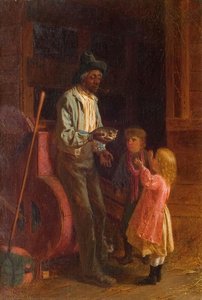
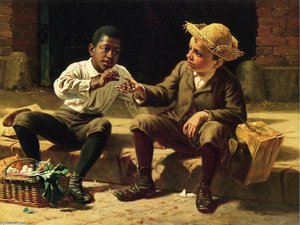
The Kitten (or Pompey and the Kitten)


 Read More
Hand Made Oil Reproduction
Hand-painted oil on canvas in your size and frame, made to order by our artists. ( Buy Print Buy Image)




P118B $10

P118H $10

P118W $10

P438Z $10

P508JH $12

P508YH $12

P805H $10

P805Z $10

P919BZ $10

P919G $10

P919XJ $10

P959ZH $10

P968JZ $12

W106C $8

W218G $10

W218JH $8

W218Y $10

W307PJ $10

W316G $10

W316PJ $8

W316Y $10

W398PJ $8

W4111J $10

W500HY $15

W500JH $15

W692G $12

W849H $8

W940BG $15

W953PJ $8




Pick from our preset sizes that match the artwork's original proportions.

You may enter your own dimensions to fit a specific frame or space. If your selected size does not match the original image's proportions, we will either crop the artwork or extend the painting with additional hand-painted elements. A digital mockup will be sent for your approval before production begins.
Please note that the on-screen preview does not reflect the actual cropping or extension. Only the mockup will accurately show the final composition.
While custom sizes are available, we recommend selecting a dimension from the predefined list to preserve the original proportions.
After order, ArtsDot.com team will email client for instructions and provide a mockup preview
Worldwide Delivery () in 3/4 weeks instead of standard 5 weeks. (16 August). No compromise on quality.

Free Worldwide Express Shipping

High-Quality Linen Canvas

Full Shipping Insurance

Customs Tax Refund Guarantee

True Color Matching Guarantee

60-Day Return Policy (Defects Only)

100% Money-Back Guarantee

Bulk Discount Offer
 Glass option is only available in size under 110 CM

The Kitten (or Pompey and the Kitten)
Reproduction Medium
Reproduction Size
-


Total Price
$ 263
Artwork Description
A Glimpse into Post-War Humanity
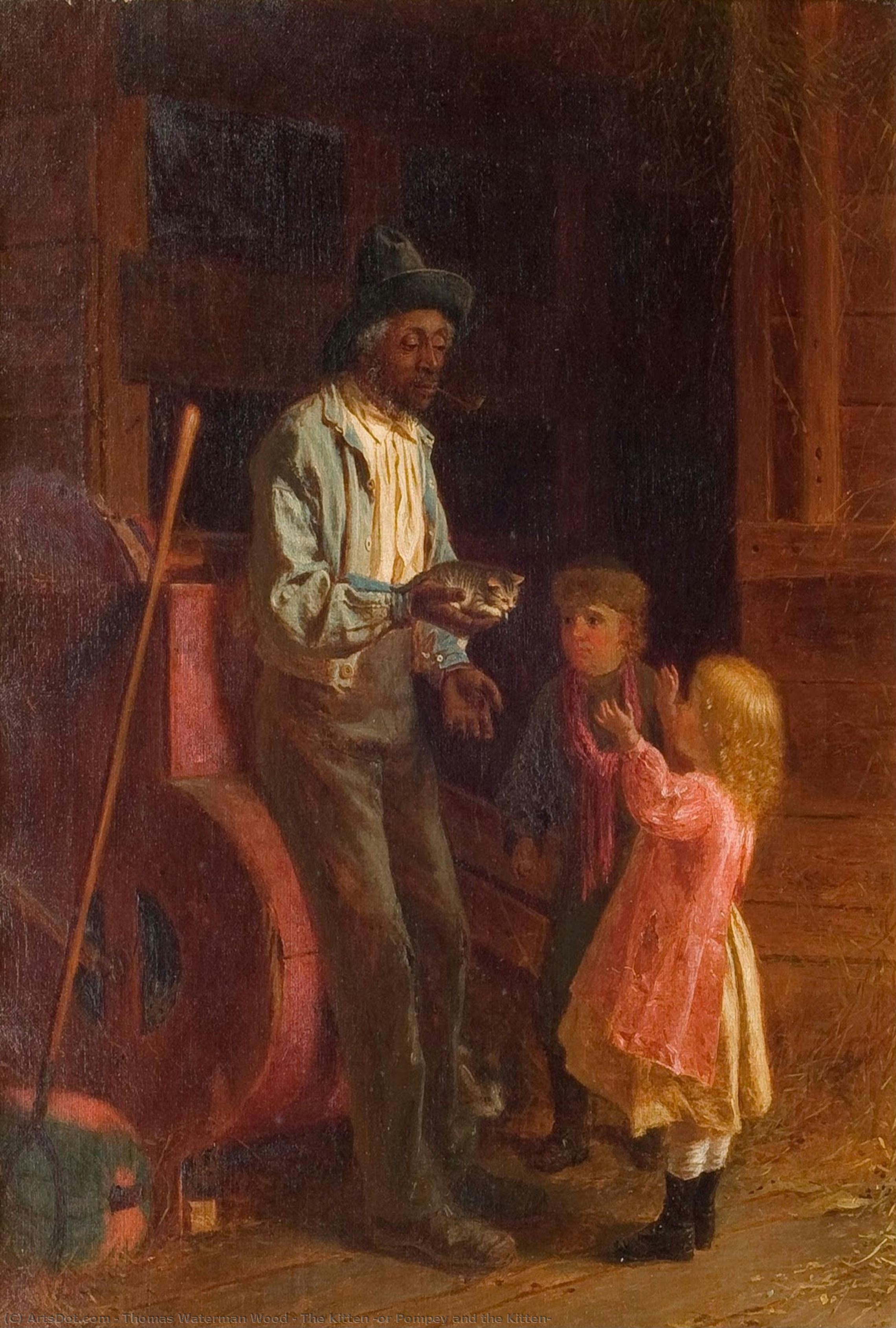
Thomas Waterman Wood’s The Kitten (or Pompey and the Kitten) is far more than a charming genre scene; it is a poignant historical document rendered with delicate brushwork. Painted in 1873, this work captures a moment of quiet domesticity set against the tumultuous backdrop of Reconstruction in the American South. The painting presents a portrait featuring a man gently cradling a kitten while standing beside a young girl whose gaze follows the small creature with evident curiosity. The composition is imbued with an immediate sense of tenderness, yet beneath this surface sweetness lies the weight of profound social change.
Historical Resonance and Social Commentary
To view this piece without understanding its context would be to miss its radical heart. Wood was renowned for painting genre scenes focusing on African Americans in Nashville and Louisville following the Civil War. His work served a vital, if sometimes sentimentalized, purpose: it sought to humanize a newly freed population for northern white audiences. While the image of the man with his kitten might appear purely pastoral today, its very existence speaks to a narrative of resilience and re-establishment. It was an attempt to portray former slaves not merely as subjects of charity, but as integral members of a community rebuilding itself—a radical act of visual affirmation.
Technique and Evocative Detail
The painter’s skill is evident in the masterful handling of light and texture. Observe the soft fur of the kitten against the sturdy fabric of the man's attire, or the subtle interplay of shadow cast by the potted plant in the corner. The inclusion of everyday objects—the visible chairs, the pipe resting near the man’s mouth—grounds the scene in tangible reality. Wood employs a narrative realism that allows the viewer to feel present in this quiet moment, making the emotional connection immediate and deeply personal.
Symbolism of Innocence and Renewal
The kitten itself acts as a potent symbol. It represents fragile life, innocence, and the delicate nature of new beginnings. Paired with the gentle interaction between man and child, it speaks to themes of nurturing and continuity. The entire tableau suggests that even after immense upheaval—the social and political earthquake of war and emancipation—humanity possesses an innate capacity for tenderness and the quiet joy of simple connection. Owning a reproduction of this piece allows one to bring home not just a painting, but a meditation on enduring spirit.
Related Artworks


Artist Biography
Sanford Robinson Gifford: A Master of Light and the Hudson
Sanford Robinson Gifford (1823–1880) stands as a pivotal figure in American art, often considered the second-generation artist to emerge from the influential Hudson River School. Born in Greenfield, Saratoga County, New York, on May 5th, 1823, Gifford’s artistic journey was deeply intertwined with the legacy of his elder brother, Charles Gifford, who had been profoundly impacted by the landscapes of Thomas Cole and Asher B. Durand. This early exposure to the School's core tenets—a reverence for nature, a focus on atmospheric effects, and a celebration of the American wilderness—laid the foundation for Gifford’s distinctive style and enduring contribution to the movement. Unlike his brother, who initially pursued a career in finance, Gifford dedicated himself entirely to art, embarking on a path that would ultimately define his life's work. Gifford’s formative years were spent largely in Hudson, New York, where he received informal instruction from Henry Ary, a local painter whose connection to Cole and Durand provided a crucial link to the School’s artistic lineage. This early training instilled in him a deep appreciation for capturing the nuances of light and color within the natural world – a skill that would become his hallmark. Following a brief period at Brown University, Gifford moved to New York City in 1847, seeking opportunities within the burgeoning art scene. There, he studied under John Rubens Smith, a prominent English expatriate artist known for his watercolor techniques and his ability to render atmospheric effects with remarkable precision. Smith’s influence is evident in Gifford's early works, particularly his meticulous attention to detail and his skillful use of color. A significant turning point in Gifford’s artistic development occurred when he traveled to Europe in 1855–57. Inspired by the landscapes of J.M.W. Turner, a master of capturing atmospheric effects through light and color, Gifford spent time studying in London, France, Belgium, Holland, and Germany. He particularly admired Turner’s ability to evoke mood and atmosphere through subtle shifts in tone and hue. This European sojourn profoundly impacted his artistic sensibilities, leading him to incorporate elements of Impressionism into his own style – a move that distinguished him from many of his Hudson River School contemporaries. Gifford's return to America in 1857 marked the beginning of his most prolific period, during which he produced a vast body of work depicting scenes of the Catskill Mountains, the Hudson Valley, and other landscapes of New York State.- Key Characteristics: Gifford’s paintings are characterized by their luminous color palettes, their masterful rendering of light and shadow, and their evocative depictions of the American wilderness.
- Technique: He employed a direct painting technique, working quickly to capture the fleeting effects of light and atmosphere. His brushwork is often loose and expressive, yet always carefully controlled.
- Subject Matter: Gifford’s subjects primarily consisted of landscapes—mountain vistas, forests, rivers, and streams—often imbued with a sense of tranquility and timelessness.
William Oliver: A London Figure in the Victorian Art World
Born William Oliver Williams on December 28, 1823, in Worcester, England, William Oliver was an artist who carved out a distinctive niche within the bustling art scene of Victorian London. Unlike many artists of his era who sought fame and fortune abroad, Oliver remained firmly rooted in his native city, establishing himself as a respected figure primarily known for his evocative depictions of young women. His work offers a fascinating glimpse into the artistic tastes and social dynamics of late 19th-century England. Oliver’s early life is somewhat shrouded in mystery, though he was the son of surgeon William Williams and Jane Williams (née Oliver). He received an apprenticeship as a goldsmith before dedicating himself to painting, likely influenced by his brother, William Oliver (1804–1853), who was also an artist. Oliver’s artistic training is believed to have included time at the Government School of Design in Birmingham, where he served as assistant master and headmaster under Thomas Clarke. This experience provided him with a solid foundation in technique and composition.- Specialization: Oliver's primary subject matter was young women, often portrayed in intimate settings or engaged in everyday activities.
- Style: His paintings are characterized by a delicate realism combined with an elegant aesthetic sensibility. He paid close attention to detail, particularly in rendering the textures of clothing and the expressions on his subjects’ faces.
- Notable Commissions: Oliver received commissions from prominent families, suggesting that he was regarded as a skilled and reliable artist.
Paul Weber: A Pioneer of American Landscape Painting
Born in Darmstadt, Germany on February 18, 1823, Paul Weber's journey as an artist led him from his homeland to the United States, where he became a significant figure in the development of American landscape painting during the mid-19th century. Initially trained in Frankfurt, Weber’s artistic sensibilities were profoundly shaped by his exposure to the German Romantic tradition and, crucially, by his subsequent travels through Europe and America. Weber's early career was marked by a dedication to technical proficiency and a meticulous approach to capturing the details of the natural world. He spent time studying at the Düsseldorf Academy in Germany, where he honed his skills in drawing and painting. His European sojourn included visits to Italy, Belgium, Holland, and Switzerland, during which he immersed himself in the works of masters such as J.M.W. Turner and Caspar David Friedrich—artists who profoundly influenced his own artistic vision.- Early Training: Weber’s formal training at the Düsseldorf Academy provided him with a strong foundation in traditional painting techniques.
- European Influences: His travels through Europe exposed him to diverse artistic styles and landscapes, broadening his perspective and enriching his artistic vocabulary.
- American Period: Weber arrived in America around 1857, establishing himself as a teacher and artist in New Hampshire.
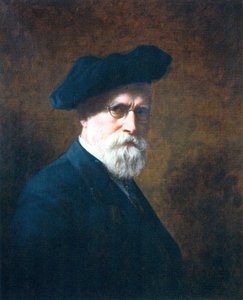
thomas waterman wood
1823 - 1903 , United States of America
Quick Facts
- Artistic Movement Or Style: Genre/Figurative Art
- Artists Or Movements Influenced By This Artist: ['Birmingham School of Art']
- Artists Who Influenced This Artist: ['William Oliver (1804–1853)']
- Date Of Birth: 1823
- Date Of Death: 1901
- Full Name: William Oliver Williams
- Nationality: English
- Notable Artworks: ['Young Women Series']
- Place Of Birth: Worcester, England
Related Articles
American Realism's Defining Works: 10 Masterpieces for Your Home
Explore 10 defining American Realism masterpieces – Hopper, Homer & more. Discover the stories behind these iconic paintings and bring timeless art to your home with ArtsDot's museum-quality reproductions. Explore the full collection online.
John George Brown: Capturing American Life & Sentiment in 19th-Century Genre Painting
Explore the captivating genre paintings of John George Brown, celebrated for his realistic depictions of 19th-century American life. Discover his legacy & find museum-quality reproductions at ArtsDot.
Henry Ossawa Tanner: Pioneering African American Representation in 19th-Century Art
Explore the life and groundbreaking work of Henry Ossawa Tanner, a pioneering African American artist who achieved international acclaim with his deeply spiritual and realistic paintings. Discover his legacy at ArtsDot.
American Realism: Social Commentary & Artistic Representation in Early 20th-Century Painting
Explore the powerful social commentary & artistic representation of American Realism. Discover key artists like Bellows & Sloan, and understand the movement's lasting impact on 20th-century art history.
Romantic Realism's Finest: 10 Masterpieces for Your Home | ArtsDot
Explore 10 defining masterpieces of Romantic Realism! Discover Courbet, Millet & Daumier's powerful paintings—capturing emotion and social realities. Find museum-quality reproductions for your home at ArtsDot.com.