Menu
FREE ART CONSULTATION
PreviewPreview AR previewAR preview Buy Print Buy PrintBuy Image Buy Image SendSend
DetailsDetails Add to favorites Add to favorites DownloadDownload SimilarsSimilars X-RayX-Ray DiaporamaDiaporama

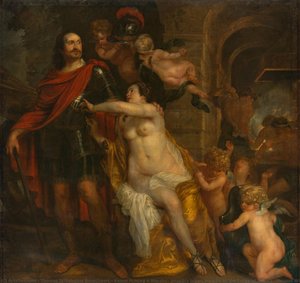
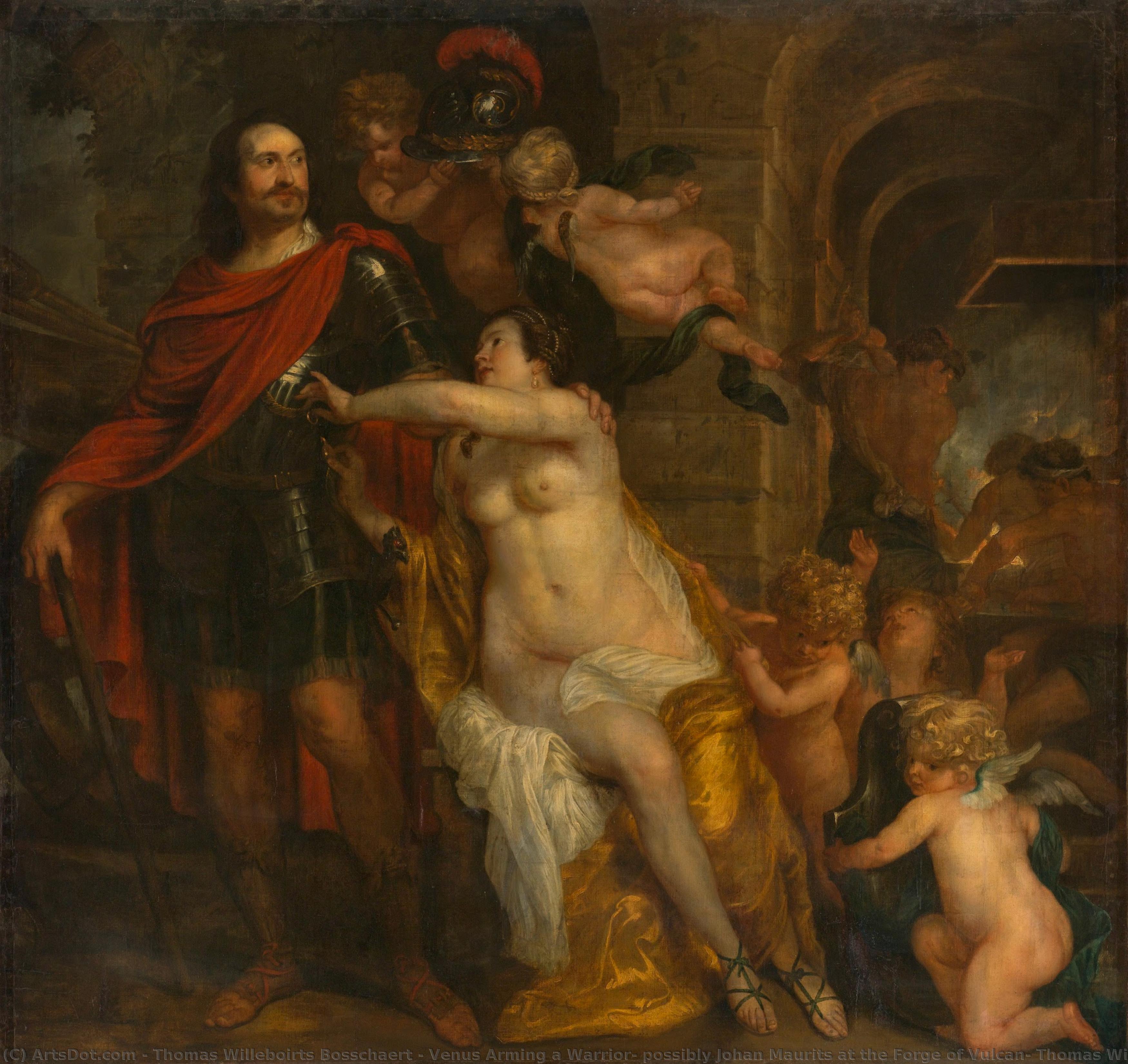
Venus Arming a Warrior, possibly Johan Maurits at the Forge of Vulcan, Thomas Willeboirts Bosschaert, c. 1644

  • Creation date1644
  • Dimensions222.0 x 234.0 cm

Discover Thomas Willeboirts Bosschaert (1613-1654), a Flemish Baroque painter of the Dutch Golden Age. Influenced by Van Dyck & Rubens, he created history paintings and portraits for prominent patrons like Frederik Hendrik.

Hand Made Oil Reproduction

Hand-painted oil on canvas in your size and frame, made to order by our artists. (Buy Print Buy PrintBuy Image Buy Image)

Standard
custom
CM
INCH

Pick from our preset sizes that match the artwork's original proportions.

width
height

You may enter your own dimensions to fit a specific frame or space. If your selected size does not match the original image's proportions, we will either crop the artwork or extend the painting with additional hand-painted elements. A digital mockup will be sent for your approval before production begins.
Please note that the on-screen preview does not reflect the actual cropping or extension. Only the mockup will accurately show the final composition.
While custom sizes are available, we recommend selecting a dimension from the predefined list to preserve the original proportions.

Examples of what can be changed: Replace face with customer photo; Add pet (e.g., replace cat with dog); Include hidden message in background; Change background landscape or elements.
After order, ArtsDot.com team will email client for instructions and provide a mockup preview

Worldwide Delivery () in 3/4 weeks instead of standard 5 weeks. (21 August). No compromise on quality.

why_choose_icon
Free Worldwide Express Shipping
why_choose_icon
High-Quality Linen Canvas
why_choose_icon
Full Shipping Insurance
why_choose_icon
Customs Tax Refund Guarantee
why_choose_icon
True Color Matching Guarantee
why_choose_icon
60-Day Return Policy (Defects Only)
why_choose_icon
100% Money-Back Guarantee
why_choose_icon
Bulk Discount Offer

Total Price

$ 263

reproduction

Venus Arming a Warrior, possibly Johan Maurits at the Forge of Vulcan, Thomas Willeboirts Bosschaert, c. 1644

Reproduction Medium

Reproduction Size

-

Total Price

$ 263

Artwork Description

Thomas Willeboirts Bosschaert seems never to have signed with initials, and thus those noted above, which seem integral, are viewed with circumspection. A pre-1940 photograph10 gives a good impression of the work’s innate qualities. Indeed its authenticity has never been doubted, and Heinrich has recently accepted it. He dates it to early 1645. Another version, destroyed in World War II, was in the Bildergalerie, Sanssouci, Potsdam. Judging from a reproduction, this version would appear to have been not so fluently painted, and Heinrich believes it to have been a replica of the Amsterdam picture.11 Recorded by the dealer Gilliam Forchondt, another copy retouched by Willeboirts Bosschaert was sold to the Johann Seyfried, Prince of Eggenberg (1644-1713), in 1673; it was published as still in situ at Krummau (Czech Republic) by Slavícek in 1993.12 Both these pictures show much more to the left of the composition and slightly more at the top and to the right. It seems likely that the Amsterdam formulation was originally the same and that therefore the support has been reduced. Thus missing to the left is the barrel and wheel of a cannon, a ramrod and shovel (partially visible), with a cavalry charge in the background. The scene in the right background is the god Vulcan’s forge. Willeboirts Bosschaert may have seen Peter Paul Rubens’s sketch of Vulcan Forging Jupiter’s Thunderbolt13 for the Torre de la Parada series or Rubens working on the picture itself.14 Seated in front of the forge is Vulcan’s wife, the goddess Venus, accompanied by five putti. The one closest to her, who pulls away the drapery more fully to reveal her thigh, and has the larger wings, may be intended as her son the god Cupid. Beside her is an imposing figure in classical-style armour; the paludamentum (a general’s cloak) shows that he is a commander as does the staff on which his right hand rests. Venus fixes his sword to the baldric, as three putti proffer his helmet, which would be followed by his shield held by the putto bottom right. In the belief that these actions were depicted in reverse – that the armour was being removed – Van Gelder following tradition proposed that the god be identified as Mars succumbing to Venus.15 But the composition is in contrast to those of this subject depicted by Rubens16 and possibly by Van Dyck17 in which the attitude of Mars is quite different. Indeed here the commander is made to strike a martial pose; this and the cavalry charge in the background of the ex-Sanssouci picture, indicate rather that he is about to engage in his military duties. On this basis, Heinrich, following Baumstark,18 identified the commander as the hero Aeneas whose armour, forged by Vulcan, was provided by his mother, Venus, as Virgil relates. But to this may be objected that the soldier is depicted as older than Venus, and could not have been intended by Willeboirts Bosschaert to be taken for her son. Further Venus, in Virgil’s Aeneid (VIII: 616), did not dress Aeneas in his armour, but ‘set up the arms all radiant under an oak before him’ (arma sub adversa posuit radiantia quercu). Thus it would appear that the artist has here simply alluded to the story of Venus providing arms for Aeneas and adapted the visual formula of Venus disarming Mars (to which there is no reference in classical literature). Van Gelde, in fact making more specific a description of the replica made by Oesterreich in 1770 (see below), suggested that the Rijksmuseum picture is a portrait historié. He proposed that depicted as Mars is Friedrich Wilhelm von Hohenzollern, Elector of Brandenburg (1620-1688), and as Venus, Louisa Henrietta, Countess of Nassau (1627-1667), an identification followed in the 1976 museum catalogue.19 The couple was married on 6 December 1646. Against this, it has to be observed that while the great elector had a low brow with a conspicuous mass of hair – as clearly shown in Honthorst’s double portrait of the married couple of 1647 (SK-A-873) – the soldier depicted by Willeboirts Bosschaert has receding hair. Further, while courtly hyperbole would have permitted a depiction of his bride as Venus, it would have been considered lacking in decorum to have had her displayed almost naked even if a low décolletage might have been acceptable. Venus’s face may be deemed generically beautiful; but the features of the commander do indeed appear specific. Oesterreich described the Sanssouci replica as an allegorical depiction of a ‘prince of Nassau’,20 and it is here suggested that the sitter could well have been Johan Maurits, Count (later Prince) of Nassau-Siegen (1604-1679). After his return from Brazil in 1644, he was appointed commander-in-chief of the cavalry of the United Provinces and Governor of Wesel by his cousin, Frederik Hendrik. He held these posts until he was appointed in 1647 by Friedrich Wilhelm, Stadholder of Cleves, Mark and Ravensberg. The features delineated by Willeboirts Bosschaert accord with those of Cornelis Vissch../..

Artist Biography

early life and training

thomas willeboirts bosschaert, a prominent figure in the dutch golden age, was born in bergen op zoom in 1613. his family, of catholic origin, had relocated to this region in the late sixteenth century. in 1628, bosschaert moved to antwerp, where he entered the studio of gerard seghers for an extensive eight-year apprenticeship. this formative period laid the groundwork for his future artistic endeavors.

artistic career and affiliations

in 1636 or 1637, bosschaert became a citizen of antwerp and joined the prestigious guild of st. luke, a significant milestone in his career. this affiliation not only underscored his commitment to his craft but also granted him access to a broader network of artists and patrons.

notable works and style

though specific details about his works are scarce, it is evident that bosschaert's artistry was deeply influenced by the prevailing styles of his time. his paintings, characterized by intricate details and masterful use of light, reflect the dutch golden age's emphasis on realism and aesthetic appeal.

museological significance and legacy

bosschaert's legacy, though not as extensively documented as some of his contemporaries, is preserved in part through the museum boijmans van beuningen rotterdam, netherlands, which houses a collection of fine and decorative arts from various periods, including the dutch golden age. [https://ArtsDot.com/@@/a@d3arrk-museum-boijmans-van-beuningen-rotterdam-netherlands](museum boijmans van beuningen rotterdam, netherlands at ArtsDot.com)

conclusion

thomas willeboirts bosschaert's life and work, though shrouded in mystery, contribute to the rich tapestry of dutch art during the 17th century. his association with prominent artists and his adherence to the artistic standards of his time underscore his significance within the era.
  • view thomas willeboirts bosschaert's artworks at [https://ArtsDot.com/@/thomas-willeboirts-bosschaert](thomas willeboirts bosschaert | ArtsDot.com)
  • explore the museum boijmans van beuningen rotterdam, netherlands collection at [https://ArtsDot.com/@@/a@d3arrk-museum-boijmans-van-beuningen-rotterdam-netherlands](museum boijmans van beuningen rotterdam, netherlands | ArtsDot.com)
  • discover more about the dutch golden age and its notable artists at [https://ArtsDot.com/all-popular-artists](the greatest artists painters of all time | ArtsDot.com)
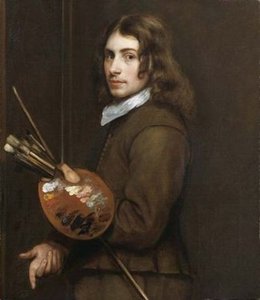
thomas willeboirts bosschaert's enigmatic life serves as a reminder of the enduring impact of dutch art on the world's cultural landscape.
thomas willeboirts bosschaert

thomas willeboirts bosschaert

1613 - 1654 , Netherlands

Quick Facts

  • Artistic Movement Or Style: Dutch Golden Age, Baroque painting
  • Artists Or Movements Influenced By This Artist: Van Dyck
  • Artists Who Influenced This Artist: Gerard Seghers
  • Date Of Birth: 1613
  • Full Name: Thomas Willeboirts Bosschaert
  • Nationality: Flemish
  • Notable Artworks: ['Venus Arming a Warrior']
  • Place Of Birth: Breda, Netherlands

Explore artworks organized by themes, styles, and characteristics.