

 Preview
 Send
Send Share
Share
 Details

 Download
 Similars
 X-Ray
X-Ray Diaporama
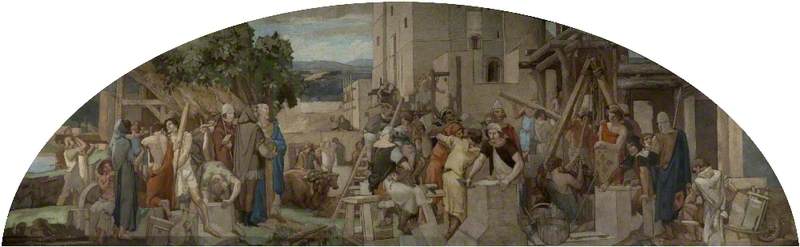
The Building of the New Castle, Newcastle upon Tyne, c.1177 AD
 1925
1925 245.0 x 805.0 cm
 Laing Art Gallery
 Read More
Purchase a high-resolution, enhanced digital image, far superior to the online preview.
Each file is meticulously prepared by our in-house specialists using advanced tools and expert manual retouching. We ensure every image has exceptional clarity, precise color accuracy, and fine detail.
The final file is delivered via email within 72 hours, optimized for immediate use in professional, editorial, and print environments. This is the same quality trusted by top-tier design studios, publishers, and galleries.
Digital Image
Download a high-resolution file for personal display, printing, and creative projects. ( Buy Print Buy Hand Made Painting)
Included in Every Digital Image Order
Expert Digital Delivery, Guaranteed
When you choose ArtsDot.com, you're not just getting an image - you're receiving a professionally enhanced digital artwork, crafted with precision and backed by a satisfaction guarantee. Here's everything that comes with your order, automatically:

Fast Email Delivery
Your high-resolution digital image file will be emailed to you within 72 hours of ordering - ready for immediate use.

AI-Enhanced Digital File
Your artwork is professionally optimized using advanced AI tools and manual editing, ensuring maximum detail, clarity, and color accuracy.

Free Lifetime Re-Delivery
Accidentally deleted or lost your file? No worries - we'll resend it to you anytime, free of charge.

No Import Fees - Ever
Enjoy your artwork instantly with zero customs, duties, or delivery fees - digital downloads are always tax-free.

Color Accuracy Guarantee
We ensure your digital image reflects the original colors as closely as possible using professional tools and color management.

60-Day Satisfaction Guarantee
If you're not satisfied with your digital image, we'll revise it or refund 100% within 60 days - no questions asked.

100% Money-Back Guarantee
Not satisfied? Get a full refund within 60 days of receiving your digital file - no questions asked.

Bulk Order Discounts
Buy 3 images, save 10% - Buy 5, save 15% - Buy 10+, save 20%. Great for creative projects, galleries, and agencies.
Related Artworks



Artist Biography
A Life Immersed in Detail: The World of Thomas William Pattison
Thomas William Pattison, a name perhaps less heralded than some of his Victorian contemporaries, nevertheless occupies a significant niche within the landscape and portrait traditions of 19th-century British art. Born in 1894, Pattison’s life unfolded during a period of immense social and artistic change, a time when the rigid academic styles were gradually giving way to new explorations of light, atmosphere, and individual expression. While comprehensive biographical details remain somewhat elusive – a common fate for artists whose work was not extensively documented by contemporary critics or institutions – his paintings themselves offer compelling insights into his skill, sensibility, and dedication to capturing the essence of both people and place. Pattison’s artistic journey wasn't one of radical innovation but rather of refined mastery within established genres, demonstrating an exceptional talent for detailed observation and a nuanced understanding of human character.The Northumberland Roots & Victorian Sensibilities
Pattison is particularly associated with the landscapes of Northumberland, England. This strong regional connection profoundly shaped his artistic vision. The rugged beauty of the Northumbrian countryside – its rolling hills, dramatic coastlines, and historic castles – provided a constant source of inspiration. His paintings frequently depict scenes imbued with a sense of quiet dignity and atmospheric realism. He wasn’t merely recording topography; he was conveying a feeling for the land, a deep connection to its history and spirit. This sensibility aligns him with the broader Victorian interest in capturing national identity through landscape painting. The era valued depictions of rural life as emblems of stability and tradition, and Pattison's work often reflects this ethos. Beyond landscapes, Pattison excelled in portraiture, creating formal representations that reveal not only the physical likenesses of his sitters but also subtle clues about their social standing, personality, and inner lives.Technique & Influences: A Blend of Realism and Impressionistic Touches
Pattison’s technical skill is immediately apparent in the meticulous detail of his paintings. He possessed a remarkable ability to render textures – the rough stone of a castle wall, the delicate fabric of a gown, the play of light on water – with astonishing accuracy. However, his work isn't simply photographic realism. A closer examination reveals an impressionistic sensibility at play, particularly in his handling of light and color. He employed broken brushstrokes and subtle gradations of tone to create atmospheric effects, suggesting depth and movement within his compositions. While a direct lineage to specific artistic movements is difficult to pinpoint, one can detect echoes of the American Barbizon school – artists who sought to capture the natural world with honesty and emotional resonance – as well as influences from tonalism, which emphasized muted colors and evocative moods. His portraits, while rooted in traditional techniques, often exhibit a looseness of brushwork that adds a sense of vitality and immediacy.Major Achievements & Historical Significance
While Pattison may not have achieved widespread fame during his lifetime, his work has steadily gained recognition in recent years. He left behind a body of approximately five known artworks, including portraits like “Alderman William Strafford Sanderson” – a striking depiction of civic honor and 1960s Northumberland society – and refined studies such as "Portrait of a Lady". These paintings offer valuable insights into the social and cultural life of Victorian England. His ability to blend detailed realism with impressionistic touches sets him apart, demonstrating a nuanced artistic sensibility that transcends simple categorization. Pattison’s work serves as a reminder that artistic significance isn't always measured by grand innovation but also by the quiet dedication to craft, observation, and the faithful representation of the world around us. His paintings are not merely historical documents; they are evocative windows into a bygone era, capturing the spirit of a place and the character of its people with remarkable sensitivity and skill. He died in 1983 leaving behind a legacy that continues to be appreciated by art enthusiasts today.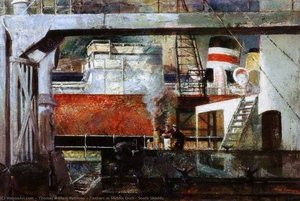
Quick Facts
- Artistic Movement Or Style: Victorian Art
- Date Of Death: Living
- Full Name: Thomas William Pattison
- Nationality: British
- Notable Artworks:
- Alderman Sanderson portrait
- Portrait of a Lady

