 Preview
 Send
Send Share
Share
 Details

 Download
 Similars
 X-Ray
X-Ray Diaporama
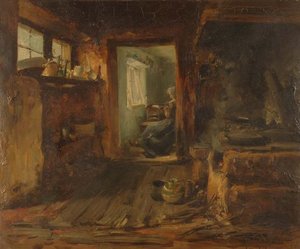
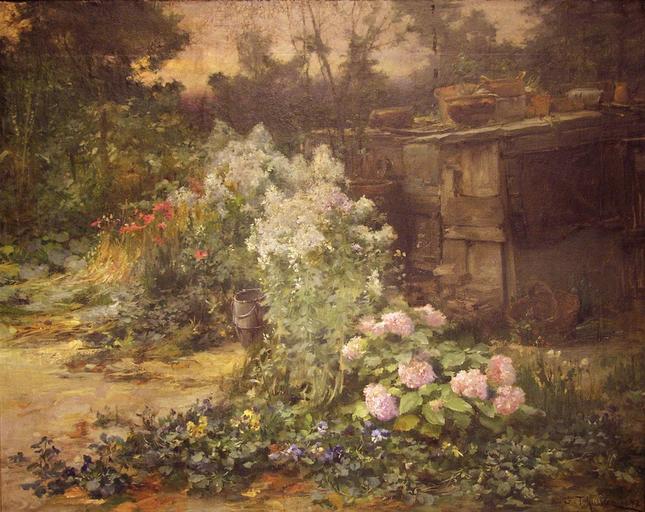
Le jardin du pauvre Der Garten des Armen (Traduction)
 Read More
Giclée / Art Print
Museum-quality giclée or canvas print with fast production and flexible finish options. ( Buy Hand Made Painting Buy Image)




































Pick from our preset sizes that match the artwork's original proportions.

You may enter your own dimensions to fit a specific frame or space. If your selected size does not match the original image's proportions, we will either crop the artwork or extend the image with a mirrored or solid-fill edge. A digital mockup will be sent for your approval before production begins.
Please note that the on-screen preview does not reflect the actual cropping or extension. Only the mockup will accurately show the final composition.
While custom sizes are available, we recommend selecting a dimension from the predefined list to preserve the original proportions.
Worldwide Delivery () in 2 weeks instead of standard 4/5 weeks. (26 August)

Free Worldwide Express Shipping

High-Quality Linen Canvas

Full Shipping Insurance

Customs Tax Refund Guarantee

True Color Matching Guarantee

60-Day Return Policy (Defects Only)

100% Money-Back Guarantee

Bulk Discount Offer
 Glass option is only available in size under 110 CM

Le jardin du pauvre Der Garten des Armen (Traduction)
Giclée / Art Print
Reproduction Size
-


Total Price
$ 63
Related Artworks










Artist Biography
A Master of Quiet Realism: The Life and Art of Gabriel Thurner
Gabriel Thurner, a French painter born in 1840 and passing away in 1907 in Paris, occupies a fascinating yet often overlooked position within the landscape of 19th-century realism. While not as widely celebrated as some of his contemporaries, Thurner’s work reveals a profound sensitivity to light, texture, and the subtle poetry of everyday life. His paintings—primarily still lifes and interior scenes—are imbued with a melancholic beauty that speaks to a deeper contemplation of existence. Though biographical details remain somewhat sparse, piecing together the available information paints a picture of an artist dedicated to capturing the essence of his subjects with meticulous detail and understated emotion. He was deeply influenced by Dutch masters of the 17th century, particularly those known for their *nature morte* paintings, but Thurner infused this tradition with a distinctly French sensibility, marked by a refined palette and atmospheric perspective.The Development of a Still Life Specialist
Thurner’s artistic journey appears to have been one of focused refinement. Early works demonstrate a clear aptitude for realistic representation, but it was his exploration of still life that truly defined his career. He wasn't interested in grand narratives or historical spectacle; instead, he found beauty and meaning in the arrangement of commonplace objects—fruit, flowers, game birds, and domestic utensils. This deliberate choice reflects a broader artistic shift occurring during the 19th century, as artists increasingly turned their attention to the lives of ordinary people and the quiet moments that constituted daily existence. His technique is characterized by an extraordinary ability to render textures – the velvety skin of peaches, the sheen of polished silver, the delicate feathers of a pigeon—creating a tactile quality that draws the viewer into the scene. He masterfully employed chiaroscuro, using light and shadow to sculpt form and create a sense of depth and atmosphere.Symbolism in the Ordinary: Decoding Thurner’s Visual Language
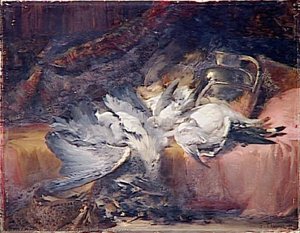
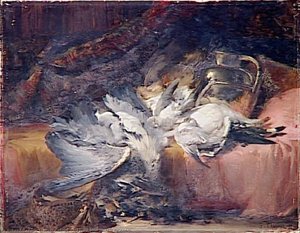
While seemingly straightforward depictions, Thurner's still lifes are often rich with symbolic undertones. The inclusion of specific objects was rarely arbitrary; rather, they served as visual metaphors for themes such as mortality, transience, and the passage of time. For example, his *Nature Morte aux Pigeons* is not merely a representation of dead birds but also a meditation on the fragility of life and the inevitability of decay. The muted color palette and somber atmosphere further reinforce this sense of melancholy. Similarly, paintings featuring decaying fruit can be interpreted as *memento mori*, reminders of human impermanence. This subtle layering of meaning elevates Thurner’s work beyond mere technical skill, inviting viewers to engage with the deeper philosophical questions embedded within his compositions. He often depicted scenes that evoke a sense of loneliness and quiet contemplation, reflecting perhaps a personal sensitivity or a broader cultural mood of introspection.Recognition and Legacy
Although not achieving widespread fame during his lifetime, Thurner’s work was exhibited in prestigious galleries and museums, indicating a level of recognition within the art world. His paintings found their way into private collections, appreciated by those who valued his refined technique and understated beauty. Today, Gabriel Thurner is increasingly recognized as an important figure in the development of 19th-century realism. His influence can be seen in the work of later artists who sought to capture the essence of everyday life with similar sensitivity and detail. His paintings offer a glimpse into a world often overlooked—a world of quiet moments, subtle emotions, and profound beauty hidden within the ordinary.- Key Characteristics: Meticulous realism, atmospheric perspective, muted color palette, symbolic undertones.
- Influences: Dutch Golden Age still life painters, French Realism.
- Major Themes: Mortality, transience, the beauty of everyday life, quiet contemplation.