 Preview
 Send
Send Share
Share
 Details

 Download
 Similars
 X-Ray
X-Ray Diaporama
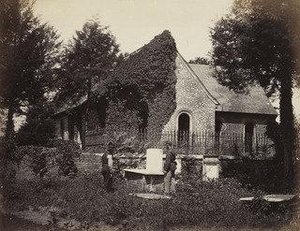
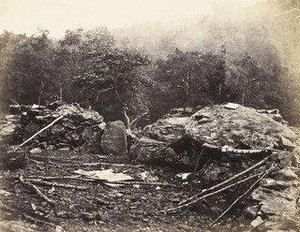
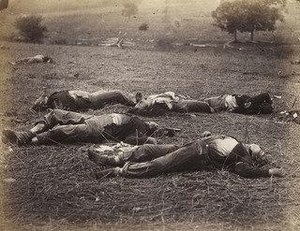
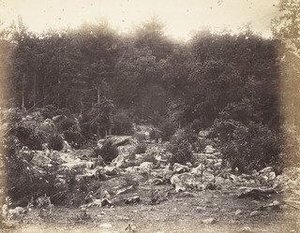
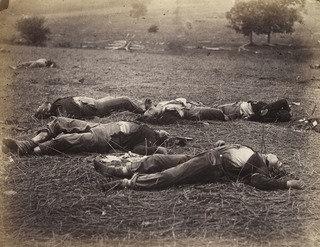
Field Where General Reynolds Fell, Gettysburg
 1863
1863 18.0 x 23.0 cm
 Read More
Hand Made Oil Reproduction
Hand-painted oil on canvas in your size and frame, made to order by our artists. ( Buy Print Buy Image)




































Pick from our preset sizes that match the artwork's original proportions.

You may enter your own dimensions to fit a specific frame or space. If your selected size does not match the original image's proportions, we will either crop the artwork or extend the painting with additional hand-painted elements. A digital mockup will be sent for your approval before production begins.
Please note that the on-screen preview does not reflect the actual cropping or extension. Only the mockup will accurately show the final composition.
While custom sizes are available, we recommend selecting a dimension from the predefined list to preserve the original proportions.
After order, ArtsDot.com team will email client for instructions and provide a mockup preview
Worldwide Delivery () in 3/4 weeks instead of standard 5 weeks. (21 August). No compromise on quality.

Free Worldwide Express Shipping

High-Quality Linen Canvas

Full Shipping Insurance

Customs Tax Refund Guarantee

True Color Matching Guarantee

60-Day Return Policy (Defects Only)

100% Money-Back Guarantee

Bulk Discount Offer
 Glass option is only available in size under 110 CM

Field Where General Reynolds Fell, Gettysburg
Reproduction Medium
Reproduction Size
-


Total Price
$ 263
Related Artworks








Artist Biography
A Pioneer of Photographic Documentation: The Life and Legacy of Alexander Gardner
Born in Paisley, Scotland, in 1821, Alexander Gardner embarked on a journey that would indelibly mark the history of photography and visual documentation. His early life was steeped in social reform, influenced by the utopian ideals of Robert Owen and the burgeoning cooperative movements sweeping through Britain. Initially trained as a jeweler, Gardner’s path took an unexpected turn when he became involved with establishing a cooperative community in Iowa, a testament to his commitment to progressive principles. This experience honed not only his organizational skills but also his communication abilities during his time as editor of the *Glasgow Sentinel*, exposing him to the complex interplay of political and social issues that would later inform his artistic vision. A pivotal moment arrived at the 1851 Great Exhibition in London, where Gardner encountered the groundbreaking photography of Mathew Brady – an encounter that ignited a passion for the medium and set the course for his future career.Documenting a Nation Divided: The Civil War Years
In 1856, Gardner immigrated to the United States, quickly immersing himself in the world of photography by joining Mathew Brady’s studio. He rapidly became an indispensable part of Brady's operation, initially specializing in producing large-format prints – known as Imperial photographs – before assuming increasing responsibilities as Brady’s eyesight began to decline. Gardner’s role expanded beyond technical expertise; he managed Brady’s Washington D.C. gallery and skillfully captured portraits of soldiers and prominent figures, including several significant depictions of Abraham Lincoln. His connection with Allan Pinkerton facilitated crucial communication between Brady and President Lincoln, ultimately leading to Gardner's appointment as chief photographer under the U.S. Topographical Engineers, followed by a position as staff photographer for General George B. McClellan. The Battle of Antietam in 1862 proved to be a defining moment, where Gardner bravely developed photographs in a portable darkroom on the battlefield itself, capturing the grim realities of war with unprecedented immediacy. However, his contribution extended beyond mere battle scenes; he meticulously documented the aftermath of conflict and the profound human cost of the Civil War, offering a stark and unflinching portrayal of its devastation.Beyond the Battlefield: A Lasting Photographic Record
Gardner’s most enduring work is arguably *Gardner's Photographic Sketch Book of the Civil War* (1866), a two-volume collection featuring 50 hand-mounted original prints that showcased his most compelling images from the conflict. Though not immediately commercially successful, this publication remains an invaluable historical record, offering a visceral and intimate glimpse into the war’s impact on both the landscape and its people. Throughout his career, Gardner collaborated with numerous photographers, notably Timothy H. O'Sullivan, whose contributions were often intertwined with his own. He is also remembered for capturing several portraits of President Lincoln, some initially believed to be the last taken before his assassination – though later research clarified they dated from February 1865. Perhaps most poignantly, Gardner uniquely documented Lincoln’s funeral procession and photographed the conspirators involved in the assassination, including their execution by hanging, providing a chillingly direct record of this pivotal moment in American history.Later Years and Enduring Significance
Following the Civil War, Gardner continued to work as a photographer, expanding his scope to document Native American treaties and survey the route of the Kansas Pacific Railroad – projects that reflected the nation’s westward expansion and its complex relationship with indigenous populations. He briefly stepped away from photography to co-found an insurance company, demonstrating his entrepreneurial spirit. However, his legacy has been complicated by a historical tendency to attribute his photographs solely to Mathew Brady. Recent scholarship, however, increasingly recognizes Gardner's significant contributions as both a photographer and a documentarian in his own right. His work remains invaluable for its detailed portrayal of the Civil War era, offering profound insights into military life, political events, and the human experience during a pivotal period in American history. Gardner’s photographs are not merely historical artifacts; they are powerful testaments to the enduring power of visual storytelling.Key Achievements & Recognition
- Pioneering War Photography: Gardner's work revolutionized how war was documented, moving beyond traditional illustrations to provide a realistic and often harrowing depiction of battlefield conditions and their aftermath.
- *Photographic Sketch Book of the Civil War*: This collection stands as a landmark achievement in photographic publishing, offering a comprehensive visual record of the conflict.
- Lincoln Portraiture: His portraits of Abraham Lincoln are among the most iconic and historically significant images of the 16th President.
- Documentation of Historical Events: Gardner’s coverage of Lincoln's funeral and the execution of his assassins provides a unique and chillingly direct record of these events.
- Collaboration with Timothy O’Sullivan: His partnership with O’Sullivan produced some of the most enduring images of the American West, capturing its vastness and beauty.
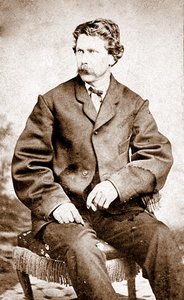
Timothy O'Sullivan Alexander Gardner
1821 - 1882 , United Kingdom
Quick Facts
- Artistic Movement Or Style: Civil War Photography
- Artists Who Influenced This Artist:
- Mathew Brady
- Robert Owen
- Date Of Birth: October 17, 1821
- Date Of Death: December 10, 1882
- Full Name: Alexander Gardner
- Nationality: Scottish-American
- Notable Artworks:
- Photographic Sketch Book
- Lincoln portraits
- Johnson’s Mill
- Place Of Birth: Paisley, UK