 Preview
 Send
Send Share
Share
 Details

 Download
 Similars
 X-Ray
X-Ray Diaporama
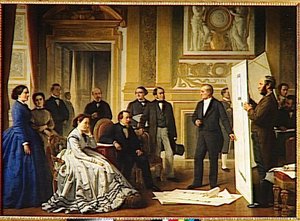
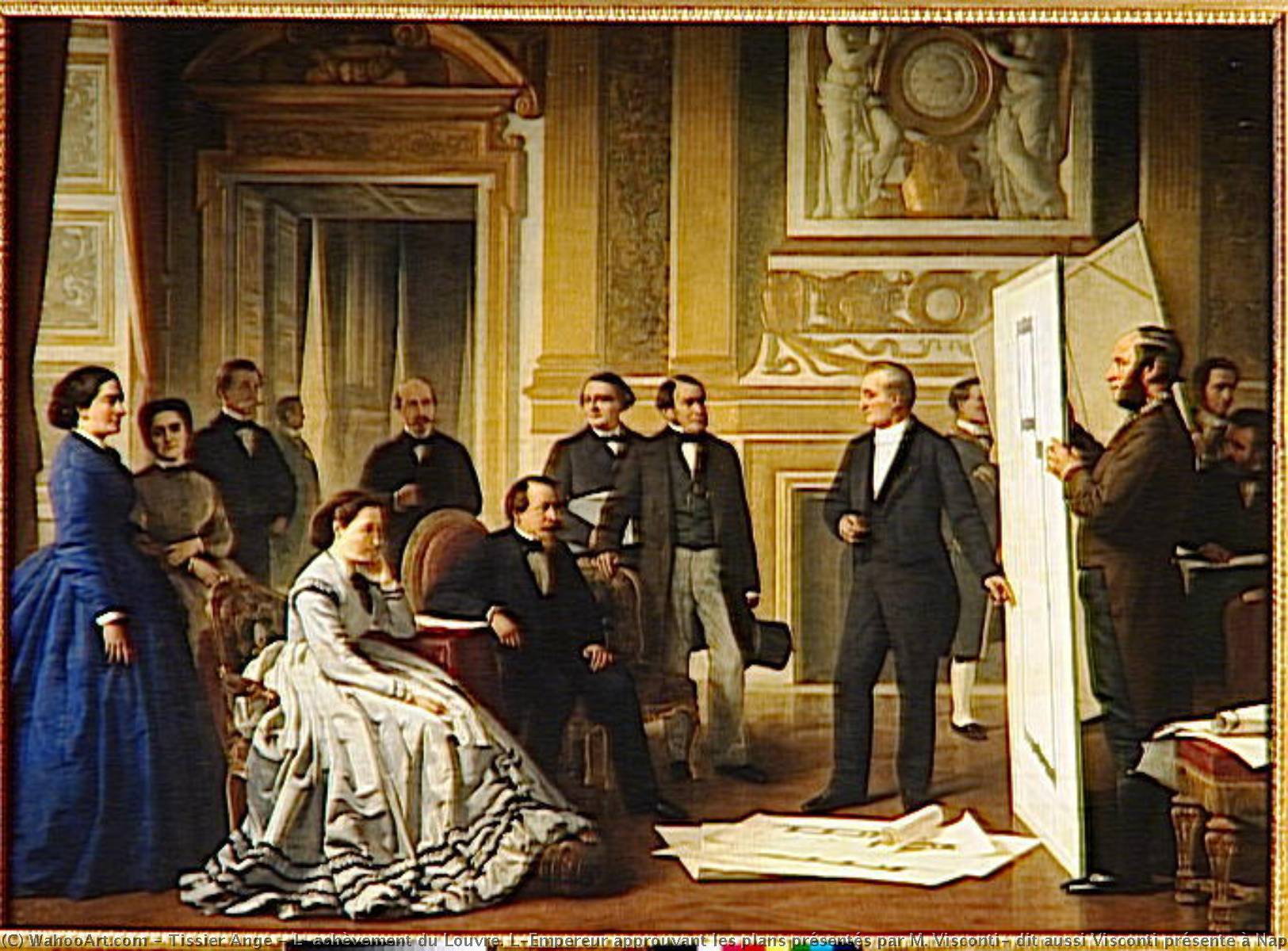
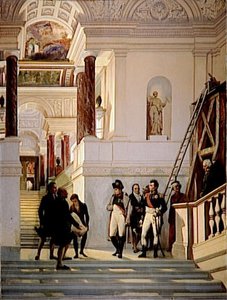
L'achèvement du Louvre. L'Empereur approuvant les plans présentés par M. Visconti, dit aussi Visconti présente à Napoléon III le plan du nouveau Louvre


 Read More
Hand Made Oil Reproduction
Hand-painted oil on canvas in your size and frame, made to order by our artists. ( Buy Print Buy Image)




































Pick from our preset sizes that match the artwork's original proportions.

You may enter your own dimensions to fit a specific frame or space. If your selected size does not match the original image's proportions, we will either crop the artwork or extend the painting with additional hand-painted elements. A digital mockup will be sent for your approval before production begins.
Please note that the on-screen preview does not reflect the actual cropping or extension. Only the mockup will accurately show the final composition.
While custom sizes are available, we recommend selecting a dimension from the predefined list to preserve the original proportions.
After order, ArtsDot.com team will email client for instructions and provide a mockup preview
Worldwide Delivery () in 3/4 weeks instead of standard 5 weeks. (26 August). No compromise on quality.

Free Worldwide Express Shipping

High-Quality Linen Canvas

Full Shipping Insurance

Customs Tax Refund Guarantee

True Color Matching Guarantee

60-Day Return Policy (Defects Only)

100% Money-Back Guarantee

Bulk Discount Offer
 Glass option is only available in size under 110 CM

L'achèvement du Louvre. L'Empereur approuvant les plans présentés par M. Visconti, dit aussi Visconti présente à Napoléon III le plan du nouveau Louvre
Reproduction Medium
Reproduction Size
-


Total Price
$ 263
Related Artworks

Artist Biography
The Refined Gaze: Jean-Baptiste-Ange Tissier and the Portraiture of an Era
Jean-Baptiste-Ange Tissier (1843-1906) occupies a fascinating, if often overlooked, position within the landscape of 19th-century French painting. He wasn’t a revolutionary iconoclast like Courbet or Manet, nor did he pursue the atmospheric explorations of the Impressionists. Instead, Tissier carved out a successful career as a highly sought-after portraitist, specializing in capturing the elegance and opulence of the Second Empire and its immediate aftermath. His canvases offer a compelling glimpse into the lives of the Parisian bourgeoisie, nobility, and those connected to the court of Napoleon III – a world steeped in social ritual, refined taste, and carefully constructed appearances. Born into an artistic family, Tissier received his formal training at the École des Beaux-Arts under Léon Cogniet, a prominent academic painter known for his historical and portrait work. This foundation instilled in him a mastery of classical technique, evident in his precise draftsmanship, balanced compositions, and subtle handling of light and shadow. However, Tissier’s talent lay not in grand narratives but in the intimate portrayal of individual character within a specific social context.A Court Painter's Ascendancy
Tissier’s breakthrough came with his appointment as an official portraitist to Napoleon III and Empress Eugénie. This prestigious position secured him access to the highest echelons of French society, and he quickly became renowned for his ability to flatter and idealize his sitters while simultaneously conveying a sense of their personality. His portraits are not merely likenesses; they are carefully curated representations designed to project an image of wealth, status, and moral virtue. He excelled at depicting the sumptuous fabrics, elaborate jewelry, and ornate interiors that defined the Second Empire aesthetic. The artist’s skill in rendering textures – silk shimmering under candlelight, the gleam of pearls, the rich velvet of a gentleman's coat – is particularly noteworthy. While many artists were beginning to break away from academic conventions, Tissier embraced them, finding a lucrative and fulfilling niche within the established art world. He understood the desires of his clientele: they wanted portraits that affirmed their position in society, and Tissier delivered with unwavering skill and sensitivity. His work during this period is characterized by a restrained elegance and a meticulous attention to detail, reflecting the formality and decorum of the imperial court.Beyond the Imperial Circle: Expanding Themes
The fall of the Second Empire in 1870 did not diminish Tissier’s career; rather, it broadened his subject matter. While he continued to paint portraits of former members of the aristocracy and wealthy patrons, he also began to explore scenes of contemporary life, often depicting women in intimate settings – reading, writing letters, or simply lost in thought. These paintings, while still exhibiting his characteristic technical finesse, reveal a growing interest in psychological nuance and emotional depth. He moved beyond purely celebratory depictions to capture moments of quiet contemplation and subtle vulnerability. Tissier’s later works also demonstrate a fascination with historical themes, particularly those related to the French monarchy. He painted scenes from the lives of Marie Antoinette and other royal figures, often imbuing them with a sense of romantic nostalgia and tragic beauty. This shift suggests a desire to connect with France's rich cultural heritage and perhaps offer a commentary on the tumultuous events that had recently transpired.Influences and Artistic Style
Tissier’s artistic lineage is rooted in the traditions of 18th-century French portraiture, particularly the work of artists like Élisabeth Vigée Le Brun and Jean-Auguste-Dominique Ingres. He admired their ability to capture both physical likeness and inner character with remarkable precision.- His early training at the École des Beaux-Arts exposed him to the academic principles of composition, anatomy, and perspective.
- The influence of Dutch Golden Age painters is also evident in his meticulous attention to detail and his mastery of light and shadow.
- While he did not fully embrace Impressionism, he was aware of its innovations and incorporated some of its techniques – such as broken brushstrokes and a heightened sense of atmosphere – into his later works.
Legacy and Historical Significance
Though not as widely celebrated as some of his contemporaries, Jean-Baptiste-Ange Tissier remains an important figure in the history of 19th-century French painting. His portraits provide invaluable insights into the lives and values of the Second Empire elite, offering a visual record of a bygone era. His work serves as a testament to the enduring power of portraiture – its ability to capture not only physical likeness but also the social, cultural, and psychological complexities of a particular time and place. Today, his paintings are held in major museums and private collections around the world, and they continue to fascinate and inspire art lovers with their refined elegance, technical brilliance, and subtle emotional depth. He represents a crucial link between the academic traditions of the past and the emerging artistic movements of the modern era – a master craftsman who successfully navigated a period of profound change while remaining true to his own unique vision.
Related Articles
Louvre Masterpieces: Explore the Top 25 Artworks for Your Home | ArtsDot
Journey through the Louvre's 25 most iconic artworks! Explore masterpieces by Leonardo da Vinci, Michelangelo & Delacroix. Discover art history, techniques & find museum-quality reproductions for your home at ArtsDot.com.
19th Century Masterpieces: 10 Paintings That Defined an Era | ArtsDot
Journey through 19th century art with ArtsDot! Explore 10 iconic paintings – from Monet & Renoir to Courbet – and discover the stories behind Romanticism, Realism & Impressionism. Find museum-quality reproductions for your home decor. Explore the full collection online!
Émile Jean Horace Vernet: Romantic Realism & Depicting 19th-Century Life
Explore the life & art of Émile Jean Horace Vernet, a master of Romantic Realism. Discover his captivating battle scenes, portraits, and Orientalist works – a window into 19th-century France. Learn about his techniques & enduring legacy.
Émile Munier: Capturing 19th-Century French Life with Tender Realism
Discover Émile Munier's tender depictions of 19th-century French life. Explore his Realist style, charming paintings of children & pets, and lasting artistic legacy. Expert insights at ArtsDot.
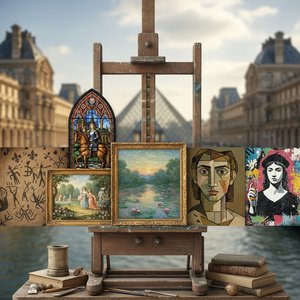
The Enduring Legacy of French Art: Movements, Masters & Cultural Impact
Explore the rich history of French art, from the Salon to Impressionism & beyond. Discover iconic masters, key movements, and expert guidance for collecting timeless masterpieces. ArtsDot.