 Preview
 Send
Send Share
Share
 Details

 Download
 Similars
 X-Ray
X-Ray Diaporama
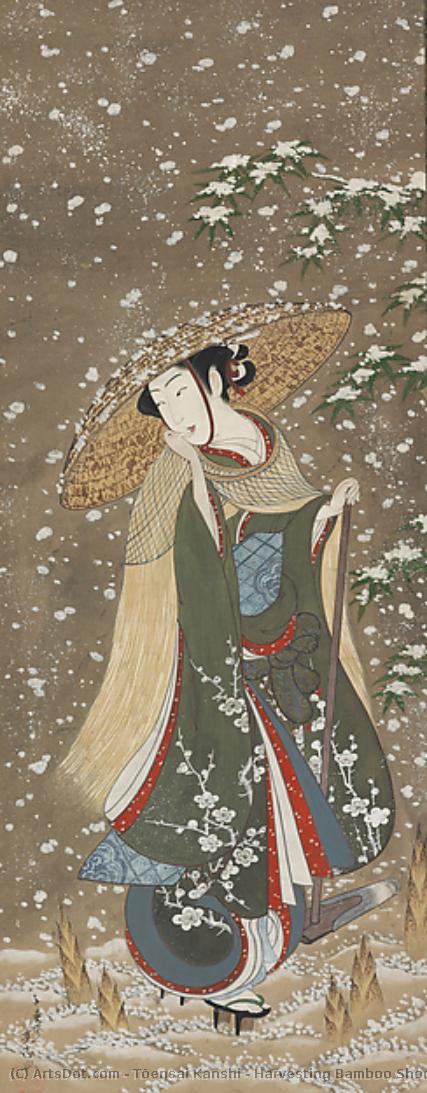
Harvesting Bamboo Shoots in Winter
 701
701 86.0cm x 34.0cm
 Read More
Hand Made Oil Reproduction
Hand-painted oil on canvas in your size and frame, made to order by our artists. ( Buy Print Buy Image)




































Pick from our preset sizes that match the artwork's original proportions.

You may enter your own dimensions to fit a specific frame or space. If your selected size does not match the original image's proportions, we will either crop the artwork or extend the painting with additional hand-painted elements. A digital mockup will be sent for your approval before production begins.
Please note that the on-screen preview does not reflect the actual cropping or extension. Only the mockup will accurately show the final composition.
While custom sizes are available, we recommend selecting a dimension from the predefined list to preserve the original proportions.
After order, ArtsDot.com team will email client for instructions and provide a mockup preview
Worldwide Delivery () in 3/4 weeks instead of standard 5 weeks. (23 August). No compromise on quality.

Free Worldwide Express Shipping

High-Quality Linen Canvas

Full Shipping Insurance

Customs Tax Refund Guarantee

True Color Matching Guarantee

60-Day Return Policy (Defects Only)

100% Money-Back Guarantee

Bulk Discount Offer
 Glass option is only available in size under 110 CM

Harvesting Bamboo Shoots in Winter
Reproduction Medium
Reproduction Size
-


Total Price
$ 263
Artwork Description
Related Artworks









Artist Biography
The Enigmatic Brush of Tōensai Kanshi
Tōensai Kanshi is a contemporary Japanese artist whose work embodies a profound connection to the traditions of *sumi-e* ink painting, yet simultaneously pushes beyond its established boundaries. Born in Japan (the exact year remains intentionally private, reflecting a focus on the art itself rather than biographical detail), Kanshi has cultivated a practice steeped in meditative discipline and an acute sensitivity to the natural world. Unlike many artists who publicly chronicle their journey, Kanshi maintains a deliberately low profile, allowing the paintings themselves to speak as the primary expression of his artistic identity. This intentional obscurity adds to the mystique surrounding his work, fostering a deeper engagement with the visual experience rather than biographical narrative. He is currently living and working, continuing to produce art that resonates with both Japanese aesthetics and a broader international audience.A Legacy Rooted in Tradition
Kanshi’s artistic lineage traces back through generations of *sumi-e* masters. While specific teachers are not publicly documented, the influence of artists like Sesshū Tōyō – renowned for his dramatic landscapes and expressive brushwork – is readily apparent in Kanshi's compositions. The core principles of *sumi-e*, emphasizing spontaneity, simplicity, and a deep understanding of ink’s properties, form the foundation of his technique. However, Kanshi isn’t merely replicating historical styles; he actively engages with them, deconstructing and rebuilding upon established conventions. His work often features the iconic “four gentlemen” – bamboo, plum blossom, chrysanthemum, and orchid – each carrying symbolic weight representing virtues like resilience, perseverance, elegance, and humility. But these motifs are rarely presented in a conventional manner. Kanshi’s interpretations frequently incorporate abstract elements and unexpected perspectives, suggesting a more personal and nuanced symbolism.The Art of Empty Space
Central to understanding Kanshi's art is the concept of *ma* – often translated as “empty space” or “interval.” In Japanese aesthetics, *ma* isn’t simply the absence of something; it’s an active element in itself, possessing its own weight and significance. Kanshi masterfully utilizes negative space to create a sense of depth, atmosphere, and emotional resonance within his paintings. His compositions are often characterized by vast expanses of white paper punctuated by carefully rendered brushstrokes. These strokes aren't merely depictions of forms; they’re gestures that capture the *essence* of those forms – the wind rustling through bamboo leaves, the delicate curve of a plum blossom branch, the quiet strength of a mountain peak. The ink itself is treated with reverence, ranging from bold, saturated blacks to subtle washes and gradations, each tone contributing to the overall mood and narrative.Contemporary Echoes
While deeply rooted in tradition, Kanshi’s work isn't confined by it. He subtly incorporates contemporary sensibilities into his paintings, moving beyond purely representational landscapes towards more abstract explorations of form and emotion. There is a sense of quietude and contemplation present in much of his art that speaks to the anxieties and uncertainties of modern life. His compositions often evoke a feeling of solitude, inviting viewers to pause and reflect on their own relationship with nature and the inner self. This ability to bridge the gap between historical technique and contemporary experience is what sets Kanshi apart. He doesn’t seek to shock or disrupt; rather, he offers a gentle invitation to rediscover beauty in simplicity and find solace in the natural world.Historical Significance & Ongoing Influence
Although his biography remains largely private, Tōensai Kanshi is rapidly gaining recognition as a significant voice in contemporary Japanese art. His work has been exhibited internationally, captivating audiences with its understated elegance and profound emotional depth. He represents a continuation of the *sumi-e* tradition, not as a static preservation of past styles but as a dynamic and evolving practice. Kanshi’s influence is particularly notable in his ability to inspire a renewed appreciation for meditative art forms in an increasingly fast-paced world. He demonstrates that true artistic innovation doesn't necessarily require radical departures from established techniques; it can also be found in the subtle refinement of existing ones, coupled with a deep commitment to personal expression and spiritual contemplation.- His work is collected by museums and private collectors worldwide.
- Kanshi’s paintings often explore themes of impermanence and interconnectedness.
- He continues to be a vital force in the ongoing evolution of *sumi-e* ink painting.