 Preview
 Send
Send Share
Share
 Details

 Download
 Similars
 X-Ray
X-Ray Diaporama
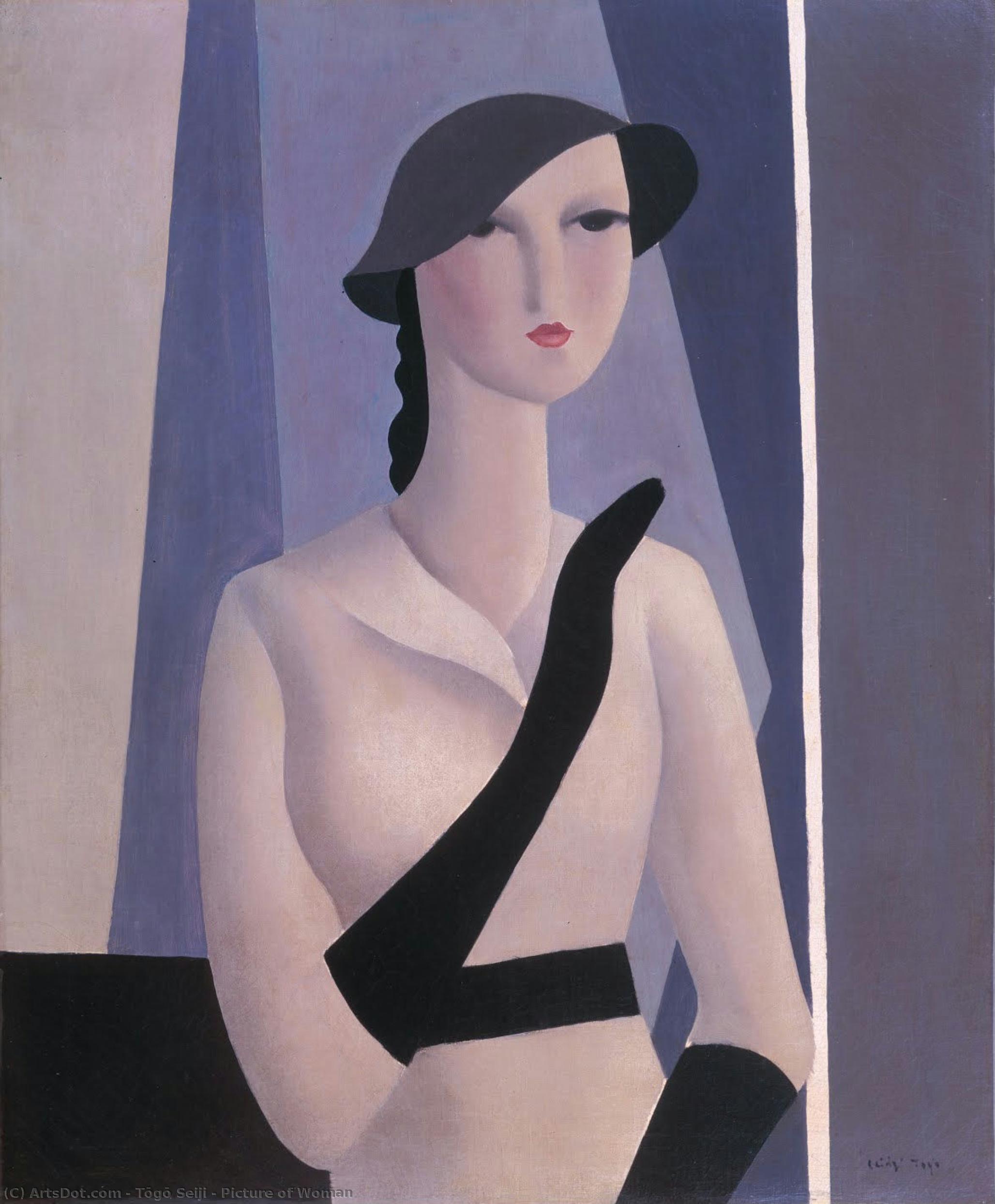
Picture of Woman
 53.0 x 65.0 cm
 Iwami Art Museum
 Read More
Giclée / Art Print
Museum-quality giclée or canvas print with fast production and flexible finish options. ( Buy Hand Made Painting Buy Image)




































Pick from our preset sizes that match the artwork's original proportions.

You may enter your own dimensions to fit a specific frame or space. If your selected size does not match the original image's proportions, we will either crop the artwork or extend the image with a mirrored or solid-fill edge. A digital mockup will be sent for your approval before production begins.
Please note that the on-screen preview does not reflect the actual cropping or extension. Only the mockup will accurately show the final composition.
While custom sizes are available, we recommend selecting a dimension from the predefined list to preserve the original proportions.
Worldwide Delivery () in 2 weeks instead of standard 4/5 weeks. (23 August)

Free Worldwide Express Shipping

High-Quality Linen Canvas

Full Shipping Insurance

Customs Tax Refund Guarantee

True Color Matching Guarantee

60-Day Return Policy (Defects Only)

100% Money-Back Guarantee

Bulk Discount Offer
 Glass option is only available in size under 110 CM

Picture of Woman
Giclée / Art Print
Reproduction Size
-


Total Price
$ 63
Collectible Description
Related Artworks








Artist Biography
Ivan Albright: A Master of Illusion and Decay
Born in North Harvey, Illinois, on February 20, 1897, Ivan Le Lorraine Albright was a uniquely American painter whose work defied easy categorization yet profoundly impacted the development of magic realism. His life, intertwined with privilege and a deep fascination with the human condition, shaped an artistic vision characterized by meticulous detail, unsettling beauty, and a haunting exploration of decay, corruption, and the passage of time. Albright’s career unfolded against the backdrop of significant social and artistic shifts in the early 20th century, ultimately establishing him as a pivotal figure in American art.Albright's early life was marked by relative comfort and access to education. He received a formal education at Northwestern University and the University of Illinois, but it was his brief training at the Art Institute of Chicago and the Pennsylvania Academy of the Fine Arts that truly ignited his artistic passion. Following World War I, he began to develop his distinctive style, one that would become instantly recognizable for its hyper-realistic depiction of subjects often imbued with a sense of unease or impending doom. His early influences included the Neue Sachlichkeit movement in Germany, which emphasized clarity and objectivity, alongside the meticulous realism of artists like Gustave Courbet.
The Rise of a Unique Style: Realism and the Uncanny
Albright’s artistic breakthrough came with *Into the World There Came a Soul Called Ida* (1930), a portrait of an aging woman gazing into a mirror. This painting, rendered in startlingly detailed realism, immediately captivated audiences with its unsettling beauty. The subject's pale complexion, wrinkled skin, and vacant stare conveyed not just age but also a profound sense of isolation and the relentless march of time. This work established his signature style: an exaggerated realism that pushed beyond mere representation to explore psychological states and the darker aspects of human experience. He frequently employed a limited palette of muted colors—greens, browns, grays—to heighten the atmosphere of decay and melancholy. The use of light was particularly crucial; Albright often utilized a diffused, almost ethereal illumination that seemed to emanate from within his subjects, lending them an otherworldly quality.Major Works and Recognition
Throughout the 1930s and 40s, Albright produced a remarkable body of work, including *That Which I Should Have Done I Did Not Do (The Door)* (1931-1941) – a haunting depiction of a decaying door with a funeral wreath hanging from it – and *Picture of Dorian Gray* (1943-44), inspired by Oscar Wilde’s novel. The latter, commissioned for the film adaptation, became one of his most famous paintings, capturing the decadent beauty and moral corruption at the heart of the story. Albright's work was exhibited widely, including in New York City at the Metropolitan Museum of Art and Venice Biennales. He received numerous accolades, including the Temple Gold medal at the Pennsylvania Academy of the Fine Arts and a medal for best picture at the “Artists for Victory” exhibition.Legacy and Influence
Ivan Albright’s artistic legacy extends far beyond his individual works. His meticulous realism, combined with his exploration of psychological themes and unsettling imagery, profoundly influenced subsequent generations of artists. He is often associated with magic realism, a genre that blends fantastical elements with starkly realistic depictions of everyday life. His work continues to be studied and admired for its technical brilliance, emotional depth, and enduring power to evoke a sense of unease and wonder. Albright’s ability to capture the fleeting beauty of decay and the complexities of human existence cemented his place as one of America's most significant artists of the 20th century. He died in Woodstock, Vermont, on November 18, 1983, leaving behind a body of work that remains both captivating and profoundly unsettling.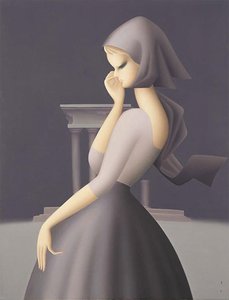
tōgō seiji
1897 - 1978 , Japan
Quick Facts
- Artistic Movement Or Style: Neue Sachlichkeit
- Artists Or Movements Influenced By This Artist: ['Magic Realism']
- Artists Who Influenced This Artist: ['George Stout']
- Date Of Birth: Feb 20, 1897
- Date Of Death: Nov 18, 1983
- Full Name: Ivan Le Lorraine Albright
- Nationality: American
- Notable Artworks:
- Into the World There Came a Soul Called Ida
- That Which I Should Have Done I Did Not Do (The Door)
- Picture of Dorian Gray
- And Man Created God in His Own Image
- Place Of Birth: North Harvey, Illinois, USA