 Preview
 Send
Send Share
Share
 Details

 Download
 Similars
 X-Ray
X-Ray Diaporama
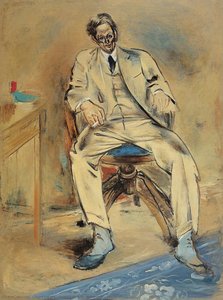
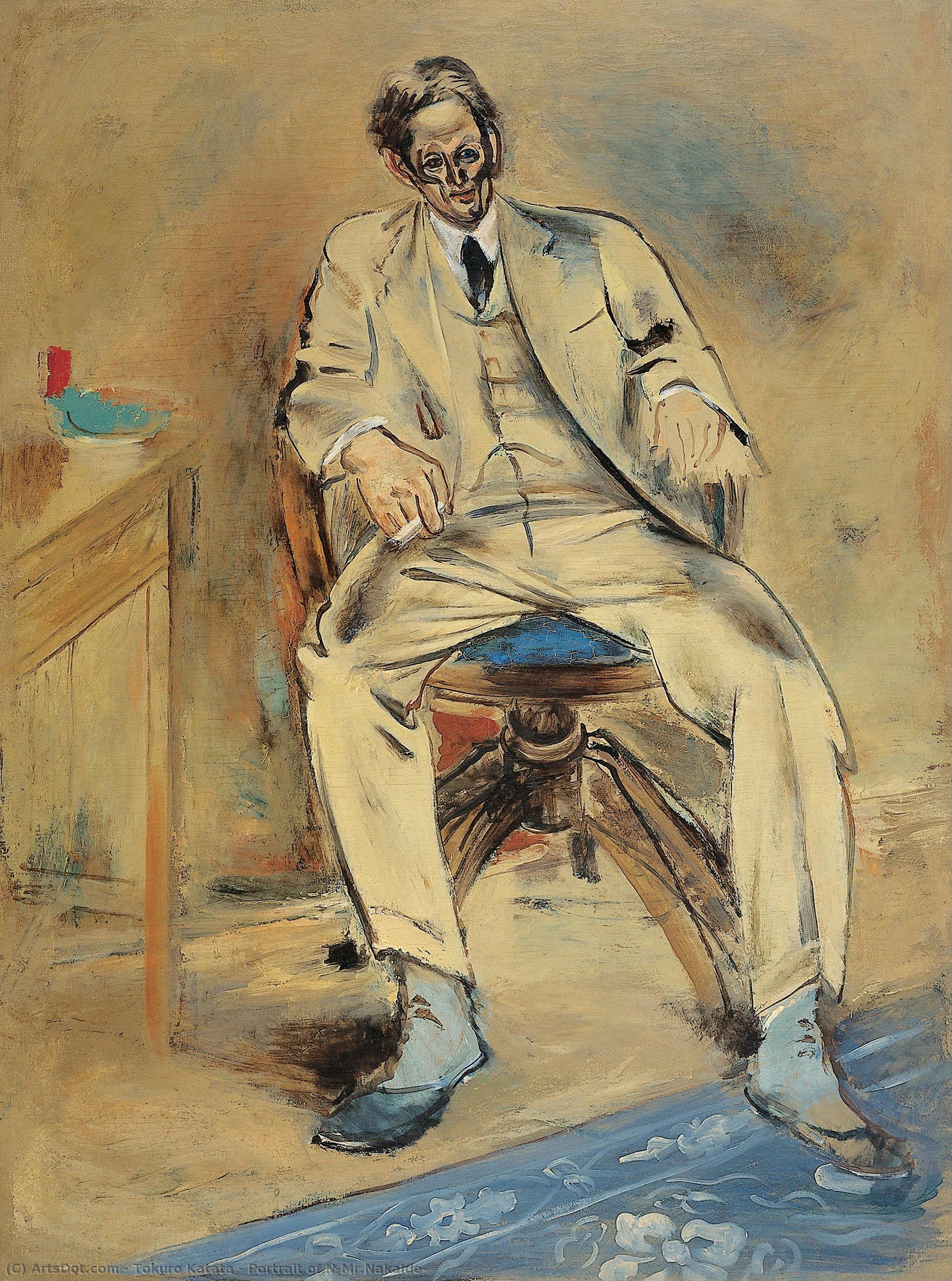
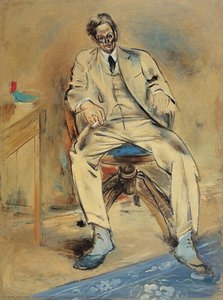
Portrait of N(Mr.Nakaide)


 Read More
Giclée / Art Print
Museum-quality giclée or canvas print with fast production and flexible finish options. ( Buy Hand Made Painting Buy Image)




































Pick from our preset sizes that match the artwork's original proportions.

You may enter your own dimensions to fit a specific frame or space. If your selected size does not match the original image's proportions, we will either crop the artwork or extend the image with a mirrored or solid-fill edge. A digital mockup will be sent for your approval before production begins.
Please note that the on-screen preview does not reflect the actual cropping or extension. Only the mockup will accurately show the final composition.
While custom sizes are available, we recommend selecting a dimension from the predefined list to preserve the original proportions.
Worldwide Delivery () in 2 weeks instead of standard 4/5 weeks. (26 August)

Free Worldwide Express Shipping

High-Quality Linen Canvas

Full Shipping Insurance

Customs Tax Refund Guarantee

True Color Matching Guarantee

60-Day Return Policy (Defects Only)

100% Money-Back Guarantee

Bulk Discount Offer
 Glass option is only available in size under 110 CM

Portrait of N(Mr.Nakaide)
Giclée / Art Print
Reproduction Size
-


Total Price
$ 63
Related Artworks



Artist Biography
The Alchemist of Clay: The Turbulent Life of Tokuro Katata
To understand the soul of Japanese ceramics in the twentieth century, one must look toward the fire-scarred legacy of Tokuro Katata. Born into a lineage of potters in the historic clay-rich region of Seto City, Katata’s life was an extraordinary tapestry woven from profound artistic brilliance and searing public controversy. While his formal name, Shokuro, connected him to a long line of craftsmen, he adopted the moniker Tokuro to distinguish himself within a crowded landscape of artisans. His early years were defined by a primal connection to the earth; as a young boy, he wandered through ancient kiln sites, collecting fragmented shards of pottery that would later serve as his most vital teachers. These small, weathered pieces of history whispered secrets of the Momoyama period, igniting a lifelong obsession with reviving the lost splendor of Mino ware.
Katata’s artistic journey was never a quiet one. He possessed a maverick spirit that refused to bow to established academic dogmas. His deep immersion in the study of tea ceremony and the excavation of ancient kiln sites allowed him to develop a technical mastery that bridged the gap between antiquity and modernity. He did not merely wish to copy the past; he sought to resurrect its very essence. This pursuit led him to experiment with the distinctive glazes of Oribe, Shino, and Ki-Seto, recreating the vibrant splashes of color and the rugged, organic textures that characterized Japan's golden age of ceramics. His work was a dialogue between the hands of a modern master and the ghosts of the sixteenth-century potters.
A Legacy Forged in Fire and Controversy
The brilliance of Katata’s technical achievements was often shadowed by the storms of scandal that defined his later years. He was a scholar who dared to challenge the status quo, most notably through his groundbreaking research into Ki-Seto ware. By asserting that this specific style originated in Tajimi rather than Seto, he ignited a firestorm of resentment among traditionalists, leading to the infamous book-burning incident of 1933. Such was his reputation for truth-seeking—and the volatility that accompanied it—that his career became inextricably linked to the "Einin Tsubo Incident," a controversy involving the forgery of an ancient piece that ultimately cost him his prestigious status as a holder of Important Intangible Cultural Property.
Yet, to view Katata solely through the lens of scandal is to miss the profound spiritual depth of his craft. Despite the loss of official recognition, his dedication to the kiln remained unshakable. His later works, such as the celebrated Tsurara (icicle) tea bowl, demonstrated a breathtaking ability to manipulate clay and glaze to evoke natural phenomena. His mastery extended across various styles, including:
- Shino Ware: Characterized by thick, milky glazes and subtle, evocative textures.
- Oribe Ware: Renowned for its bold, copper-green glazes and playful, representational motifs.
- Setoguro: A deep, lustrous black glaze that captured the stark beauty of the Seto tradition.
- Ki-Seto: A yellowish, understated elegance that he famously re-contextualized through his historical research.
Ultimately, Tokuro Katata remains a titan of Japanese ceramic history. He was an artist who lived on the edge of convention, a historian who risked his reputation for the sake of archaeological truth, and a potter whose hands could breathe life into cold clay. His legacy is not found merely in museums, but in the very survival of the Mino traditions he fought so fiercely to protect and redefine.
tokuro katata
1907 - 1993 , Japan
Quick Facts
- Artistic Movement Or Style: Representational painting; Mino pottery (Oribe)
- Artists Or Movements Influenced By This Artist: ['Momoyama Era Art']
- Artists Who Influenced This Artist:
- Imperial Academy Exhibitions
- Japan Fine Arts Exhibitions
- Date Of Birth: 1907
- Date Of Death: 1993
- Full Name: Tokuro Katata
- Nationality: Japanese
- Notable Artworks: ['Portrait of N(Mr.Nakaide)']
- Place Of Birth: Seto City, Japan