 Preview
 Send
Send Share
Share
 Details

 Download
 Similars
 X-Ray
X-Ray Diaporama
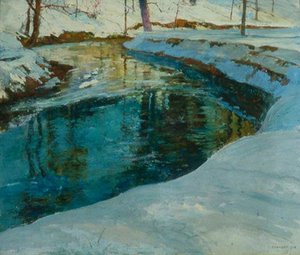
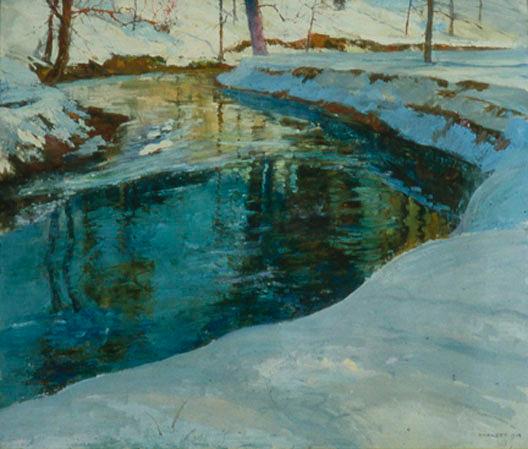
Close of a Winter Day, (painting)

 Read More
Giclée / Art Print
Museum-quality giclée or canvas print with fast production and flexible finish options. ( Buy Hand Made Painting Buy Image)




































Pick from our preset sizes that match the artwork's original proportions.

You may enter your own dimensions to fit a specific frame or space. If your selected size does not match the original image's proportions, we will either crop the artwork or extend the image with a mirrored or solid-fill edge. A digital mockup will be sent for your approval before production begins.
Please note that the on-screen preview does not reflect the actual cropping or extension. Only the mockup will accurately show the final composition.
While custom sizes are available, we recommend selecting a dimension from the predefined list to preserve the original proportions.
Worldwide Delivery () in 2 weeks instead of standard 4/5 weeks. (23 August)

Free Worldwide Express Shipping

High-Quality Linen Canvas

Full Shipping Insurance

Customs Tax Refund Guarantee

True Color Matching Guarantee

60-Day Return Policy (Defects Only)

100% Money-Back Guarantee

Bulk Discount Offer
 Glass option is only available in size under 110 CM

Close of a Winter Day, (painting)
Giclée / Art Print
Reproduction Size
-


Total Price
$ 63
Related Artworks










Artist Biography
Thomas P. Barnett (1870 - 1929): Architect of St. Louis’s Soul
Thomas Barnett, born February 11, 1870, in St. Louis, Missouri, was a prolific architect and painter whose legacy continues to shape the city's cultural landscape. His artistic vision—characterized by Romantic idealism and meticulous craftsmanship—established him as one of St. Louis’s most prominent figures of his era, leaving an indelible mark on its architectural heritage and artistic sensibilities.Early Life & Artistic Training
Barnett’s formative years were steeped in the traditions of his father, George I. Barnett, a celebrated architect known for monumental structures like the Old Courthouse and the Missouri Governor's Mansion. Following in his father’s footsteps, Tom Barnett honed his skills at Saint Louis University, immersing himself in the study of architecture before embarking on a collaborative partnership with his brother and brother-in-law, George Dennis Barnett and John Ignatius Haynes, forming Barnett, Haynes & Barnett. This firm swiftly gained renown for upholding the stylistic grandeur inherited from George I., prioritizing Classicism as its guiding principle—a deliberate choice reflecting the values of St. Louis’s elite at the time.Architectural Achievements: Shaping St. Louis's Skyline
Barnett, Haynes & Barnett’s architectural endeavors spanned across diverse projects – commercial buildings, residential estates, and notably, religious edifices. Among their most enduring creations stand the Cathedral Basilica of St. Louis—a breathtaking testament to Gothic Revival artistry—the Adolphus Hotel in Dallas, Texas, embodying opulent Beaux Arts elegance, and Saint Clement Catholic Church in Chicago, showcasing meticulous detailing and harmonious proportions. The firm’s collaborative spirit ensured that each project resonated with a shared aesthetic vision, cementing their place as architects of St. Louis's identity. Particularly noteworthy was the Palace of Liberal Arts for the Louisiana Purchase Exposition of 1904, where Barnett secured the Gold Medal for Architecture—a recognition of his masterful execution and artistic sensitivity. Subsequent projects included the Missouri State Capitol building in Jefferson City and numerous other structures that continue to inspire awe and admiration.Painting: Capturing American Landscapes
Beyond architecture, Barnett pursued painting with fervor, studying under Paul Cornoyer and embracing the tenets of American Impressionism. His canvases—primarily landscapes—were imbued with vibrant colors and expansive brushstrokes, reflecting his profound connection to the natural world. Barnett’s artistic style prioritized idealized representations of scenery, conveying emotions of serenity and optimism—a stylistic hallmark that distinguished him from many contemporaries. He exhibited extensively throughout the United States, garnering acclaim for his evocative depictions of American West landscapes and mining towns. Awards included the Bronze Medal for Painting at the Lewis and Clark Centennial Exposition in 1905 and the First Ives Landscape Prize from the St. Louis Artist’s Guild annually between 1914 and 1925—testaments to his artistic prowess and unwavering dedication.Legacy & Recognition
Barnett's influence extended beyond individual buildings and paintings; he served as a mentor, shaping the careers of younger architects and artists. His works are housed in prominent museums across America, including the Art Institute of Chicago, Detroit Institute of Arts, Saint Louis Art Museum, and the Busch family collection at Grant’s Farm—a lasting testament to his artistic contribution and enduring fascination for capturing the beauty of the American landscape. Thomas Barnett remains a celebrated figure in St. Louis's history—an architect who elevated the city's cultural stature and an artist whose canvases continue to inspire contemplation and appreciation for the sublime grandeur of nature.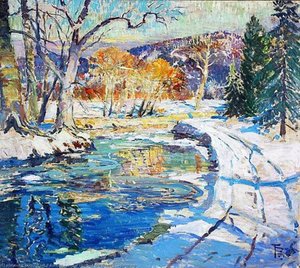
tom p barnett
1870 - 1929
Quick Facts
- Artistic Movement Or Style: Landscape Painting
- Artists Or Movements Influenced By This Artist: ['Beaux Arts']
- Artists Who Influenced This Artist: ['George I Barnett']
- Date Of Birth: February 11, 1870
- Date Of Death: September 23, 1929
- Full Name: Thomas P Barnett
- Nationality: American
- Notable Artworks:
- Cathedral Basilica of St Louis
- Adolphus Hotel
- Place Of Birth: St Louis