

 Preview
 Send
Send Share
Share
 Details

 Download
 Similars
 X-Ray
X-Ray Diaporama
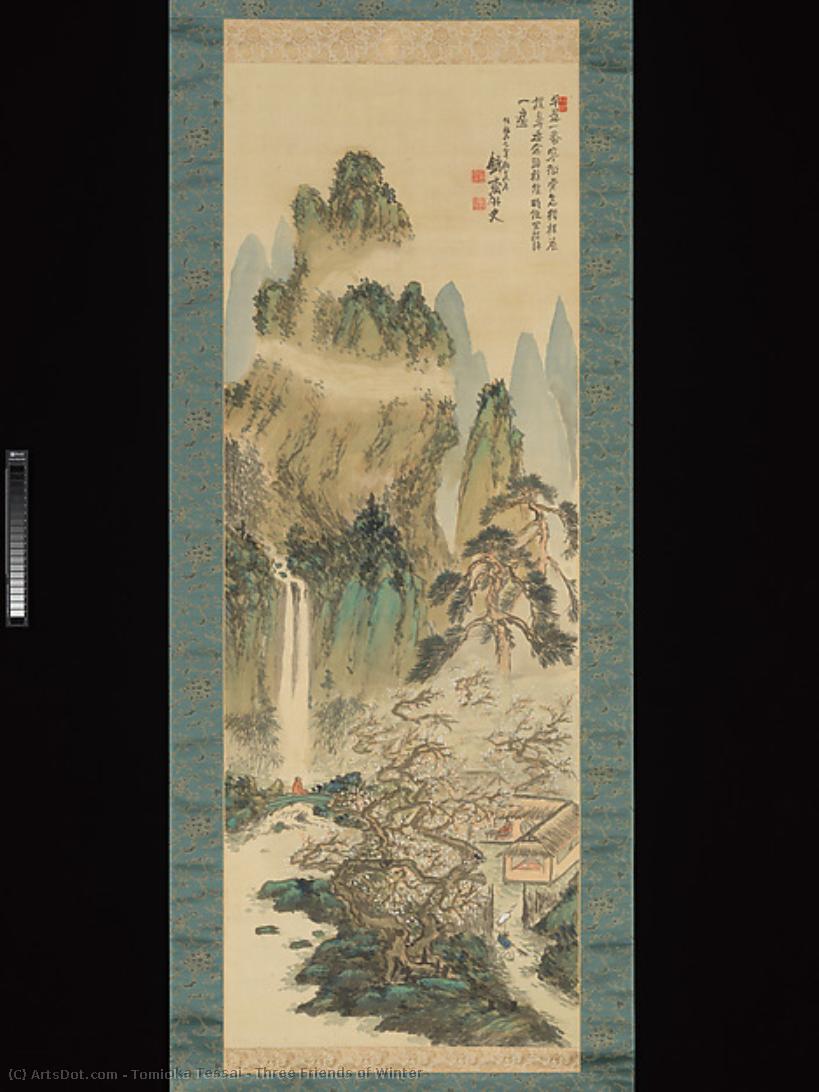
Three Friends of Winter
 1906
1906 142.0 x 51.0 cm
 Read More
Purchase a high-resolution, enhanced digital image, far superior to the online preview.
Each file is meticulously prepared by our in-house specialists using advanced tools and expert manual retouching. We ensure every image has exceptional clarity, precise color accuracy, and fine detail.
The final file is delivered via email within 72 hours, optimized for immediate use in professional, editorial, and print environments. This is the same quality trusted by top-tier design studios, publishers, and galleries.
Digital Image
Download a high-resolution file for personal display, printing, and creative projects. ( Buy Print Buy Hand Made Painting)
Included in Every Digital Image Order
Expert Digital Delivery, Guaranteed
When you choose ArtsDot.com, you're not just getting an image - you're receiving a professionally enhanced digital artwork, crafted with precision and backed by a satisfaction guarantee. Here's everything that comes with your order, automatically:

Fast Email Delivery
Your high-resolution digital image file will be emailed to you within 72 hours of ordering - ready for immediate use.

AI-Enhanced Digital File
Your artwork is professionally optimized using advanced AI tools and manual editing, ensuring maximum detail, clarity, and color accuracy.

Free Lifetime Re-Delivery
Accidentally deleted or lost your file? No worries - we'll resend it to you anytime, free of charge.

No Import Fees - Ever
Enjoy your artwork instantly with zero customs, duties, or delivery fees - digital downloads are always tax-free.

Color Accuracy Guarantee
We ensure your digital image reflects the original colors as closely as possible using professional tools and color management.

60-Day Satisfaction Guarantee
If you're not satisfied with your digital image, we'll revise it or refund 100% within 60 days - no questions asked.

100% Money-Back Guarantee
Not satisfied? Get a full refund within 60 days of receiving your digital file - no questions asked.

Bulk Order Discounts
Buy 3 images, save 10% - Buy 5, save 15% - Buy 10+, save 20%. Great for creative projects, galleries, and agencies.
Collectible Description
Related Artworks









Artist Biography
The Last Voice of Bunjinga: The Life and Legacy of Tomioka Tessai
Tomioka Tessai, born as Tomioka Yusuke, remains one of the most profound and singular figures in the long tapestry of Japanese art history. Standing at a monumental crossroads between eras, he was both the final great guardian of the Bunjinga tradition—a style rooted in the scholarly, literati ideals of China—and a pioneering force behind the emergence of Nihonga, the modern evolution of Japanese painting. Born in Kyoto in 1836, his early years were marked by a deep immersion in the intellectual and spiritual currents of his time. The loss of his father at a young age led him to serve as a page at a Shinto shrine, an experience that provided him with an intimate, early exposure to ritualistic beauty and the power of visual storytelling through sacred art. His scholarly foundations were laid under the tutelage of Okuni Tadamasa, a renowned scholar of kokugaku. Through this mentorship, Tessai absorbed the profound tenets of Neo-Confucianism, a philosophy that emphasizes moral cultivation and a harmonious, respectful coexistence with the natural world. This intellectual rigor would later manifest in his brushwork, where every stroke was an expression of character and cosmic order. Perhaps most significantly, his life was touched by the presence of the Buddhist nun and poet Ōtagaki Rengetsu. As his patron and mentor, Rengetsu nurtured his artistic sensibilities, instilling in him a lifelong fascination with the delicate interplay between poetry and visual representation, ensuring that his art would always possess a lyrical, soulful quality.A Synthesis of Tradition and Innovation
As Tessai’s mastery grew, so too did his ability to bridge disparate worlds. His artistic journey was not merely one of technical refinement but of profound stylistic synthesis. While he remained deeply anchored in the Bunjinga style—characterized by its emphasis on spontaneous brushwork and the expression of the artist's inner spirit—he began to incorporate elements that would define the new Nihonga movement. This transition was not a rejection of his roots but an expansion of them, allowing him to document the changing landscape of Meiji-era Japan with both historical reverence and modern vitality. His technical prowess extended beyond the canvas into the realm of calligraphy, where his command of line and ink mirrored the strength and fluidity of his paintings. This versatility allowed him to move seamlessly between the delicate, poetic nuances of literati landscapes and more robust, topographical works. His involvement in the Meiji government even saw him contributing maps and charts, demonstrating a commitment to using his artistic vision to document the physical and political evolution of his nation.Historical Significance and Enduring Spirit
The significance of Tomioka Tessai lies in his role as a cultural bridge. He lived through a period of intense transformation in Japan, witnessing the closing of the feudal era and the dawn of modernization. In an age where many were looking solely toward Western influences, Tessai provided a vital link to the classical past, ensuring that the spiritual and philosophical depth of Japanese tradition was not lost in the rush toward progress. His achievements can be summarized through his enduring impact on the Japanese aesthetic:- As the final bastion of the Bunjinga style, he preserved the scholarly traditions of literati painting for future generations.
- As a pioneer of Nihonga, he helped shape the modern identity of Japanese painting by blending classical techniques with contemporary sensibilities.
- His work serves as a visual record of the transition from the Edo period to the Meiji era, capturing both the landscape and the shifting cultural psyche of Japan.
tomioka yusuke
1836 - 1924 , Japan
Quick Facts
- Artistic Movement Or Style: Bunjinga & Nihonga
- Artists Or Movements Influenced By This Artist: ['Kanō School']
- Artists Who Influenced This Artist: ['Ōtagaki Rengetsu']
- Date Of Birth: Kyoto, Japan (1836)
- Date Of Death: 1924
- Full Name: Tomioka Yusuke
- Nationality: Japanese
- Notable Artworks:
- Scene Inspired by the Scrolls of Frolicking Animals and Humans
- Hall of Enma, the King of Hell
- Place Of Birth: Kyoto

