 Preview
 Send
Send Share
Share
 Details

 Download
 Similars
 X-Ray
X-Ray Diaporama
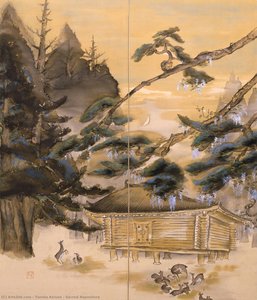
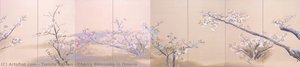
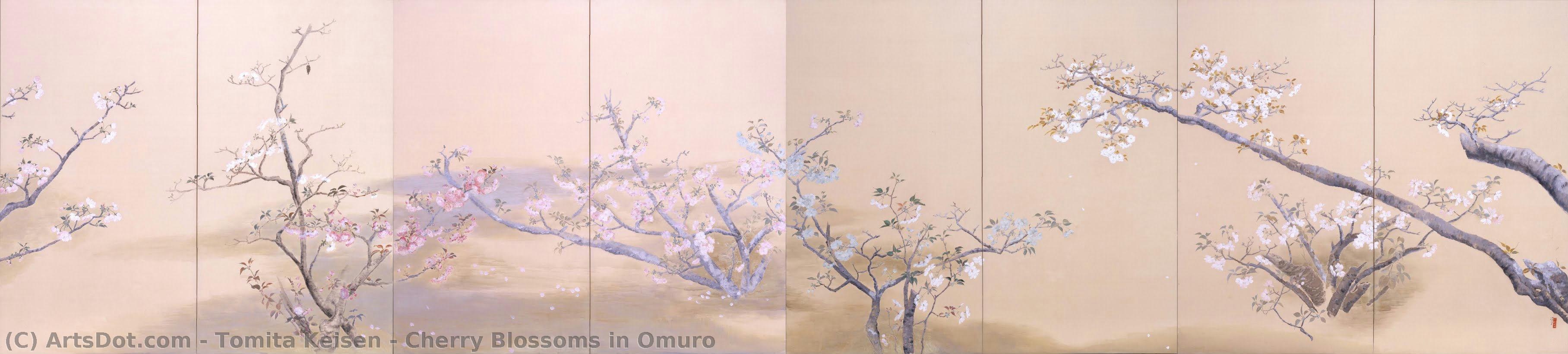
Cherry Blossoms in Omuro
 184.0 x 168.0 cm
 Fukuoka Art Museum
 Read More
Hand Made Oil Reproduction
Hand-painted oil on canvas in your size and frame, made to order by our artists. ( Buy Print Buy Image)




































Pick from our preset sizes that match the artwork's original proportions.

You may enter your own dimensions to fit a specific frame or space. If your selected size does not match the original image's proportions, we will either crop the artwork or extend the painting with additional hand-painted elements. A digital mockup will be sent for your approval before production begins.
Please note that the on-screen preview does not reflect the actual cropping or extension. Only the mockup will accurately show the final composition.
While custom sizes are available, we recommend selecting a dimension from the predefined list to preserve the original proportions.
After order, ArtsDot.com team will email client for instructions and provide a mockup preview
Worldwide Delivery () in 3/4 weeks instead of standard 5 weeks. (20 August). No compromise on quality.

Free Worldwide Express Shipping

High-Quality Linen Canvas

Full Shipping Insurance

Customs Tax Refund Guarantee

True Color Matching Guarantee

60-Day Return Policy (Defects Only)

100% Money-Back Guarantee

Bulk Discount Offer
 Glass option is only available in size under 110 CM

Cherry Blossoms in Omuro
Reproduction Medium
Reproduction Size
-


Total Price
$ 263
Artwork Description
Related Artworks



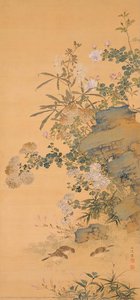
Artist Biography
The Soul of Nihonga: The Life and Legacy of Tomita Keisen
In the delicate interplay of light and mineral pigment, the works of Tomita Keisen (1879–1936) offer a window into a Japan caught between the weight of ancient tradition and the dawn of modernity. Born in Fukuoka, Keisen’s early life was rooted in a world of meticulous craftsmanship, shaped by his family's heritage as restaurateurs. This foundational appreciation for precision and detail would later manifest in his mastery of Nihonga, a style that seeks to capture the essence of the natural world through traditional Japanese techniques. His journey was not merely one of technical skill, but a profound spiritual pilgrimage that sought to bridge the gap between the earthly landscape and the divine.
Keisen’s artistic evolution was shaped by a rigorous and diverse education that spanned the most influential schools of his era. His initial training under Kinugasa Morimase, a painter for the Kuroda clan, introduced him to the structured, bold aesthetics of the Kanō school. However, Keisen possessed an insatiable intellectual curiosity that drove him toward the more naturalistic and contemplative Shijō school. By studying under Tsuji Kakō in Kyoto, he learned to infuse his landscapes with a sense of quietude and spiritual depth. This synthesis of styles allowed him to move beyond mere representation, creating works where the atmosphere itself feels heavy with meaning.
A Tapestry of Faith and Exploration
What truly distinguishes Keisen from his contemporaries was the profound spiritual dimension that permeated his brushwork. His worldview was a complex tapestry woven from threads of Christianity and Zen Buddhism, a duality that informed his travels and his artistic gaze. During his expeditions to China and Okinawa, Keisen did not merely observe landscapes; he sought out the sacred. He immersed himself in the iconography of Heian-period Buddhist imagery, absorbing the ancient aesthetic sensibilities that prioritize the ephemeral beauty of the moment. This deep engagement with religious history allowed him to utilize mineral pigments not just for color, but to evoke a sense of timelessness and reverence.
His technical mastery is most evident in his ability to manipulate traditional materials to achieve extraordinary atmospheric effects. Through the careful application of crushed minerals and organic pigments, he could recreate the misty morning light over a mountain range or the subtle translucency of water. His achievements were recognized by the most prestigious institutions of his time, including frequent exhibitions at the Japan Painting Association, which cemented his status as a leading figure in the Meiji-era art scene. His work serves as a testament to the power of Nihonga to convey complex emotional and spiritual states through the medium of nature.
Historical Significance and Enduring Influence
The historical importance of Tomita Keisen lies in his role as a guardian of tradition who was nonetheless open to the transformative energies of his age. He did not view the past as a static relic, but as a living language capable of expressing contemporary truths. His ability to integrate the structured lineage of the Kanō school with the fluid naturalism of the Shijō school created a unique visual vocabulary that resonated with both scholars and the public.
Today, Keisen’s legacy is preserved in significant collections, most notably at the Moa Museum, where his landscapes continue to inspire awe. His life remains a profound example of how an artist can navigate the tensions between different belief systems and artistic movements to create something truly universal. To look upon a Keisen painting is to witness a moment of perfect equilibrium—where the physical world meets the spiritual, and where every brushstroke carries the weight of history.
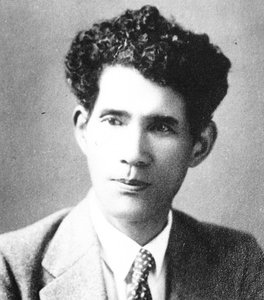
tomita keisen
1879 - 1936 , Japan
Quick Facts
- Artistic Movement Or Style: Nihonga
- Artists Or Movements Influenced By This Artist: ['Kanō School']
- Artists Who Influenced This Artist:
- Kinugasa Morimase
- Tsuji Kakō
- Date Of Birth: December 9, 1879
- Date Of Death: 1936
- Full Name: Tomita Keisen
- Nationality: Japanese
- Notable Artworks:
- Eight Views of Saga
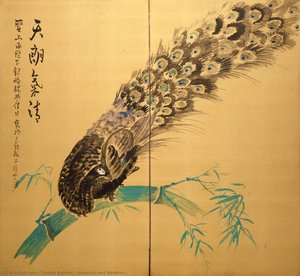
- Peacock and Bamboo
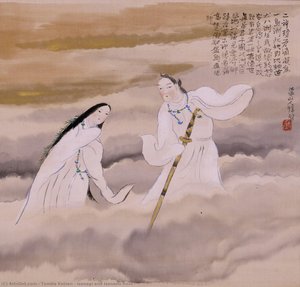
- Izanagi and Izanami
- Place Of Birth: Fukuoka, Japan