 Preview
 Send
Send Share
Share
 Details

 Download
 Similars
 X-Ray
X-Ray Diaporama
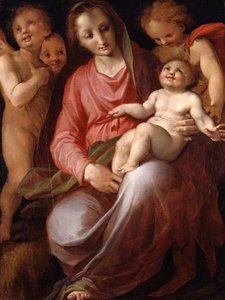
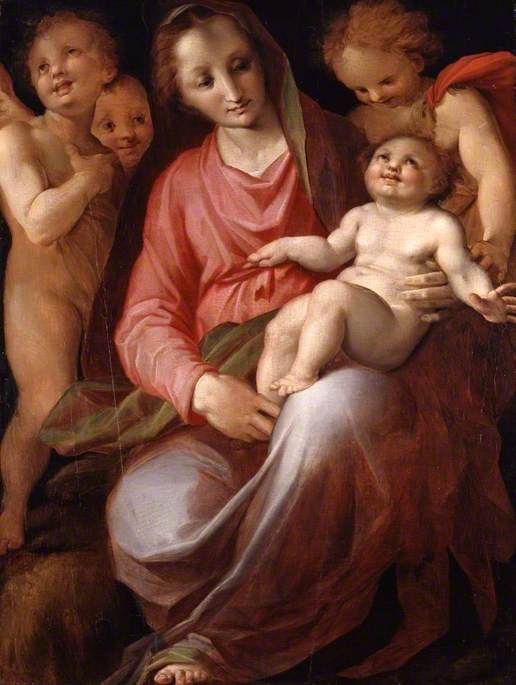
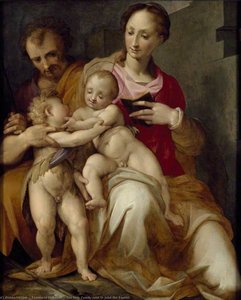
Madonna and Child with the Infant Saint John
 1570
1570 77.0 x 61.0 cm
 Read More
Hand Made Oil Reproduction
Hand-painted oil on canvas in your size and frame, made to order by our artists. ( Buy Print Buy Image)




































Pick from our preset sizes that match the artwork's original proportions.

You may enter your own dimensions to fit a specific frame or space. If your selected size does not match the original image's proportions, we will either crop the artwork or extend the painting with additional hand-painted elements. A digital mockup will be sent for your approval before production begins.
Please note that the on-screen preview does not reflect the actual cropping or extension. Only the mockup will accurately show the final composition.
While custom sizes are available, we recommend selecting a dimension from the predefined list to preserve the original proportions.
After order, ArtsDot.com team will email client for instructions and provide a mockup preview
Worldwide Delivery () in 3/4 weeks instead of standard 5 weeks. (26 August). No compromise on quality.

Free Worldwide Express Shipping

High-Quality Linen Canvas

Full Shipping Insurance

Customs Tax Refund Guarantee

True Color Matching Guarantee

60-Day Return Policy (Defects Only)

100% Money-Back Guarantee

Bulk Discount Offer
 Glass option is only available in size under 110 CM

Madonna and Child with the Infant Saint John
Reproduction Medium
Reproduction Size
-


Total Price
$ 263
Related Artworks








Artist Biography
The Ethereal Grace of Tommaso Manzuoli
In the vibrant, intellectually charged atmosphere of sixteenth-century Florence, few artists captured the delicate tension between spiritual devotion and stylistic artifice as poignantly as Tommaso Manzuoli. Known to history by his evocative moniker, Maso da San Friano, this Florentine master emerged from a lineage of creators, born into a family where the brush was a primary language. Though his life was tragically brief—concluding in 1571 at the tender age of only thirty-five—the impact of his work resonated far beyond his short tenure. Manzuoli did not merely paint; he orchestrated scenes of profound psychological depth, weaving together the monumental legacies of the High Renaissance with the sophisticated, often elongated elegance of the Manierismo movement.
The foundations of Manzuoli’s artistry were laid within the prestigious workshops of Florence, where the air was thick with the influence of giants. While historical accounts offer slight variations on his earliest mentors—with Giorgio Vasari pointing toward the tutelage of Pier Francesco Foschi and others suggesting the guidance of Carlo Portelli—the result was an unmistakable stylistic synthesis. From these masters, he inherited a profound respect for classical structure, yet he possessed the creative courage to embrace the emerging Mannerist tendencies. His work began to reflect a departure from the balanced stability of his predecessors, moving instead toward a world of complex compositions, subtle distortions, and an almost sculptural approach to the human form, heavily inspired by the monumental presence of Michelangelo Buonarroti.
A Mastery of Light and Devotion
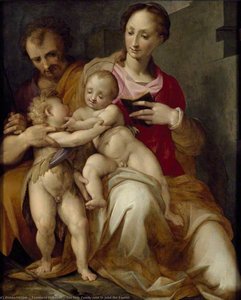
To encounter a Manzuoli painting is to enter a space of quiet, stylized contemplation. His oeuvre is perhaps most celebrated for its religious iconography, where he achieved a remarkable ability to infuse sacred subjects with human tenderness. In masterpieces such as The Holy Family with St John the Baptist, housed in the magnificent Palazzo Pitti, one observes his signature technique: the use of pyramidal structures and soft, nuanced shading to create a sense of intimacy within a highly stylized framework. He possessed a rare gift for capturing the fleeting expressions of sanctity—the gentle gaze of a Madonna or the innocent curiosity of an infant saint—rendering them with a clarity that feels both otherworldly and deeply relatable.
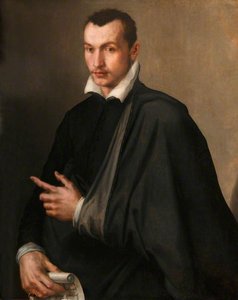
Beyond his religious devotion, Manzuoli’s skill extended into the realm of portraiture, where he could translate the dignity and social standing of his patrons into enduring visual legacies. His portrait of Ottavio Farnese, the 2nd Duke of Parma, serves as a testament to his ability to navigate the complexities of Mannerist detail, presenting a figure of immense gravity through rich textures and precise anatomical rendering. This duality—the ability to move between the ethereal realms of the divine and the grounded reality of the aristocratic portrait—defines his unique contribution to the Florentine school.
Legacy Amidst the Twilight of the Renaissance
The historical significance of Maso da San Friano lies in his role as a bridge between eras. He stood at the crossroads where the harmonious ideals of the early Renaissance met the more restless, experimental spirit of the late sixteenth century. His work embodies the Counter-Maniera period, a time when artists sought to balance the intellectual complexity of Mannerism with a renewed clarity and emotional accessibility. Even as his life was cut short by illness, the seeds he planted in the Florentine tradition continued to flourish.
Today, we remember Tommaso Manzuoli not just as a painter of beautiful images, but as an artist who understood the profound weight of emotion. His ability to manipulate light and form to evoke spiritual longing remains a hallmark of his genius. Through his brush, the fleeting moments of human connection were elevated to the eternal, ensuring that his name would remain etched in the annals of Italian art history alongside the very masters who inspired him.
tommaso manzuoli
1536 - 1571
Quick Facts
- Artistic Movement Or Style: Mannerism
- Artists Or Movements Influenced By This Artist: ['Ottavio Farnese']
- Artists Who Influenced This Artist: ['Pier Francesco Foschi']
- Date Of Birth: 1536
- Full Name: Tommaso d'Antonio Manzuoli
- Nationality: Italian
- Notable Artworks:
- The Holy Family with St John the Baptist
- Madonna
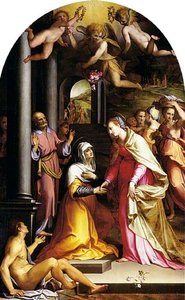
- The Visitation
- Place Of Birth: Firenze