 Preview
 Send
Send Share
Share
 Details

 Download
 Similars
 X-Ray
X-Ray Diaporama
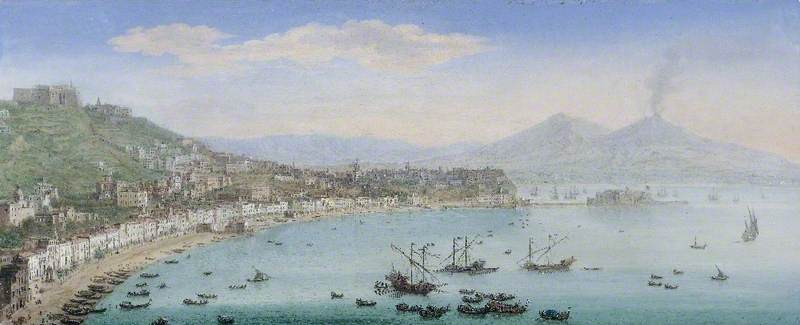
The Bay of Naples seen from Posillipo, Italy
 1760
1760 32.0 x 79.0 cm
 Read More
Hand Made Oil Reproduction
Hand-painted oil on canvas in your size and frame, made to order by our artists. ( Buy Print Buy Image)




































Pick from our preset sizes that match the artwork's original proportions.

You may enter your own dimensions to fit a specific frame or space. If your selected size does not match the original image's proportions, we will either crop the artwork or extend the painting with additional hand-painted elements. A digital mockup will be sent for your approval before production begins.
Please note that the on-screen preview does not reflect the actual cropping or extension. Only the mockup will accurately show the final composition.
While custom sizes are available, we recommend selecting a dimension from the predefined list to preserve the original proportions.
After order, ArtsDot.com team will email client for instructions and provide a mockup preview
Worldwide Delivery () in 3/4 weeks instead of standard 5 weeks. (29 August). No compromise on quality.

Free Worldwide Express Shipping

High-Quality Linen Canvas

Full Shipping Insurance

Customs Tax Refund Guarantee

True Color Matching Guarantee

60-Day Return Policy (Defects Only)

100% Money-Back Guarantee

Bulk Discount Offer
 Glass option is only available in size under 110 CM

The Bay of Naples seen from Posillipo, Italy
Reproduction Medium
Reproduction Size
-


Total Price
$ 263
Related Artworks









Artist Biography
Tommaso Ruiz: A Neapolitan Master of the Bay
Tommaso Ruiz, a largely unsung figure of 18th-century Italian art, deserves renewed attention for his exquisite depictions of the Bay of Naples and Posillipo. Born around 1750 (the exact date remains uncertain), Ruiz emerged during a period of significant artistic ferment in Naples – a city that served as a vibrant hub for Neoclassicism, drawing inspiration from both classical antiquity and the burgeoning ideals of the Enlightenment. His work, characterized by a serene elegance and meticulous attention to detail, offers a captivating glimpse into the beauty and tranquility of this iconic Italian landscape.
Ruiz’s artistic journey is intertwined with the rich cultural tapestry of Naples. The city, renowned for its historical significance and artistic patronage, provided him with an ideal environment to hone his skills. He was deeply influenced by the prevailing Neoclassical style, evident in his carefully composed scenes, balanced compositions, and emphasis on idealized beauty. However, unlike some of his contemporaries who slavishly replicated classical forms, Ruiz infused his work with a distinctly Italian sensibility – a sensitivity to light, color, and the unique atmosphere of the region.
The Bay as Canvas: Themes and Techniques
Ruiz’s primary subject matter revolved around the breathtaking vistas surrounding Naples. He frequently depicted the Bay of Naples itself, capturing its shimmering waters, dramatic cliffs, and distant islands with remarkable precision. Equally important were his views of Posillipo, a hillside suburb overlooking the bay, known for its picturesque villas and gardens. These landscapes weren’t merely topographical representations; they were imbued with a sense of peace, harmony, and timeless beauty – qualities highly valued during the 18th century.
Technically, Ruiz demonstrated considerable skill in rendering light and atmosphere. He employed subtle gradations of color to create a sense of depth and volume, capturing the shifting effects of sunlight on water and stone. His brushwork was generally smooth and controlled, contributing to the overall impression of refinement and elegance. He often utilized a muted palette, favoring cool blues, greens, and grays – colors that perfectly complemented the natural tones of the landscape.
Influences and Artistic Context
While Ruiz’s work is firmly rooted in Neoclassicism, it also reveals subtle influences from other artistic traditions. The meticulous detail and emphasis on realism can be traced back to the works of Canaletto and Guardi, both Venetian painters who were renowned for their topographical views. Furthermore, there's a hint of Baroque influence in his use of dramatic lighting and atmospheric effects – a legacy of Naples’ rich artistic past.
Crucially, Ruiz operated within a vibrant art scene that included other notable Neapolitan artists such as Bernardo Bellotto and Francesco Solimena. These painters shared a common interest in depicting the landscapes surrounding Naples, contributing to a collective effort to celebrate the beauty of their region. However, Ruiz’s unique perspective – his ability to capture both the grandeur and tranquility of the Bay of Naples – distinguishes him as a particularly compelling artist.
Legacy and Rediscovery
Despite his talent, Ruiz remained largely unknown during his lifetime. His work was primarily appreciated within private collections and circulated through art dealers. It wasn’t until the 20th century that his paintings began to receive wider recognition – thanks in part to the efforts of scholars and collectors who championed his artistic merits.
Today, Ruiz's works are held in prestigious museums and private collections around the world. His landscapes continue to captivate viewers with their serene beauty and technical mastery. Tommaso Ruiz’s legacy as a master of Neapolitan landscape painting is finally being acknowledged – a testament to his enduring artistic vision and the timeless appeal of his captivating views of the Bay of Naples.

tommaso ruiz
1954 - 1760
Quick Facts
- Artistic Movement Or Style: Neoclassicism
- Date Of Death: 1760
- Full Name: Tommaso Ruiz
- Nationality: Italian
- Notable Artworks:
- View of the Bay of Naples
- View of Naples and Posillipo
- The Bay of Naples seen from Posillipo
- Place Of Birth: Naples, Italy