 Preview
 Send
Send Share
Share
 Details

 Download
 Similars
 X-Ray
X-Ray Diaporama
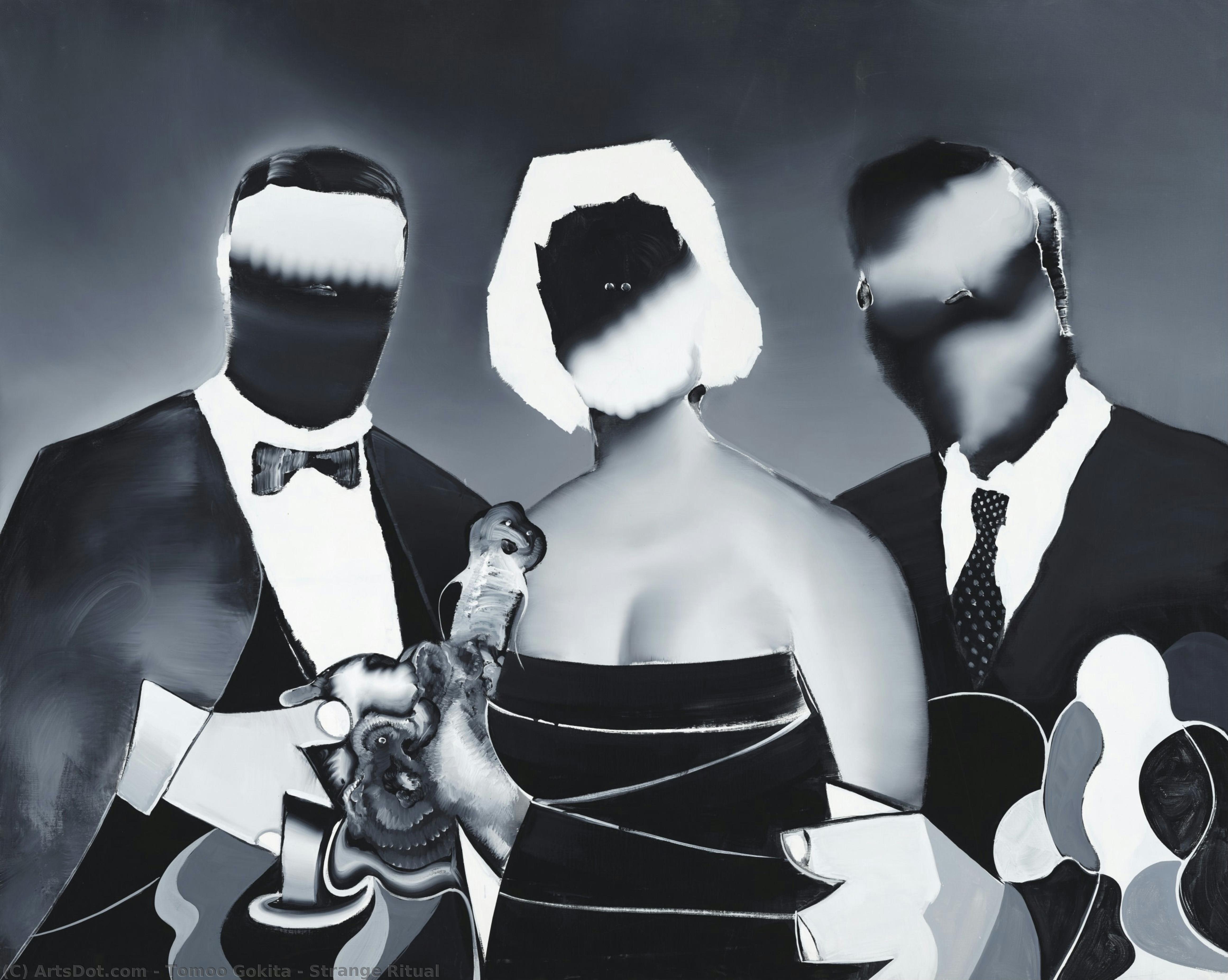
Strange Ritual
 5.0 x 3.0 cm
 Read More
Hand Made Oil Reproduction
Hand-painted oil on canvas in your size and frame, made to order by our artists. ( Buy Print Buy Image)




































Pick from our preset sizes that match the artwork's original proportions.

You may enter your own dimensions to fit a specific frame or space. If your selected size does not match the original image's proportions, we will either crop the artwork or extend the painting with additional hand-painted elements. A digital mockup will be sent for your approval before production begins.
Please note that the on-screen preview does not reflect the actual cropping or extension. Only the mockup will accurately show the final composition.
While custom sizes are available, we recommend selecting a dimension from the predefined list to preserve the original proportions.
After order, ArtsDot.com team will email client for instructions and provide a mockup preview
Worldwide Delivery () in 3/4 weeks instead of standard 5 weeks. (3 September). No compromise on quality.

Free Worldwide Express Shipping

High-Quality Linen Canvas

Full Shipping Insurance

Customs Tax Refund Guarantee

True Color Matching Guarantee

60-Day Return Policy (Defects Only)

100% Money-Back Guarantee

Bulk Discount Offer
 Glass option is only available in size under 110 CM

Strange Ritual
Reproduction Medium
Reproduction Size
-


Total Price
$ 263
Related Artworks






Artist Biography
Tomoo Gokita: The Erasure of Faces and the Sublimation of Horror
Born in Tokyo, Japan, in 1969, Tomoo Gokita’s artistic journey is a fascinating convergence of seemingly disparate influences – graphic design, illustration, American subculture, and a profound engagement with themes of loss, violence, and the uncanny. Initially pursuing studies in drafting and painting at a local art school, Gokita quickly realized that his creative impulses extended beyond traditional academic boundaries. He found himself drawn to the dynamism of Tokyo’s nightlife scene, working as a graphic designer for nightclubs and later crafting striking visuals for musicians – experiences that instilled in him an appreciation for visual communication and a keen eye for composition. However, it was a return to drawing and painting in the mid-1990s, fueled by a desire to explore his own artistic vision, that truly set him on his current path.
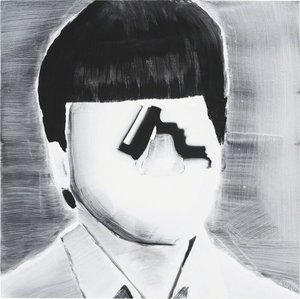
Gokita’s breakthrough came with the publication of ‘Lingerie Wrestling’ (2000), a collection of drawings based on images from his father's collection of Japanese pornographic magazines and American wrestling publications. This work established his signature style: the systematic erasure of faces within dynamic, often violent, compositions. He doesn’t simply obscure features; he actively dismantles them, leaving behind fragmented forms and unsettling voids. This deliberate act of removal speaks to a deeper exploration of identity, representation, and the inherent instability of visual perception. The influence of Surrealism is palpable here, but Gokita transcends mere mimicry, injecting a distinctly Japanese sensibility – a quiet intensity and an almost ritualistic approach to his craft.
The Monochrome Palette and the Language of Abstraction
Following ‘Lingerie Wrestling,’ Gokita honed his artistic voice through a period of intense experimentation with monochrome palettes. He moved away from color, embracing the stark simplicity of greyscale – a choice that dramatically heightened the emotional impact of his work. This shift wasn’t simply stylistic; it represented a deliberate effort to strip away superficiality and focus on the underlying structure and energy within each image. Gokita describes his process as “improvisation,” yet this apparent spontaneity belies a meticulous control over every brushstroke, every gesture. The resulting paintings are not random accidents but carefully orchestrated displays of tension and release.
His early work frequently referenced American subcultures – particularly the aesthetics of 1960s and 70s rock ‘n’ roll and wrestling—but he quickly developed a unique visual language, one that felt distinctly Japanese. He began to incorporate elements of manga culture, traditional Japanese art forms, and a fascination with the grotesque, creating images that are both familiar and unsettlingly alien. The recurring motif of the faceless figure – often depicted in dynamic poses reminiscent of wrestling or combat—became a central element of his artistic vocabulary, symbolizing vulnerability, loss, and the struggle for identity.
Exhibitions and Recognition
Tomoo Gokita’s work has garnered significant attention within the international art world. He quickly gained a devoted following after ‘Lingerie Wrestling,’ leading to exhibitions at prestigious galleries such as Petzel Gallery in New York, Mary Boone Gallery, and Blum & Poe in Los Angeles. His pieces have been featured in museums across Japan and internationally, solidifying his position as one of the leading contemporary Japanese artists. Notable solo shows include “Beauty” (Mary Boone Gallery, NYC, 2017), "Hotel Paraiso" (McNamara Art Projects, Hong Kong, 2018) and “Out of Sight” (ATM Gallery, NYC, 2016).
His work has been included in group exhibitions at institutions like the Birmingham Museum of Art (Alabama, 2017), Tulane University’s Newcomb Art Museum (Louisiana, 2015) and the Kawaguchiko Museum of Art (Japan, 2014). Gokita's ability to seamlessly blend influences—from Western art history to Japanese popular culture—demonstrates a sophisticated understanding of visual language and a willingness to challenge conventional notions of representation.
A Legacy of Erasure and Subversion
Tomoo Gokita’s artistic legacy extends beyond the aesthetic qualities of his work. His systematic erasure of faces, coupled with his exploration of themes like violence, loss, and identity, invites viewers to confront uncomfortable truths about themselves and the world around them. He doesn't offer easy answers or comforting resolutions; instead, he presents a series of unsettling images that linger in the mind long after they’ve been viewed. Gokita’s work is a testament to the power of abstraction to evoke profound emotional responses and a reminder that beauty can be found even in the darkest corners of the human experience.
His continued experimentation with color, most notably his recent return to pastel hues, suggests an ongoing dialogue between tradition and innovation. Gokita remains a vital voice within contemporary Japanese art, consistently pushing the boundaries of representation and challenging viewers to reconsider their assumptions about what constitutes “image” and “meaning.”
Tomoo Gokita
1969 - , Japan
Quick Facts
- Artistic Movement Or Style: Monochrome abstract
- Artists Or Movements Influenced By This Artist:
- Neo-Expressionists
- Surrealism
- Abstraction
- Artists Who Influenced This Artist:
- Julian Schnabel
- Eric Fischl
- David Salle
- Date Of Birth: 1969, Tokyo, Japan
- Full Name: Tomoo Gokita
- Nationality: Japanese
- Notable Artworks:
- Lingerie Wrestling
- Beauty
- Hoteli Paraiso
- Place Of Birth: Tokyo, Japan