 Preview
 Send
Send Share
Share
 Details

 Download
 Similars
 X-Ray
X-Ray Diaporama
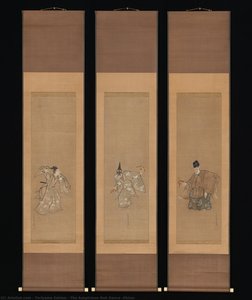
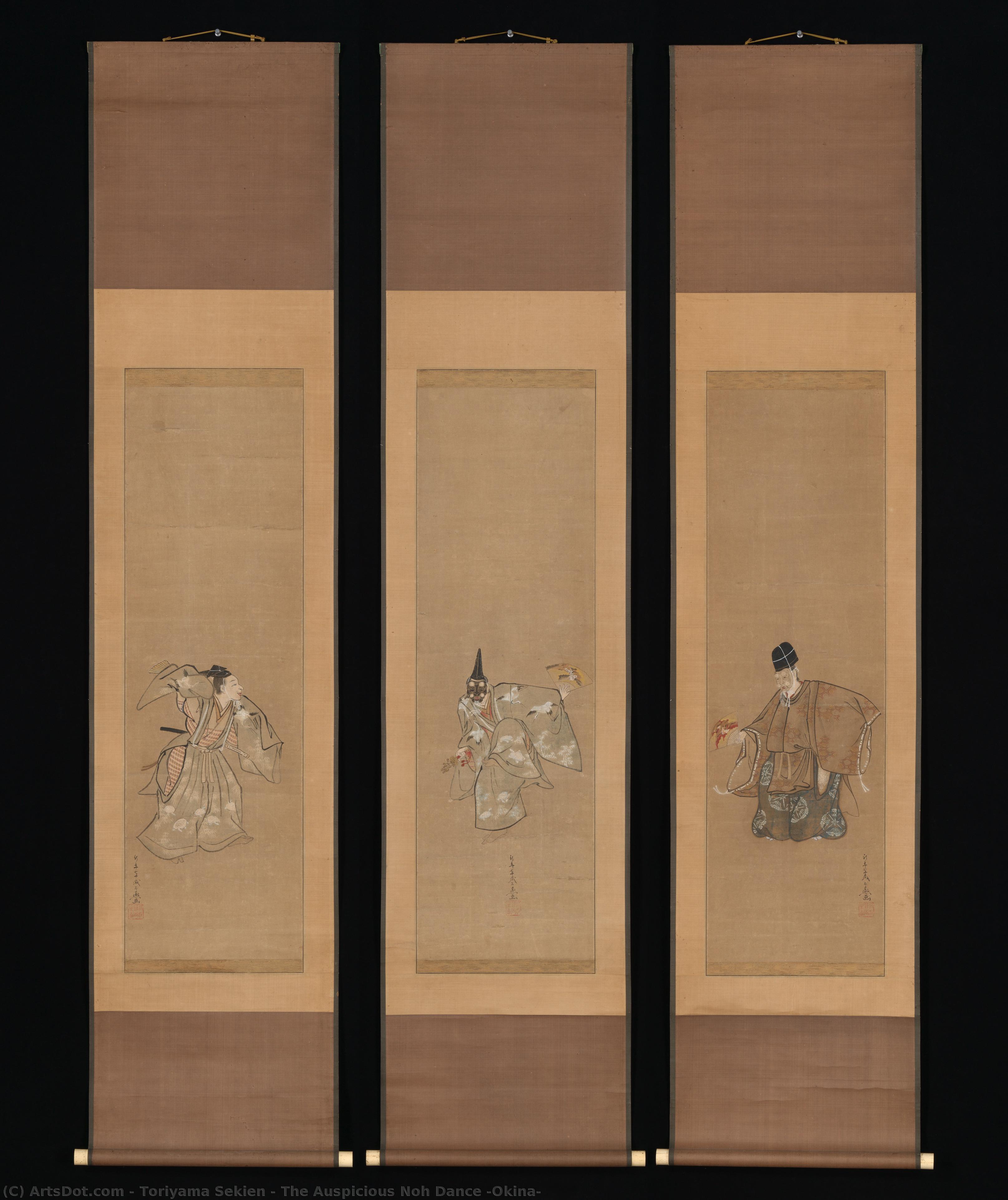
The Auspicious Noh Dance "Okina"
 1790
1790 87.0 x 27.0 cm
 Read More
Giclée / Art Print
Museum-quality giclée or canvas print with fast production and flexible finish options. ( Buy Hand Made Painting Buy Image)




































Pick from our preset sizes that match the artwork's original proportions.

You may enter your own dimensions to fit a specific frame or space. If your selected size does not match the original image's proportions, we will either crop the artwork or extend the image with a mirrored or solid-fill edge. A digital mockup will be sent for your approval before production begins.
Please note that the on-screen preview does not reflect the actual cropping or extension. Only the mockup will accurately show the final composition.
While custom sizes are available, we recommend selecting a dimension from the predefined list to preserve the original proportions.
Worldwide Delivery () in 2 weeks instead of standard 4/5 weeks. (24 August)

Free Worldwide Express Shipping

High-Quality Linen Canvas

Full Shipping Insurance

Customs Tax Refund Guarantee

True Color Matching Guarantee

60-Day Return Policy (Defects Only)

100% Money-Back Guarantee

Bulk Discount Offer
 Glass option is only available in size under 110 CM

The Auspicious Noh Dance "Okina"
Giclée / Art Print
Reproduction Size
-


Total Price
$ 63
Collectible Description
Related Artworks










Artist Biography
Toriyama Sekien: A Pioneer of Yōkai Illustration and Ukiyo-e Innovation
- Name: Toriyama Sekien (also known as Sano Toyofusa)
- Born: 1712, Tokyo, Japan
- Died: 1788
- Origin: ArtsDot
Early Life and Artistic Training
- Sekien was born into a family of high-ranking servants to the Tokugawa Shogunate, affording him access to elite artistic training.
- He received instruction from prominent artists of the Kanō school, Kanō Gyokuen and Kanō Chikanobu. While not formally recognized as a member of the Kanō school, this rigorous training significantly shaped his artistic foundation.
- His early work demonstrates a clear influence from the Kanō style, characterized by its emphasis on traditional Japanese techniques and formal composition. However, Sekien would later diverge to forge his own unique path.
Contributions to Ukiyo-e and the World of Yōkai
- Sekien is celebrated for being among the first artists to apply Kanō school techniques to ukiyo-e printmaking. This was a revolutionary step, bringing greater sophistication and detail to the genre.
- He invented fuki-bokashi, an innovative method allowing for the replication of subtle color gradations in prints. This technique significantly enhanced the visual complexity and nuance achievable in ukiyo-e.
- His most significant contribution lies in his illustrated books of yōkai (supernatural creatures from Japanese mythology). These works, such as "Tokaido Yotsuya Kaiki" and "Eliminations of Demons," popularized depictions of yōkai like tanuki and tengu, shaping their image in popular culture.
- As a teacher, Sekien mentored influential artists including Kitagawa Utamaro and Utagawa Toyoharu, whose works reflect his influence.
Major Works and Artistic Development
- Tokaido Yotsuya Kaiki: A collection of illustrations depicting various yōkai encountered along the Tokaido highway. This work is considered a cornerstone of Japanese folklore illustration.
- Eliminations of Demons (Konpaku Zatsuwa): Another significant series showcasing Sekien's imaginative depictions of supernatural beings, often accompanied by explanatory text.
- His artistic development involved moving beyond the strict formalism of the Kanō school to embrace a more dynamic and expressive style suitable for ukiyo-e and the depiction of fantastical subjects. He experimented with color palettes and composition to create visually striking and memorable images.
Historical Significance and Legacy
- Sekien’s work played a crucial role in shaping the public perception of yōkai, solidifying their place in Japanese folklore and popular imagination. His illustrations became iconic representations of these creatures.
- His innovative printmaking techniques, particularly fuki-bokashi, significantly advanced the capabilities of ukiyo-e art, influencing subsequent generations of artists.
- Sekien’s legacy extends to contemporary artists like Kawanabe Kyōsai and Mizuki Shigeru, who continue to draw inspiration from his work. He is recognized as a pivotal figure in the history of Japanese art, bridging traditional techniques with innovative approaches and contributing significantly to both ukiyo-e and folklore illustration.
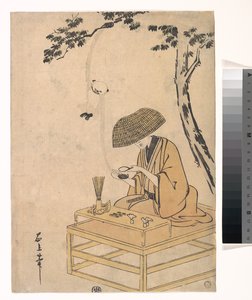
Toriyama Sekien
1712 - 1788 , Japan
Quick Facts
- Artistic Movement Or Style: Ukiyo-e, Kanō school
- Artists Or Movements Influenced By This Artist:
- Kitagawa Utamaro
- Utagawa Toyoharu
- Kawanabe Kyōsai
- Mizuki Shigeru
- Artists Who Influenced This Artist:
- Kanō Gyokuen
- Kanō Chikanobu
- Date Of Birth: 1712
- Date Of Death: 1788
- Full Name: Toriyama Sekien
- Nationality: Japanese
- Notable Artworks: ['The Auspicious Noh Dance "Okina"']
- Place Of Birth: Tokyo, Japan