Preview
 Send
Send Share
Share
 Details

 Download
 Similars
 X-Ray
X-Ray Diaporama
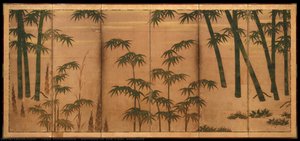
Illustrated Legends of Ishiyamadera (Ishiyamadera engi emaki), Scroll 4
 1497
1497 34.0 x 1928.0 cm
 Read More
Giclée / Art Print
Museum-quality giclée or canvas print with fast production and flexible finish options. ( Buy Hand Made Painting Buy Image)




































Pick from our preset sizes that match the artwork's original proportions.

You may enter your own dimensions to fit a specific frame or space. If your selected size does not match the original image's proportions, we will either crop the artwork or extend the image with a mirrored or solid-fill edge. A digital mockup will be sent for your approval before production begins.
Please note that the on-screen preview does not reflect the actual cropping or extension. Only the mockup will accurately show the final composition.
While custom sizes are available, we recommend selecting a dimension from the predefined list to preserve the original proportions.
Worldwide Delivery () in 2 weeks instead of standard 4/5 weeks. (30 August)

Free Worldwide Express Shipping

High-Quality Linen Canvas

Full Shipping Insurance

Customs Tax Refund Guarantee

True Color Matching Guarantee

60-Day Return Policy (Defects Only)

100% Money-Back Guarantee

Bulk Discount Offer
 Glass option is only available in size under 110 CM

Illustrated Legends of Ishiyamadera (Ishiyamadera engi emaki), Scroll 4
Giclée / Art Print
Reproduction Size
-


Total Price
$ 63
Related Artworks










Artist Biography
Jan van Eyck: A Pioneer of Northern Renaissance Vision
Jan van Eyck, a name synonymous with groundbreaking innovation and meticulous detail in 15th-century art, stands as one of the most pivotal figures in the development of Western painting. Born around 1395 in Maaseik, Belgium – though his exact birthdate remains uncertain – he emerged from a family steeped in artistic tradition, likely apprenticed to his brother Hubert van Eyck. Van Eyck’s legacy isn't simply defined by individual masterpieces; it lies in the revolutionary techniques he pioneered, fundamentally altering how artists approached light, texture, and representation. His work represents a crucial bridge between the Gothic traditions of his time and the burgeoning naturalism that would characterize the High Renaissance.Early Life and Artistic Training
The precise details of van Eyck’s early life are somewhat elusive, shrouded in the historical gaps of the late medieval period. What is known with certainty is that he began his artistic career in Maaseik, where he likely honed his skills before relocating to Bruges around 1430. Bruges, then a thriving center for trade and art patronage under the rule of Philip the Good, Duke of Burgundy, offered an unparalleled environment for artistic development. It was here that van Eyck’s talent truly flourished, attracting the attention of the powerful duke who became his primary patron. This association proved immensely beneficial, providing him with commissions, access to luxurious materials, and a platform to experiment with new techniques. While Hubert van Eyck is often credited alongside Jan in works like the Ghent Altarpiece, recent scholarship suggests that Jan may have been the more dominant force within the partnership, particularly in the later stages of their collaboration.Technological Innovations: Oil Painting and Hyperrealism
Van Eyck’s most significant contribution to art history is undoubtedly his mastery of oil painting – a technique he seemingly developed independently, though others were experimenting with similar methods at the time. Prior to van Eyck, artists primarily used tempera paint, which dries quickly but lacks the rich colors and luminous effects achievable with oils. Van Eyck’s innovation allowed for layering pigments gradually, creating subtle gradations of tone, incredible detail, and a remarkable sense of depth and realism. This meticulous approach is vividly demonstrated in works like the *Arnolfini Portrait* (1434), where every object – from the folds of the clothing to the reflection in the mirror – is rendered with astonishing precision. Furthermore, van Eyck’s use of light was revolutionary. He meticulously observed and depicted how light interacted with surfaces, creating a sense of three-dimensionality that had previously been largely absent in panel paintings. His ability to capture the textures of fabrics, the sheen of metal, and the delicate details of human skin is unparalleled. This hyperrealistic style, combined with his mastery of oil painting, set a new standard for artistic representation and profoundly influenced generations of artists who followed.Major Works and Artistic Style
Jan van Eyck’s oeuvre comprises a remarkable collection of paintings, each showcasing his exceptional skill and innovative techniques. The *Ghent Altarpiece* (1432), a monumental work commissioned for St. Bavo's Cathedral in Ghent, remains one of the most celebrated masterpieces of the Northern Renaissance. Its complex structure, featuring multiple panels depicting scenes from the life of Christ, is a testament to van Eyck’s technical prowess and his ability to convey profound religious narratives through intricate detail. The *Arnolfini Portrait* (1434), arguably his most famous work, continues to fascinate art historians with its enigmatic symbolism and meticulous realism. The painting depicts Giovanni Arnolfini and his wife, Giovanna Cenami, in their home, filled with objects that carry layers of meaning – from the single candle symbolizing God’s presence to the discarded shoes representing humility. Other notable works include *Portrait of a Man* (1433), showcasing van Eyck's ability to capture individual personality and likeness, and various devotional panels reflecting the religious piety of his time.Legacy and Historical Significance
Jan van Eyck’s impact on art history is immeasurable. He not only perfected the technique of oil painting but also fundamentally altered the way artists approached realism, detail, and representation. His meticulous observation of nature, combined with his innovative use of light and color, established a new standard for artistic excellence that influenced generations of Northern Renaissance painters, including Rogier van der Weyden, Hans Memling, and Albrecht Dürer. His work stands as a cornerstone of Western art, demonstrating the power of technical innovation to elevate artistic expression and provide profound insights into the culture and society of his time. Van Eyck’s legacy continues to inspire artists and captivate viewers today, solidifying his place as one of the most important figures in the history of art.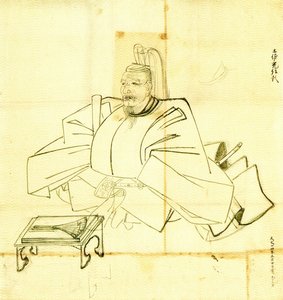
tosa mitsunobu
1434 - 1525 , Japan
Quick Facts
- Artistic Movement Or Style:
- Early Netherlandish art
- Flemish art
- Gothic art
- Artists Or Movements Influenced By This Artist: ['Rogier van der Weyden']
- Artists Who Influenced This Artist: ['Robert Campin']
- Date Of Birth: 1395
- Date Of Death: 1441
- Full Name: Jan van Eyck
- Nationality: Dutch
- Notable Artworks:
- Ghent Altarpiece
- Arnolfini Portrait
- Place Of Birth: Maaseik, Belgium