 Preview
 Send
Send Share
Share
 Details

 Download
 Similars
 X-Ray
X-Ray Diaporama
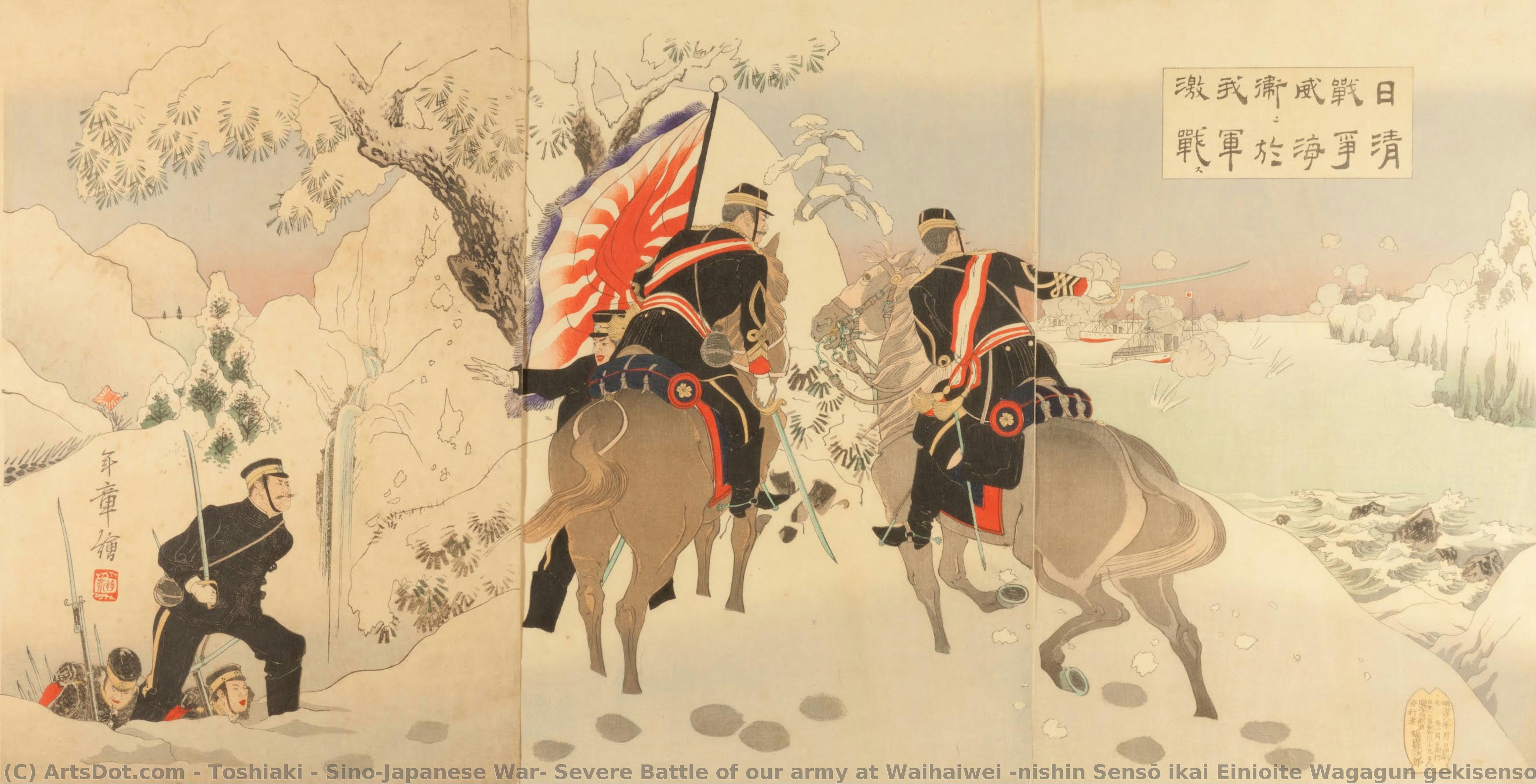
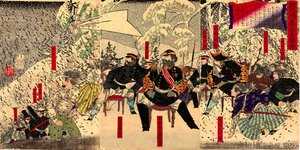
Sino-Japanese War: Severe Battle of our army at Waihaiwei (nishin Sensō ikai Einioite Wagagun gekisenso)


 Read More
Hand Made Oil Reproduction
Hand-painted oil on canvas in your size and frame, made to order by our artists. ( Buy Print Buy Image)




































Pick from our preset sizes that match the artwork's original proportions.

You may enter your own dimensions to fit a specific frame or space. If your selected size does not match the original image's proportions, we will either crop the artwork or extend the painting with additional hand-painted elements. A digital mockup will be sent for your approval before production begins.
Please note that the on-screen preview does not reflect the actual cropping or extension. Only the mockup will accurately show the final composition.
While custom sizes are available, we recommend selecting a dimension from the predefined list to preserve the original proportions.
After order, ArtsDot.com team will email client for instructions and provide a mockup preview
Worldwide Delivery () in 3/4 weeks instead of standard 5 weeks. (5 September). No compromise on quality.

Free Worldwide Express Shipping

High-Quality Linen Canvas

Full Shipping Insurance

Customs Tax Refund Guarantee

True Color Matching Guarantee

60-Day Return Policy (Defects Only)

100% Money-Back Guarantee

Bulk Discount Offer
 Glass option is only available in size under 110 CM

Sino-Japanese War: Severe Battle of our army at Waihaiwei (nishin Sensō ikai Einioite Wagagun gekisenso)
Reproduction Medium
Reproduction Size
-


Total Price
$ 263
Related Artworks




Artist Biography
Joseph Parry: A Manchester Master of Everyday Life
Born in Liverpool in 1744, Joseph Parry’s artistic journey began not within the hallowed halls of a formal academy, but amidst the practicalities of apprenticeship. His father, a Welsh master pilot, instilled in him a deep appreciation for observation and detail – skills that would prove invaluable as he transitioned from ship painting to capturing the vibrant pulse of Manchester life. Early training as a house painter provided a foundational understanding of color and composition, while his own fervent dedication fueled an independent pursuit of artistic excellence. By 1790, Parry had established himself as ‘Father of Art’ in Manchester, a testament to his ability to translate the commonplace into compelling visual narratives.
Parry's work is characterized by a remarkable realism and a keen eye for detail. He wasn’t interested in grand historical scenes or mythological allegories; instead, he focused on the everyday lives of Manchester’s inhabitants – merchants, laborers, market vendors, and children. His most celebrated piece, ‘The Old Market and Shambles at Manchester,’ offers an astonishingly detailed panorama of a bustling marketplace, brimming with activity and capturing the energy of the city. Similarly, ‘Eccles Wake,’ a monumental painting depicting a harvest festival, showcases his mastery of portraying large crowds – a feat achieved through numerous individual studies meticulously assembled to create a cohesive whole. This dedication to direct observation, combined with a subtle understanding of light and shadow, distinguishes Parry’s style from more idealized representations of the era.
Beyond his prolific painting career, Parry was also a skilled engraver, producing striking portraits of himself – only ten impressions were ever created, highlighting their rarity. His engravings served as both artistic expressions and practical reproductions of his paintings, demonstrating a versatility that further cemented his reputation within the Manchester art community. The influence of David Allan, a contemporary painter known for his portraiture and genre scenes, is subtly evident in Parry’s approach to depicting human figures and capturing fleeting moments of interaction.
The Parry Family Legacy
Joseph Parry's artistic lineage extended beyond himself. His son, David Henry Parry (1793-1826), followed in his father’s footsteps, studying under him and eventually establishing his own practice in London. David Henry developed a distinct style, often incorporating elements of Romanticism into his landscapes and portraits. He married Elizabeth Smallwood and continued the family's commitment to documenting Manchester life, producing works that mirrored his father’s focus on the city’s social fabric. Tragically, David Henry died prematurely at the age of 33, leaving behind a promising artistic career.
A third generation artist, Charles James Parry (1824-1894), further expanded the family's artistic contributions. Initially pursuing a career in business, he discovered a passion for landscape painting and quickly gained recognition for his evocative depictions of the English countryside. Charles James’ work demonstrates a refined technique and a sensitivity to light and color, reflecting the artistic trends of the Victorian era. His legacy includes two sons, Charles James Parry Jr. and David Henry Parry, both of whom continued the family's tradition of artistic practice.
Parry’s Artistic Context & Influences
Joseph Parry emerged during a period of significant social and economic transformation in Britain – the rise of industrialization and urbanization. Manchester, as one of the nation’s leading textile centers, was experiencing rapid growth and profound changes. Parry's art served not only as a record of this dynamic environment but also as a commentary on its impact on society. His paintings offer glimpses into the lives of ordinary people, capturing both the hardships and the opportunities presented by the burgeoning industrial economy.
While Parry’s work is largely independent, it shares stylistic affinities with other contemporary artists working in Britain during this period. The influence of David Allan, particularly his focus on genre scenes and portraiture, can be discerned in Parry's approach to depicting human subjects. Furthermore, the meticulous detail and realistic rendering characteristic of Parry’s paintings echo the traditions of Dutch Golden Age painting, which had exerted a considerable influence on British artists throughout the 18th century.
Historical Significance & Lasting Impact
Joseph Parry's contribution to British art lies not in grand historical narratives or revolutionary artistic innovations but rather in his ability to capture the essence of everyday life. His paintings provide invaluable insights into the social and cultural landscape of Manchester during the late 18th and early 19th centuries. ‘The Old Market and Shambles at Manchester’ and ‘Eccles Wake,’ in particular, are considered seminal works of urban realism, offering a compelling visual record of a rapidly changing city.
Parry's legacy extends beyond his individual paintings; he played a crucial role in fostering a vibrant artistic community in Manchester. His dedication to capturing the city’s spirit inspired subsequent generations of artists and helped establish Manchester as a center for artistic production. Today, Parry’s works are housed in museums and private collections throughout Britain, serving as enduring reminders of his talent and his profound understanding of the human experience.
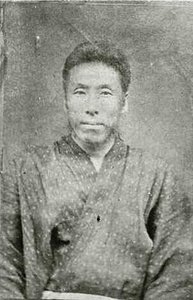
toshiaki
1744 - 1821 , Japan
Quick Facts
- Artistic Movement Or Style: Painter and engraver
- Artists Or Movements Influenced By This Artist: ['David Allan']
- Date Of Birth: 1744
- Date Of Death: 1826
- Full Name: Joseph Parry
- Nationality: Welsh
- Notable Artworks:
- The Old Market & Shambles
- Eccles Wake
- Place Of Birth: Liverpool, Wales