 Preview
 Send
Send Share
Share
 Details

 Download
 Similars
 X-Ray
X-Ray Diaporama
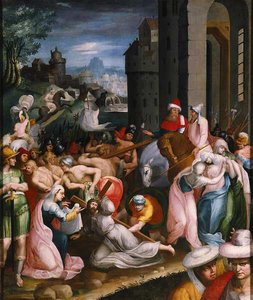
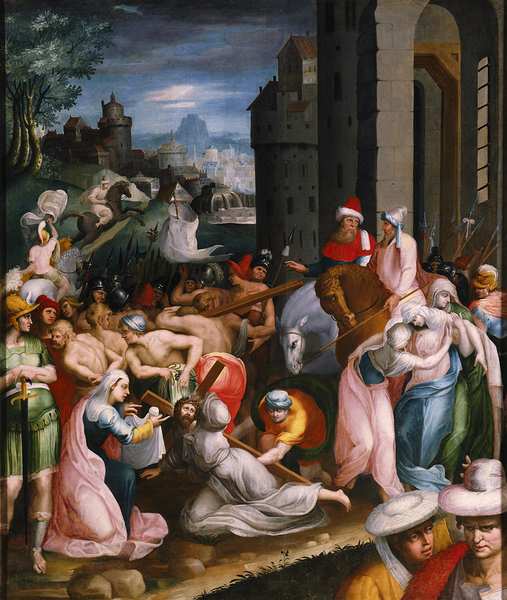
La Montee Au Calvaire
 Read More
Hand Made Oil Reproduction
Hand-painted oil on canvas in your size and frame, made to order by our artists. ( Buy Print Buy Image)




































Pick from our preset sizes that match the artwork's original proportions.

You may enter your own dimensions to fit a specific frame or space. If your selected size does not match the original image's proportions, we will either crop the artwork or extend the painting with additional hand-painted elements. A digital mockup will be sent for your approval before production begins.
Please note that the on-screen preview does not reflect the actual cropping or extension. Only the mockup will accurately show the final composition.
While custom sizes are available, we recommend selecting a dimension from the predefined list to preserve the original proportions.
After order, ArtsDot.com team will email client for instructions and provide a mockup preview
Worldwide Delivery () in 3/4 weeks instead of standard 5 weeks. (17 August). No compromise on quality.

Free Worldwide Express Shipping

High-Quality Linen Canvas

Full Shipping Insurance

Customs Tax Refund Guarantee

True Color Matching Guarantee

60-Day Return Policy (Defects Only)

100% Money-Back Guarantee

Bulk Discount Offer
 Glass option is only available in size under 110 CM

La Montee Au Calvaire
Reproduction Medium
Reproduction Size
-


Total Price
$ 263
Related Artworks
Artist Biography
The Elegance of Mannerism: The Life and Legacy of Toussaint Dubreuil
Toussaint Dubreuil, a name etched into the delicate fabric of the French Renaissance, stands as a masterful bridge between the structured grandeur of Mannerism and the fluid, emotive grace of Italian influence. Born in Paris around 1561, Dubreuil emerged during a transformative era when the French court sought to mirror the sophisticated aesthetics of the Italian masters. His life, though relatively brief, concluded in 1602, yet the impact of his brushwork remains a testament to the artistic ambitions of the Second School of Fontainebleau. This movement was not merely a stylistic choice but a cultural phenomenon, blending the elongated, stylized forms of Mannerism with a vibrant, rhythmic energy that sought to elevate the French spirit through classical ideals.
The foundation of Dubreuil’s artistry was laid under the watchful eye of Ruggiero de Ruggieri at Fontainebleau. This formative period was crucial, as it immersed him in the principles of classical sculpture and the humanist philosophies that defined the royal court. From this tutelage, he inherited a meticulous devotion to detail and an uncanny ability to render idealized beauty. His early works reveal a profound grasp of Mannerist techniques—characterized by expressive gestures and complex, undulating draperies—yet they are simultaneously infused with a subtle, lyrical nuance derived from Italian traditions. This synthesis allowed him to create compositions that felt both structurally sophisticated and emotionally resonant.
Narrative Grandeur and Mythological Vision
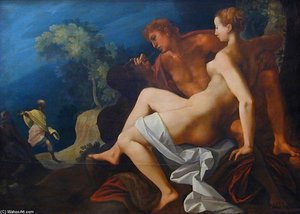
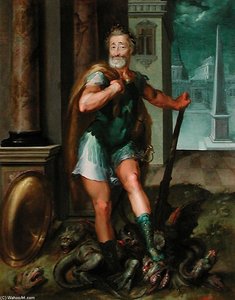
Dubreuil’s creative impulse was deeply rooted in the literary and mythological landscapes of his time. He found endless inspiration in the epic tales of Homer, the poetic explorations of Pierre de Rationale, and the dramatic narratives of Torquato Tasso. Through these subjects, he explored universal themes of heroism, virtue, and divine grace, translating ancient legends into visual spectacles for the French aristocracy. His canvases often feature:
- Heroic Confrontations: Dramatic scenes where figures are caught in moments of intense physical and emotional struggle, utilizing elongated limbs to heighten the sense of tension.
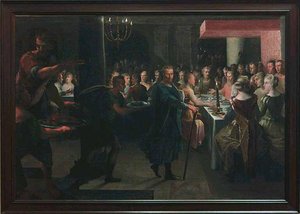
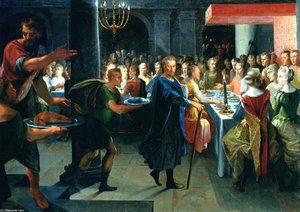
- Opulent Festivities: Grandiose depictions of banquets and royal celebrations, such as his work Sujet inconnu, dit Un banquet, which capture the splendor and social hierarchy of the era.
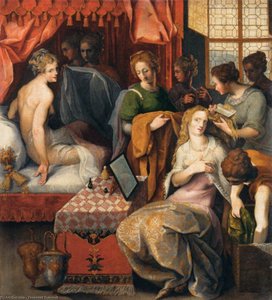
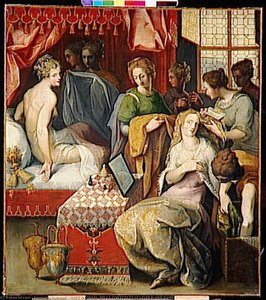
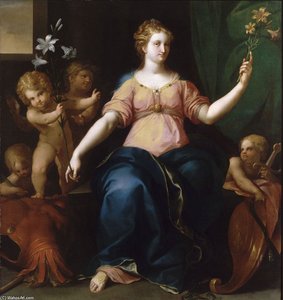
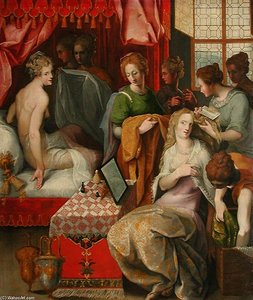
- Intimate Portraits and Domesticity: More delicate explorations of beauty and ritual, exemplified by works like La Toilette et le Lever d'une Dame, where the grace of the human form is celebrated through soft light and refined detail.
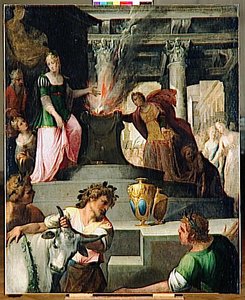
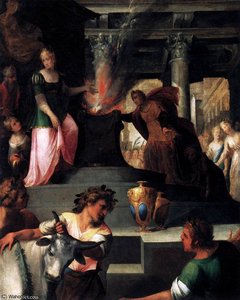
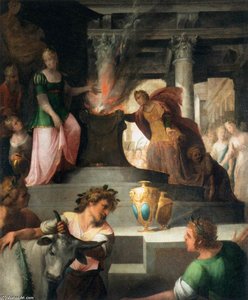
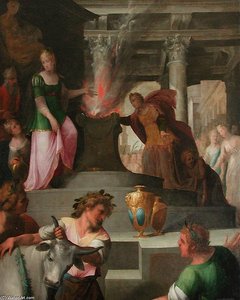
In masterpieces such as Sacrifice Antique, Dubreuil demonstrates his ability to evoke profound mystery. Through the use of flickering flames and shadowy, enigmatic figures, he invites the viewer into a world of ancient ritual, where the boundaries between the mortal and the divine become blurred. This capacity for atmosphere is what distinguishes him from his contemporaries, as he moved beyond mere imitation of style to achieve a true sense of narrative depth.
Historical Significance and Artistic Triumph
The zenith of Dubreuil’s career was marked by his monumental contributions to the Fontainebleau Palace. His ability to execute ambitious fresco projects showcased a technical versatility that commanded respect within the highest circles of French nobility. These large-scale works served as much more than decoration; they were political and cultural statements, reinforcing the prestige of the French monarchy through the language of classical triumph. While he may not have achieved the widespread fame of some of his peers, his role in refining the Second School of Fontainebleau was indispensable.
Dubreuil’s legacy lies in his ability to harmonize disparate influences into a cohesive, uniquely French aesthetic. By weaving together the tension of Mannerism with the harmony of the Italian Renaissance, he helped define an era of unparalleled elegance. His work remains a vital study for anyone seeking to understand the transition of European art toward a more emotive and narrative-driven future, ensuring that his name continues to resonate within the halls of art history.
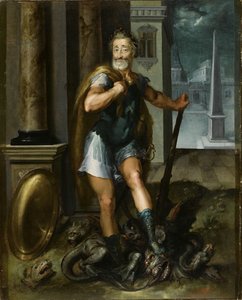
Toussaint Dubreuil
1561 - 1602 , France
Quick Facts
- Artistic Movement Or Style: Second School Fontainebleau; Mannerism; Italian Art Influence
- Artists Who Influenced This Artist: ['Ruggiero de Ruggieri']
- Date Of Birth: ca. 1561
- Date Of Death: 1602
- Full Name: Toussaint Dubreuil
- Nationality: French
- Notable Artworks:
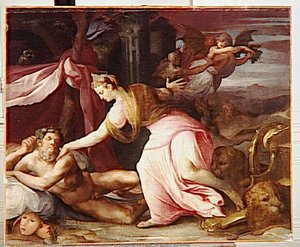
- Hyante & Climene
- Sujet inconnu, dit Un banquet
- SUJET INCONNU, DIT LA TOILETTE ET LE LEVER D'UNE DAME
- Place Of Birth: Paris, France