 Preview
 Send
Send Share
Share
 Details

 Download
 Similars
 X-Ray
X-Ray Diaporama
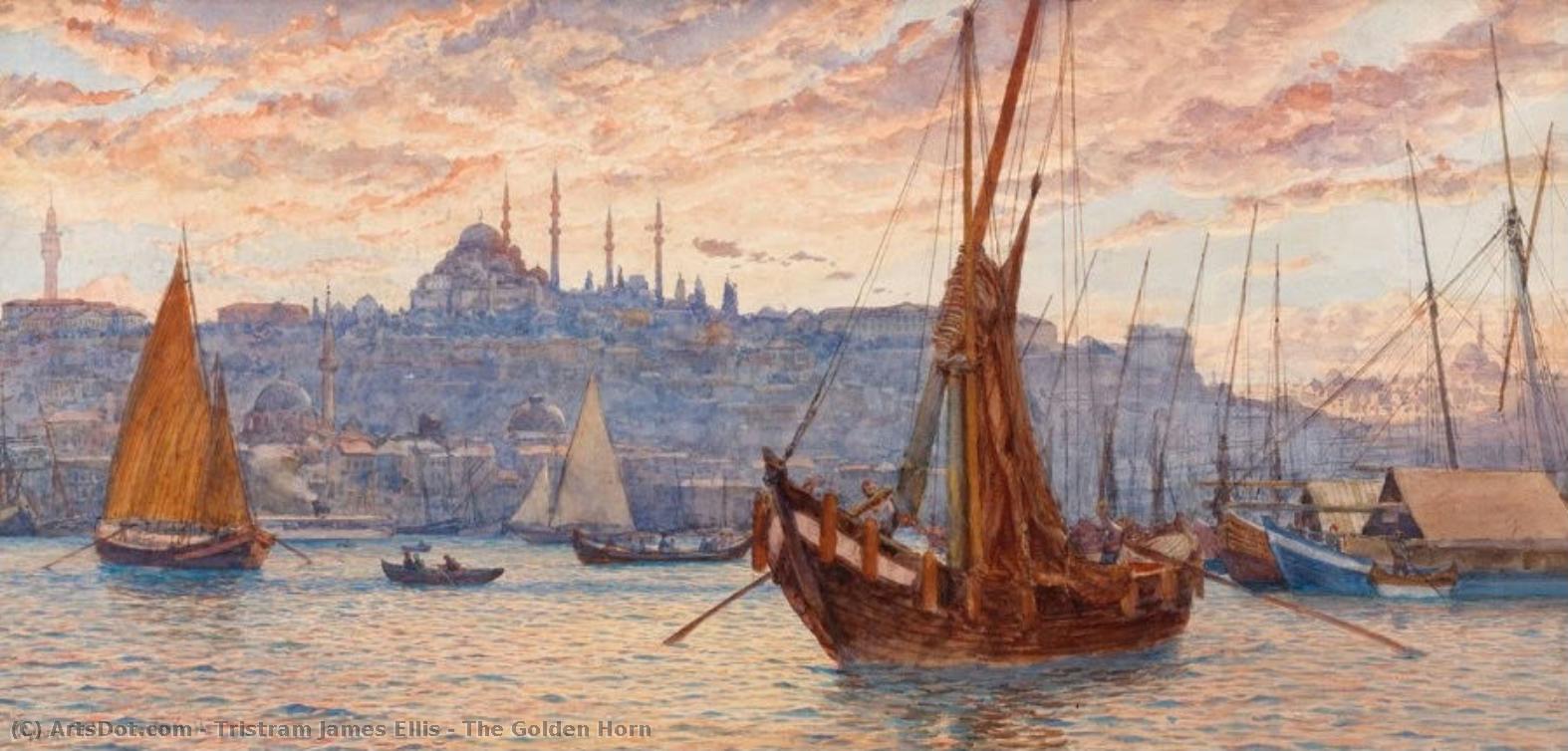
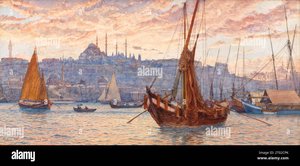
The Golden Horn
 1885
1885 36.0 x 77.0 cm
 Pera Museum
 Read More
Giclée / Art Print
Museum-quality giclée or canvas print with fast production and flexible finish options. ( Buy Hand Made Painting Buy Image)




































Pick from our preset sizes that match the artwork's original proportions.

You may enter your own dimensions to fit a specific frame or space. If your selected size does not match the original image's proportions, we will either crop the artwork or extend the image with a mirrored or solid-fill edge. A digital mockup will be sent for your approval before production begins.
Please note that the on-screen preview does not reflect the actual cropping or extension. Only the mockup will accurately show the final composition.
While custom sizes are available, we recommend selecting a dimension from the predefined list to preserve the original proportions.
Worldwide Delivery () in 2 weeks instead of standard 4/5 weeks. (21 August)

Free Worldwide Express Shipping

High-Quality Linen Canvas

Full Shipping Insurance

Customs Tax Refund Guarantee

True Color Matching Guarantee

60-Day Return Policy (Defects Only)

100% Money-Back Guarantee

Bulk Discount Offer
 Glass option is only available in size under 110 CM

The Golden Horn
Giclée / Art Print
Reproduction Size
-


Total Price
$ 63
Collectible Description
Related Artworks









Artist Biography
Tristram James Ellis: A Painter of the Eastern Dream
Born in the verdant hills of Malvern, England, in 1844, Tristram James Ellis – known affectionately as “Tristie” to his family – embarked on a remarkable artistic journey that would transport him across continents and immerse him in the vibrant cultures of the Middle East and Eastern Mediterranean. His life’s work wasn't merely a collection of paintings; it was an attempt to capture the essence of these exotic lands, imbued with a profound sense of observation and a deep appreciation for their unique beauty. Ellis’s story is one of a mathematician who traded equations for pigments, a young man seeking adventure and artistic fulfillment, ultimately becoming a celebrated Orientalist painter whose evocative watercolors continue to captivate viewers today.
Ellis's early life provided an unexpected foundation for his future career. The son of Alexander John Ellis, a respected mathematician and philologist, he was initially immersed in the world of numbers and languages. However, a dissatisfaction with the rigid structure of academic learning – particularly the emphasis on rote copying rather than original creative expression within his drawing classes – led him to seek a different path. He attended Queenwood College in Hampshire, where he excelled in mathematics but found himself drawn to the possibilities of visual representation. This early yearning for artistic freedom ultimately steered him away from academia and towards the captivating world of art.
Ellis’s formal training began in Paris under the tutelage of Léon Bonnat, a prominent figure in French academic painting. Bonnat's studio was a crucible of artistic talent, housing students from across Europe and beyond – a truly international environment. While Ellis benefited immensely from Bonnat’s guidance, particularly in mastering technique and composition, he found himself increasingly drawn to the dynamism of the human form and the allure of landscape. He resisted Bonnat’s suggestion to focus solely on history painting, preferring instead to explore the more immediate and compelling subjects that ignited his imagination: the people, places, and light of the East.
Following his Parisian studies, Ellis embarked on a series of transformative journeys that would shape the trajectory of his artistic career. Beginning in 1878, he spent six months sketching in Cyprus, then under British rule, an experience that left him with a lasting appreciation for the island’s rugged beauty and complex history. This initial foray into the Middle East ignited a passion that led to extended explorations throughout Syria, Iraq, Egypt, Greece, Turkey, and even Norway. These travels weren't simply vacations; they were meticulously planned expeditions dedicated to capturing the spirit of these distant lands on paper. He documented his adventures in two volumes: “On a Raft, and Through the Desert,” published in 1881, which detailed his journey through Syria and Kurdistan, and "Sketching from Nature - a Handbook for Students and Amateurs," released in 1883.
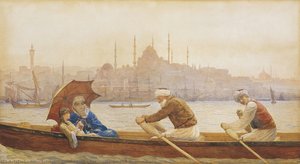
Ellis’s artistic style is characterized by a remarkable ability to convey atmosphere and emotion. His watercolors are renowned for their luminous colors, delicate brushwork, and keen observation of detail. He wasn't interested in creating mere reproductions; instead, he sought to capture the *feeling* of a place – the heat of the sun on ancient stones, the bustle of a crowded marketplace, the serenity of a desert landscape at dusk. His paintings of Istanbul, particularly “The Golden Horn” and “Excursion on the Golden Horn,” are testaments to his skill in depicting urban life with both accuracy and poetic grace. These works, now housed at the Pera Museum in Istanbul, offer glimpses into the daily routines, social interactions, and architectural splendor of a city that has captivated artists for centuries.
Ellis’s artistic output was consistently recognized by prominent institutions during his lifetime. He exhibited regularly at the Royal Academy, the Royal Society of British Artists, the New Watercolour Society, and the Royal Institute of Painters in Water Colours. His work gained considerable acclaim, solidifying his reputation as a leading Orientalist painter. Beyond his individual achievements, Ellis’s legacy extends through his membership in prestigious organizations like the Royal Society of British Artists and the Royal Institute of Painters in Watercolours, further cementing his place within the artistic community.
Key Works & Artistic Style
- The Golden Horn (1879): A quintessential example of Ellis’s skill in capturing the atmosphere and energy of Istanbul. The watercolor vividly depicts the bustling waterway, with boats navigating beneath a dramatic sky.
- Excursion on the Golden Horn (c. 1880): This painting showcases Ellis's ability to portray the vibrant life along the Golden Horn, capturing the details of daily activities and architectural elements with remarkable precision.
- Scenes from Syria & Iraq: Ellis’s extensive travels resulted in a vast body of work depicting landscapes, cities, and people from across Syria and Iraq. These paintings offer valuable insights into the region's cultural heritage and natural beauty.
Historical Significance
Tristram James Ellis’s work holds significant historical value as a representation of 19th-century Orientalism – an artistic movement that explored themes of the East through European eyes. While often critiqued for its potential to exoticize and misrepresent non-Western cultures, Ellis's paintings offer a nuanced perspective, reflecting both his admiration for the beauty he encountered and his careful observation of local customs and traditions. His detailed depictions of everyday life in cities like Istanbul and Baghdad provide valuable historical documentation, offering glimpses into a world that was rapidly changing during the late 19th century.
Ellis’s journey from mathematician to celebrated painter is a testament to the transformative power of artistic passion. He left behind a rich legacy of watercolor paintings that continue to inspire and delight viewers today, serving as enduring reminders of his remarkable travels and his profound appreciation for the beauty and complexity of the Eastern world.
tristram james ellis
1844 - 1922 , United Kingdom
Quick Facts
- Artistic Movement Or Style: Orientalist painting
- Artists Who Influenced This Artist: ['Léon Bonnat']
- Date Of Birth: July 2, 1844
- Date Of Death: July 25, 1922
- Full Name: Tristram James Ellis
- Nationality: British
- Notable Artworks:
- The Golden Horn
- Excursion on the Golden Horn
- Place Of Birth: Malvern Hills, UK