 Preview
 Send
Send Share
Share
 Details

 Download
 Similars
 X-Ray
X-Ray Diaporama
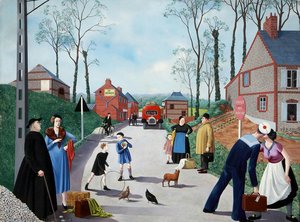
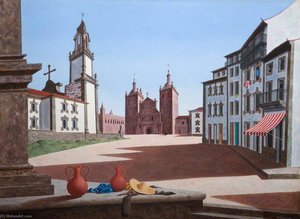
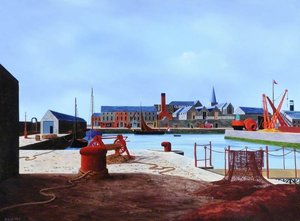
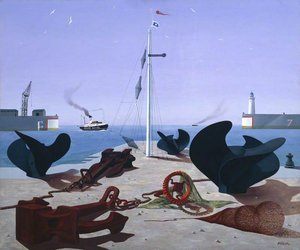
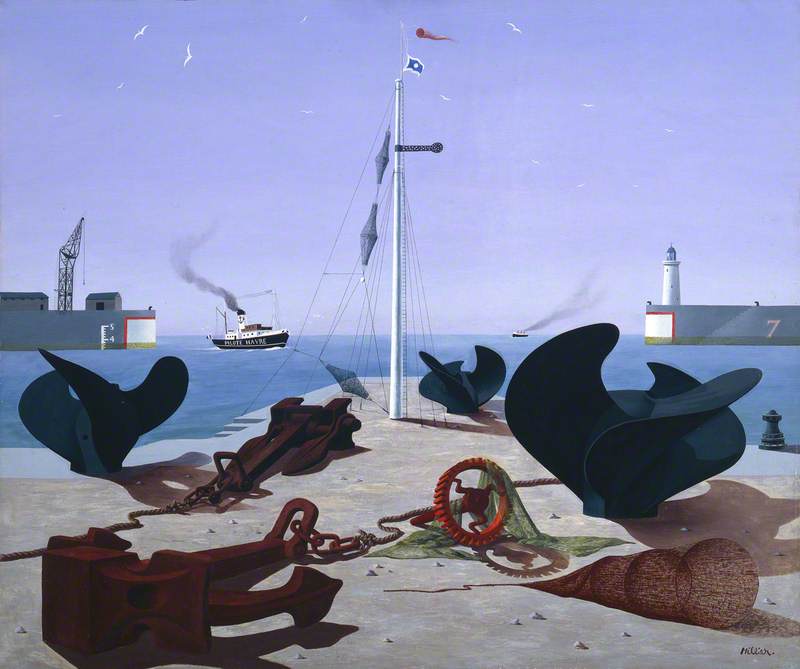
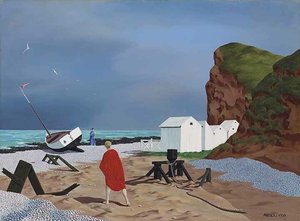
Le Havre de Grâce
 1939
1939 70.0 x 84.0 cm
 Read More
Giclée / Art Print
Museum-quality giclée or canvas print with fast production and flexible finish options. ( Buy Hand Made Painting Buy Image)




































Pick from our preset sizes that match the artwork's original proportions.

You may enter your own dimensions to fit a specific frame or space. If your selected size does not match the original image's proportions, we will either crop the artwork or extend the image with a mirrored or solid-fill edge. A digital mockup will be sent for your approval before production begins.
Please note that the on-screen preview does not reflect the actual cropping or extension. Only the mockup will accurately show the final composition.
While custom sizes are available, we recommend selecting a dimension from the predefined list to preserve the original proportions.
Worldwide Delivery () in 2 weeks instead of standard 4/5 weeks. (21 August)

Free Worldwide Express Shipping

High-Quality Linen Canvas

Full Shipping Insurance

Customs Tax Refund Guarantee

True Color Matching Guarantee

60-Day Return Policy (Defects Only)

100% Money-Back Guarantee

Bulk Discount Offer
 Glass option is only available in size under 110 CM

Le Havre de Grâce
Giclée / Art Print
Reproduction Size
-


Total Price
$ 63
Related Artworks
Artist Biography
Barnett Newman: Architect of the Sublime
Barnett Newman (1905-1970) remains one of the most enigmatic and profoundly influential figures in 20th-century art, a painter who wrestled with fundamental questions about perception, spirituality, and the very nature of seeing. His work, characterized by vast fields of luminous color punctuated by thin, vertical “zips,” transcends mere representation, inviting viewers into an experience that is both intensely personal and universally resonant. Newman’s journey to this singular style was a complex one, shaped by early influences, philosophical inquiry, and a relentless pursuit of expressing the ineffable.
Born in New York City in 1905, Newman's childhood was rooted in the immigrant experience of his Polish Jewish parents. He initially pursued a path in philosophy at City College of New York, demonstrating an early intellectual curiosity that would inform much of his artistic thinking. He worked as a teacher and writer before dedicating himself fully to painting in the 1930s, abandoning earlier works—characterized by expressionistic tendencies—that he later deemed insufficient. A pivotal encounter with Alon Bement at the University of Virginia introduced him to the principles of Dow’s “visual alchemy,” emphasizing intuitive design and a rejection of academic realism. This shift marked a crucial turning point, moving Newman away from direct observation towards a more internalized process of artistic creation.
Newman's early career was intertwined with the vibrant New York art scene of the 1940s, particularly through his association with the Uptown Group and Betty Parsons Gallery. He initially explored surrealist influences, but it was during this period that he began to develop his signature style – the *Onement* series. These monumental canvases, dominated by vast fields of color, represent a radical departure from traditional painting. The “zips,” thin, vertical lines that bisect the color fields, are not merely decorative elements; they function as spatial dividers, creating a sense of depth and simultaneously suggesting an underlying structure—a kind of architectural framework for the viewer’s experience. Newman himself described these zips as "the architecture of feeling," emphasizing their role in shaping the emotional impact of his work.
The Language of Color and Space
Newman's approach to color was deeply philosophical. He rejected the notion of color as a descriptive tool, arguing that it possessed an intrinsic value—a “presence” independent of any object or subject. He sought to capture this presence directly, allowing the colors themselves to dictate the composition and structure of the painting. This is evident in his *Onement* series, where the colors are often pure, unmixed pigments applied with a deliberate lack of gesture. The zips, then, don’t define or delineate; they reveal—they expose the underlying architecture of color and space.
Influences on Newman's work were diverse and complex. He drew inspiration from various sources, including the writings of philosophers like Paul Tillich and Søren Kierkegaard, whose ideas about faith, anxiety, and transcendence resonated deeply with his artistic concerns. He also studied the works of Vincent van Gogh, whose expressive use of color and brushstroke profoundly impacted his own approach to painting. However, Newman ultimately sought to transcend these influences, forging a unique visual language that spoke directly to the viewer’s inner experience.
Major Works and Artistic Development
Newman's most significant body of work comprises the *Onement* series (1948-1960), which established his distinctive style. These monumental canvases, often measuring over seven feet tall, create an immersive environment for the viewer, inviting them to lose themselves in the vastness of color and space. Alongside the *Onement* series, Newman produced a number of smaller works, including paintings featuring single zips—often referred to as “zip paintings”—and drawings that explored similar themes of spatial division and perceptual experience. His later work, particularly his "Sanctuaries" (1964-1970), represented a further refinement of his style, characterized by increasingly pure colors and more subtle variations in the placement of the zips.
Newman’s work was initially met with mixed reactions from critics. Some dismissed it as abstract nonsense, while others recognized its profound emotional power and intellectual rigor. However, over time, Newman's influence has grown steadily, and his paintings are now considered among the most important works of American Abstract Expressionism. His legacy extends beyond the realm of painting, influencing generations of artists who have sought to explore the relationship between perception, space, and spirituality.
Historical Significance and Legacy
Barnett Newman’s work stands as a pivotal moment in the history of modern art. He pushed the boundaries of abstraction, moving beyond representational imagery to create paintings that engage with fundamental questions about human experience. His emphasis on color as an independent entity, his exploration of spatial division, and his commitment to expressing the “sublime” – that which transcends rational understanding—have had a lasting impact on contemporary art practice.
Newman’s influence can be seen in the work of countless artists who have followed in his footsteps, including Robert Irwin, Craig Finn, and Ellsworth Kelly. His paintings continue to resonate with viewers today, offering a profound and enduring invitation to contemplate the mysteries of perception, spirituality, and the human condition. His commitment to stripping away the superfluous and revealing the essential continues to inspire artists and viewers alike, solidifying his place as one of the most important figures in 20th-century art.
tristram paul hillier
1905 - 1983 , China
Quick Facts
- Artistic Movement Or Style: Abstract expressionism, Color field painting
- Artists Or Movements Influenced By This Artist: ['Mark Rothko']
- Artists Who Influenced This Artist:
- Paul Gauguin
- Vincent van Gogh
- Date Of Birth: January 29, 1905
- Date Of Death: July 4, 1970
- Full Name: Barnett Newman
- Nationality: American
- Notable Artworks:
- Vir Heroicus Sublimis
- The Stations of the Cross
- Place Of Birth: New York City, USA