

 Preview
 Send
Send Share
Share
 Details

 Download
 Similars
 X-Ray
X-Ray Diaporama
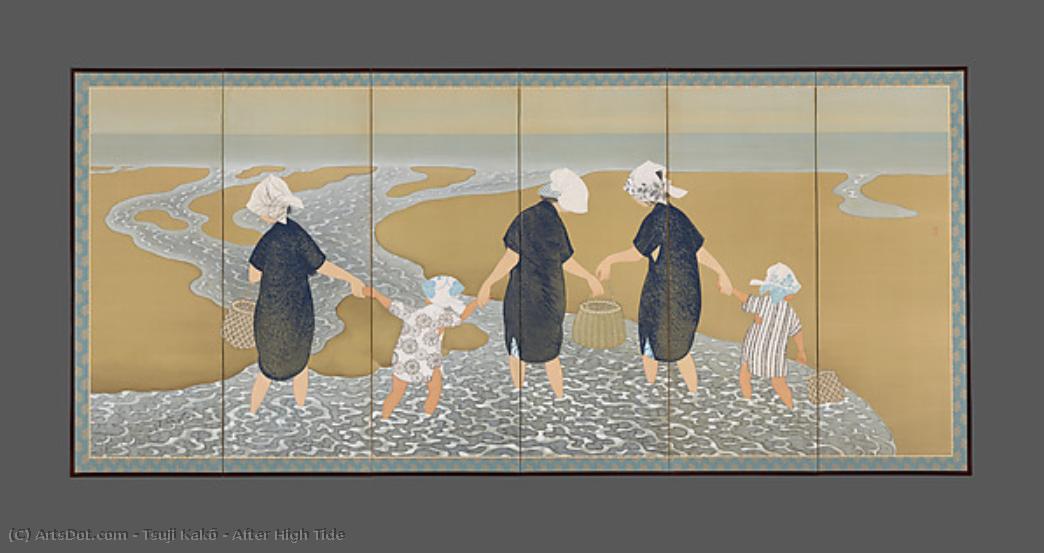
After High Tide


 Read More
Purchase a high-resolution, enhanced digital image, far superior to the online preview.
Each file is meticulously prepared by our in-house specialists using advanced tools and expert manual retouching. We ensure every image has exceptional clarity, precise color accuracy, and fine detail.
The final file is delivered via email within 72 hours, optimized for immediate use in professional, editorial, and print environments. This is the same quality trusted by top-tier design studios, publishers, and galleries.
Digital Image
Download a high-resolution file for personal display, printing, and creative projects. ( Buy Print Buy Hand Made Painting)
Included in Every Digital Image Order
Expert Digital Delivery, Guaranteed
When you choose ArtsDot.com, you're not just getting an image - you're receiving a professionally enhanced digital artwork, crafted with precision and backed by a satisfaction guarantee. Here's everything that comes with your order, automatically:

Fast Email Delivery
Your high-resolution digital image file will be emailed to you within 72 hours of ordering - ready for immediate use.

AI-Enhanced Digital File
Your artwork is professionally optimized using advanced AI tools and manual editing, ensuring maximum detail, clarity, and color accuracy.

Free Lifetime Re-Delivery
Accidentally deleted or lost your file? No worries - we'll resend it to you anytime, free of charge.

No Import Fees - Ever
Enjoy your artwork instantly with zero customs, duties, or delivery fees - digital downloads are always tax-free.

Color Accuracy Guarantee
We ensure your digital image reflects the original colors as closely as possible using professional tools and color management.

60-Day Satisfaction Guarantee
If you're not satisfied with your digital image, we'll revise it or refund 100% within 60 days - no questions asked.

100% Money-Back Guarantee
Not satisfied? Get a full refund within 60 days of receiving your digital file - no questions asked.

Bulk Order Discounts
Buy 3 images, save 10% - Buy 5, save 15% - Buy 10+, save 20%. Great for creative projects, galleries, and agencies.
Collectible Description
Related Artworks
Artist Biography
The Soul of the Wave: The Life and Legacy of Tsuji Kakō
In the vibrant, transformative landscape of late Meiji and early Taishō era Japan, few artists possessed the courage to deviate from the established path as resolutely as Tsuji Kakō. Born in Kyoto in 1870 into a family deeply rooted in the meticulous traditions of textile design and dyeing, Kakō’s very DNA was woven with an appreciation for intricate craftsmanship and color. This early immersion in the tactile beauty of fabric would later manifest in his paintings through a breathtaking command of pattern and pigment. His formal education at the Kyoto Municipal Special School of Painting and the Kyoto Municipal School of Arts and Crafts provided him with a rigorous technical foundation, shaped by the legendary Kōno Bairei. Under Bairei’s tutelage, Kakō mastered the delicate nuances of both the Maruyama and Shijō schools, yet he possessed an innate restlessness that prevented him from merely replicating the academic standards of his time.
The true metamorphosis of Kakō’s artistry occurred in 1899, when he embraced the meditative discipline of Zen Buddhism. This spiritual awakening fundamentally altered his perception of the natural world, shifting his focus from mere representation to the capture of essence and spontaneity. The Zen principles of emptiness and fluidity began to permeate his brushwork, leading him toward a style that favored subtle tonal gradations and an avoidance of rigid, suffocating compositions. He became a pioneer of Nihonga—modern Japanese-style painting—that breathed with a spiritual resonance. While his contemporaries often sought prestige through political correctness and adherence to social trends, Kakō remained an iconoclast, prioritizing the evocative power of nature over the approval of the academy.
Mastery of Motion and Mineral Pigment
Kakō’s most enduring contribution to the art world lies in his unparalleled ability to render the kinetic energy of water. He was a master of the wave, treating the ocean not as a static subject but as a living, breathing force. His technique often employed tarashikomi—a sophisticated wet-on-wet method where fresh ink is dropped into still-wet pigment—to create the organic, mottled textures found in sea foam and swirling currents. This mastery is perhaps most vividly realized in his celebrated work, "After High Tide." In this masterpiece, a group of women and children gather shellfish against a glistening silk background of gold and silver. The painting is a tour-de-force of texture; the deep azurite blue of the women's robes contrasts sharply with the intricate, Rinpa-inspired motifs on the children’s garments, all rendered with a lavish application of mineral colors that leave no surface untouched.
Beyond his aquatic studies, Kakō demonstrated an incredible versatility that allowed him to traverse different historical and symbolic themes. His ability to manipulate heavy layers of pigment alongside delicate washes of ink allowed him to move seamlessly between the monumental and the miniature. Whether he was depicting the stylized, earthen presence of a haniwa figure through overlapping washes of cinnabar or capturing the ephemeral light of a summer afternoon, his work always maintained a sense of profound individual truth. This commitment to his own vision meant that while his work achieved immense popularity with the public—even appearing on widely circulated postcards—it occasionally faced critical scrutiny from those who found his unconventional approach too radical for the traditionalist establishment.
A Lasting Impression on Japanese Modernism
The historical significance of Tsuji Kakō extends far beyond his technical achievements. He stands as a bridge between the classical traditions of the Edo period and the burgeoning modernism of the 20th century. By integrating Zen-infused spontaneity with the disciplined techniques of the Maruyama and Shijō schools, he helped redefine what Nihonga could achieve in a rapidly changing Japan. His refusal to conform to societal pressures or political trends granted his work an authenticity that remains palpable to the modern viewer. Though he passed away in 1931, leaving behind a legacy of daring experimentation, his influence can be traced through the works of other leading figures of his era, such as Takeuchi Seihō and Kikuchi Hōbun.
To study the work of Tsuji Kakō is to witness a lifelong dialogue between tradition and rebellion. His life was a testament to the idea that true artistic growth requires the courage to look inward, finding inspiration in the silence of Zen and the rhythmic pulse of the tide. Today, his paintings serve as vital windows into a period of profound cultural transition, reminding us that the most enduring art is often that which dares to break the mold.
tsuji kakō 都路華香
1870 - 1931 , Japan
Quick Facts
- Artistic Movement Or Style: Maruyama & Shijō schools, Zen influence
- Artists Or Movements Influenced By This Artist: Takeuchi Seihō
- Artists Who Influenced This Artist: Kōno Bairei
- Date Of Birth: 1870
- Full Name: Tsuji Kakō 都路華香
- Nationality: Japanese
- Notable Artworks:
- Green Waves
- Waves and Plovers
- Place Of Death: Kyoto

