

 Preview
 Send
Send Share
Share
 Details

 Download
 Similars
 X-Ray
X-Ray Diaporama
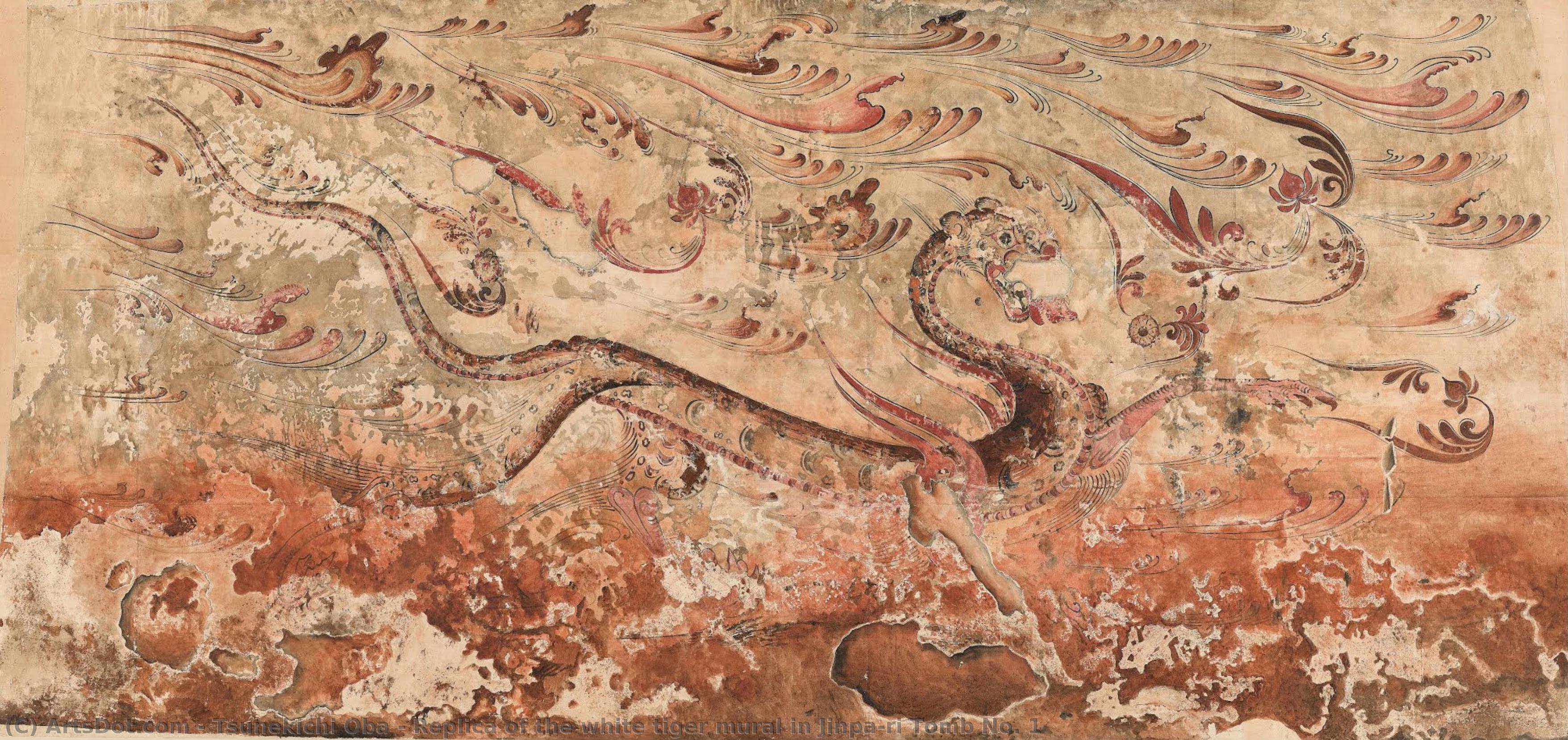
Replica of the white tiger mural in Jinpa-ri Tomb No. 1
 Painting
- Nihonga
 155.0 x 330.0 cm
 National Museum of Korea
 Read More
Purchase a high-resolution, enhanced digital image, far superior to the online preview.
Each file is meticulously prepared by our in-house specialists using advanced tools and expert manual retouching. We ensure every image has exceptional clarity, precise color accuracy, and fine detail.
The final file is delivered via email within 72 hours, optimized for immediate use in professional, editorial, and print environments. This is the same quality trusted by top-tier design studios, publishers, and galleries.
Digital Image
Download a high-resolution file for personal display, printing, and creative projects. ( Buy Print Buy Hand Made Painting)
Included in Every Digital Image Order
Expert Digital Delivery, Guaranteed
When you choose ArtsDot.com, you're not just getting an image - you're receiving a professionally enhanced digital artwork, crafted with precision and backed by a satisfaction guarantee. Here's everything that comes with your order, automatically:

Fast Email Delivery
Your high-resolution digital image file will be emailed to you within 72 hours of ordering - ready for immediate use.

AI-Enhanced Digital File
Your artwork is professionally optimized using advanced AI tools and manual editing, ensuring maximum detail, clarity, and color accuracy.

Free Lifetime Re-Delivery
Accidentally deleted or lost your file? No worries - we'll resend it to you anytime, free of charge.

No Import Fees - Ever
Enjoy your artwork instantly with zero customs, duties, or delivery fees - digital downloads are always tax-free.

Color Accuracy Guarantee
We ensure your digital image reflects the original colors as closely as possible using professional tools and color management.

60-Day Satisfaction Guarantee
If you're not satisfied with your digital image, we'll revise it or refund 100% within 60 days - no questions asked.

100% Money-Back Guarantee
Not satisfied? Get a full refund within 60 days of receiving your digital file - no questions asked.

Bulk Order Discounts
Buy 3 images, save 10% - Buy 5, save 15% - Buy 10+, save 20%. Great for creative projects, galleries, and agencies.
A Majestic Encounter with Antiquity
In the quiet halls of the National Museum of Korea, there exists a window into a lost era, captured through the breathtaking Replica of the white tiger mural in Jinpa-ri Tomb No. 1. This expansive masterpiece, measuring an imposing 155 x 330 cm, does more than merely decorate a space; it transports the viewer across centuries to the sacred funerary traditions of ancient Korea. The painting presents a vision of power and mystery, where the formidable silhouette of a white tiger emerges from the shadows. With its head partially veiled by architectural elements, the tiger possesses an enigmatic presence that commands immediate attention, inviting the observer to contemplate what lies hidden within the depths of history.
The artistry of this reproduction breathes life into the ancient mural, utilizing a meticulous approach to detail that honors the original's spirit. The texture of the painting suggests a profound connection to the earth and the passage of time, as if the brushstrokes themselves were carved from the very stone of the Jinpa-ri tomb. For the discerning collector or interior designer, this piece offers a rare opportunity to integrate a sense of monumental scale and historical gravity into a contemporary setting. The interplay of light and shadow across the tiger's form creates a dynamic visual rhythm, making it a centerpiece that anchors a room with its silent, predatory grace.
Symbolism and the Spirit of the White Tiger
To behold this artwork is to engage with one of East Asia's most potent symbols. In many ancient traditions, the white tiger is not merely an animal but a celestial guardian, representing strength, protection, and the warding off of evil spirits. Within the context of the Jinpa-ri tomb, the mural served as a spiritual sentinel, guarding the deceased in the afterlife. The way the tiger’s body is prominently displayed, yet partially obscured, evokes a sense of the divine presence that remains ever-watchful but unseen. This duality—the visible power and the hidden mystery—creates an emotional resonance that is both soothing and awe-inspiring.
For those seeking to curate spaces that evoke contemplation and prestige, this reproduction offers a profound narrative depth. It is a piece that speaks of endurance and the eternal cycle of life and death. The subtle nuances in the tiger's markings and the deliberate composition allow for a versatile application in high-end decor, whether placed in a minimalist gallery-style living room or a sophisticated study. By bringing this mural into a modern interior, one does not just display art; one invites a legendary guardian to preside over the home, infusing the environment with an aura of ancient wisdom and unparalleled majesty.
Related Artworks

Artist Biography
The Soul of the Nihonga: The Life and Legacy of Tsunekichi Oba
In the delicate intersection where ancient tradition meets the dawn of modernity, the work of Tsunekichi Oba (1878–1958) resides as a profound testament to Japanese artistic resilience. Born in the scenic Akita Prefecture, Oba emerged during a transformative era for Japan, a period when the nation was navigating the complex currents of Western influence while striving to preserve its cultural essence. His journey was not merely one of personal skill, but a dedicated mission to revitalize Nihonga—the traditional Japanese painting style—by breathing new life into the venerable aesthetics of the Kanō School. Through his brush, the bold outlines and vibrant pigments of the fifteenth-century masters were reimagined for a contemporary audience, creating a visual language that felt both timeless and strikingly fresh.
Oba’s artistic foundation was laid within a family deeply rooted in artistic heritage, providing him with an early immersion in the nuances of visual storytelling. His formal education at the prestigious Tokyo Art School allowed him to master the technical rigors of his craft, specifically the assertive lines and rich color palettes characteristic of the Kanō lineage. This training instilled in him a deep respect for the structural integrity of a composition, yet he was never a mere imitator of the past. Instead, he sought a synthesis of styles, blending the disciplined techniques of traditional ink and pigment painting with a subtle, modern sensibility that captured the ephemeral beauty of the natural world.
Nature as Narrative: Symbolism and Technique
The heart of Oba’s oeuvre lies in his ability to transform the landscape into a spiritual experience. His compositions often feature serene mountain ranges shrouded in mist, tranquil waters reflecting the celestial light, and the delicate presence of flora and fauna. These were not merely decorative subjects; they were laden with profound symbolism. In the Japanese tradition, birds and blossoms are frequently used as auspicious emblems of longevity, prosperity, and the cyclical nature of life. Oba utilized these motifs to create works that functioned as visual poems, inviting viewers to contemplate the harmony between the earthly and the divine.
Beyond the canvas, Oba demonstrated a remarkable versatility by employing the medium of woodblock printing to elevate his narratives. This technique allowed him to expand the reach of his vision, translating the intricate textures and atmospheric depths of his paintings into a more reproducible form that could resonate with a broader public. His mastery over both the fluid brushwork of Nihonga and the graphic precision of printmaking highlights a technical dexterity that is rare among his contemporaries. Whether depicting a single, dew-covered petal or an expansive, misty vista, his work maintains a consistent sense of rhythmic balance and emotional depth.
A Monumental Legacy: From Murals to Modern Memory
One of the most captivating dimensions of Oba’s contribution to art history is his ability to bridge disparate cultural histories. His artistic reach extended even to the interpretation of ancient motifs, such as his breathtakingly detailed work inspired by the white tiger mural in Jinpa-ri Tomb No. 1. In recreating such monumental imagery, Oba tapped into a sense of ancient majesty and mystery, connecting the sacred funerary traditions of ancient Korea with the refined aesthetics of Japanese painting. This ability to evoke the weight of history through a meticulous, almost sculptural approach to detail demonstrates his role as a custodian of much older, pan-Asian artistic spirits.
Today, the legacy of Tsunekichi Oba continues to inspire collectors and scholars alike. His work stands as a vital link in the evolution of Japanese art, representing a successful navigation through the tensions of tradition and innovation. By honoring the foundational principles of his ancestors while embracing the evolving landscape of the twentieth century, Oba ensured that the essence of Nihonga would not merely survive, but flourish. His paintings remain windows into a world of quiet strength and enduring beauty, reminding us of the power of art to preserve the soul of a culture across the passage of time.
tsunekichi oba
1878 - 1958 , Japan
Quick Facts
- Artistic Movement Or Style: Nihonga
- Artists Or Movements Influenced By This Artist: ['Western Art']
- Artists Who Influenced This Artist: ['Kanō School']
- Date Of Birth: 1878
- Full Name: Tsunekichi Oba
- Nationality: Japanese
- Notable Artworks: ['Landscape and Couplet of Chinese Verse']
- Place Of Birth: Akita, Japan

