

 Preview
 Send
Send Share
Share
 Details

 Download
 Similars
 X-Ray
X-Ray Diaporama
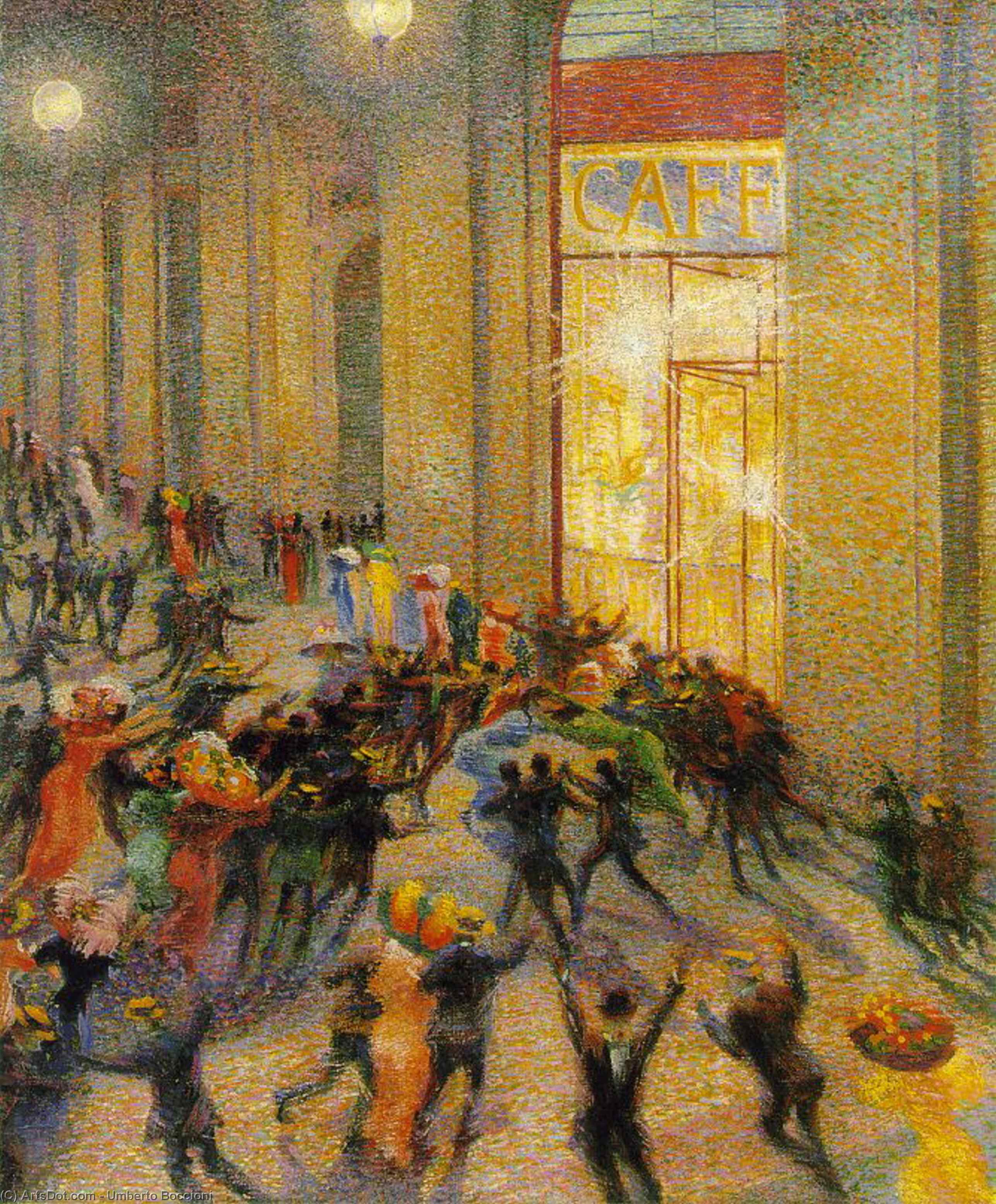
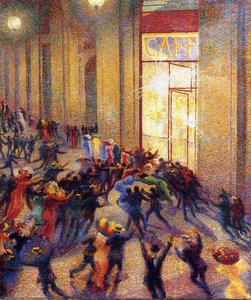
Riot (also known as Riot in the Galleria)
 Acrylic On Canvas
- WallArt
- Futurism
 1910
1910- Modern
 76.0 x 64.0 cm
 Read More
Purchase a high-resolution, enhanced digital image, far superior to the online preview.
Each file is meticulously prepared by our in-house specialists using advanced tools and expert manual retouching. We ensure every image has exceptional clarity, precise color accuracy, and fine detail.
The final file is delivered via email within 72 hours, optimized for immediate use in professional, editorial, and print environments. This is the same quality trusted by top-tier design studios, publishers, and galleries.
Digital Image
Download a high-resolution file for personal display, printing, and creative projects. ( Buy Print Buy Hand Made Painting)
Included in Every Digital Image Order
Expert Digital Delivery, Guaranteed
When you choose ArtsDot.com, you're not just getting an image - you're receiving a professionally enhanced digital artwork, crafted with precision and backed by a satisfaction guarantee. Here's everything that comes with your order, automatically:

Fast Email Delivery
Your high-resolution digital image file will be emailed to you within 72 hours of ordering - ready for immediate use.

AI-Enhanced Digital File
Your artwork is professionally optimized using advanced AI tools and manual editing, ensuring maximum detail, clarity, and color accuracy.

Free Lifetime Re-Delivery
Accidentally deleted or lost your file? No worries - we'll resend it to you anytime, free of charge.

No Import Fees - Ever
Enjoy your artwork instantly with zero customs, duties, or delivery fees - digital downloads are always tax-free.

Color Accuracy Guarantee
We ensure your digital image reflects the original colors as closely as possible using professional tools and color management.

60-Day Satisfaction Guarantee
If you're not satisfied with your digital image, we'll revise it or refund 100% within 60 days - no questions asked.

100% Money-Back Guarantee
Not satisfied? Get a full refund within 60 days of receiving your digital file - no questions asked.

Bulk Order Discounts
Buy 3 images, save 10% - Buy 5, save 15% - Buy 10+, save 20%. Great for creative projects, galleries, and agencies.
Collectible Description
Riot (also known as Riot in the Galleria) – A Futurist Vision of Urban Chaos
Umberto Boccioni’s “Riot” stands as an arresting emblem of Futurism, a movement that violently rejected academic tradition and embraced dynamism, speed, and the burgeoning anxieties of the early 20th century. Painted in 1910, this monumental canvas—measuring 76 x 64 cm—was initially conceived for the Pinacoteca di Brera in Milan, Italy, cementing its place within the canon of Italian avant-garde art.
The painting depicts a frenzied scene unfolding within a shopping mall – Galleria Vittorio Emanuele II – capturing the essence of Futurist ideals. Artists like Charles Saatchi have lauded Boccioni’s masterful blend of Impressionist influences with Pointillism, highlighting his innovative approach to portraying movement and emotion.
The Futurists: Embracing Velocity and Disruption
Born in Reggio Calabria in 1882, Umberto Boccioni’s formative years were marked by constant relocation due to his father's government postings. This nomadic upbringing instilled in him a profound appreciation for diverse environments, profoundly shaping his artistic sensibilities. He honed his skills at the Accademia di Belle Arti di Roma under Giovanni Mataloni, mastering Liberty style poster art.
Futurism, spearheaded by Filippo Tommaso Marinetti’s manifesto of 1909, rejected the past and championed a radical reimagining of artistic expression. The movement fervently admired technological advancements – cars, airplanes, industrial cities – perceiving them as symbols of progress and liberation from bourgeois constraints.
Composition and Technique: Fractured Reality
“Riot”’s composition is deliberately chaotic, mirroring the Futurist obsession with speed and fragmentation. Figures intertwine and overlap, creating a palpable sense of disorder—a deliberate antithesis to traditional artistic conventions. Two horses dominate the scene, positioned strategically near the center and on the right side, alongside carriages visible on the left, middle, and right.
Boccioni’s technique is characterized by bold brushstrokes and vibrant color palettes – predominantly reds, yellows, and blues—designed to convey a sense of urgency and excitement. The artist skillfully utilizes Pointillist dots to build up texture and luminosity, capturing the fleeting impressions of movement and creating an illusion of depth that defies conventional perspective.
Symbolism: Consumption and Rebellion
The Galleria Vittorio Emanuele II itself serves as a potent symbol within “Riot,” representing not merely commerce but also the pervasive influence of consumer culture—a target of Futurist critique. The painting’s depiction of a violent brawl underscores the movement's preoccupation with social unrest and its rejection of established hierarchies.
As noted in scholarly articles like "Riot in the Gallery" on Wikipedia, Boccioni’s work embodies the Futurist desire to confront viewers with the dynamism and instability inherent in modern life. It remains a testament to his artistic vision—a visceral portrayal of a world perpetually in motion.
For those seeking to explore more works by Umberto Boccioni or delve deeper into the Futurist movement, reproductions are available on ArtsDot.com: Umberto Boccioni: Riot (also known as Riot in the Galleria) and Umberto Boccioni: Riot in the Galleria.
Furthermore, “The Futurism Art Movement” provides valuable context for understanding Boccioni’s artistic trajectory and its broader significance within the cultural landscape of his time.
Related Artworks
Artist Biography
A Life Forged in Motion: The Revolutionary Vision of Umberto Boccioni
Umberto Boccioni, born in Reggio Calabria in 1882, was a figurehead of the Italian Futurist movement—a force that sought to shatter artistic conventions and embrace the dynamism of the modern world. His life, though tragically cut short at just thirty-three, became a testament to this fervent belief in progress, speed, and the intoxicating energy of the machine age. Boccioni’s early years were marked by constant relocation due to his father's civil service position, an upbringing that exposed him to diverse landscapes and instilled within him a restless spirit. This nomadic existence eventually led him to Rome, where he initially pursued studies in decorative arts before gravitating towards painting, absorbing influences from the Liberty style poster artists of the time. However, it was his encounter with Futurism, ignited by the writings of Filippo Tommaso Marinetti, that truly set his artistic trajectory ablaze.Embracing the Whirlwind: The Rise of a Futurist
The year 1910 proved pivotal for Boccioni. He signed the *Manifesto dei Pittori Futuristi*, solidifying his commitment to a movement that celebrated technology, velocity, and even violence as emblems of modernity. This wasn’t merely an aesthetic choice; it was a philosophical rebellion against the weight of tradition, a desire to capture the very essence of a world hurtling towards an uncertain future. Boccioni quickly became one of Futurism's most articulate theorists, expanding upon Marinetti’s initial pronouncements and applying them to the visual arts. He argued for a complete break from representational accuracy, advocating instead for paintings that conveyed not just *what* things looked like, but *how* they felt in motion—the sensation of speed, the fragmentation of form, the overwhelming energy of urban life. His early works, while still hinting at Impressionist and Divisionist influences, began to demonstrate this burgeoning obsession with dynamism. Paintings such as *The City Rises* (1910-1911) are monumental in scale and ambition, depicting the chaotic construction of a modern metropolis—a swirling vortex of human figures, buildings, and machinery that embodies the Futurist ideal.Deconstructing Reality: Technique and Themes
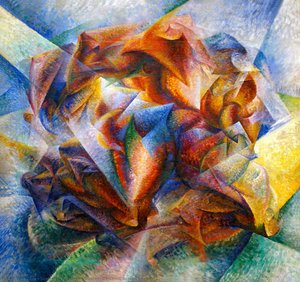
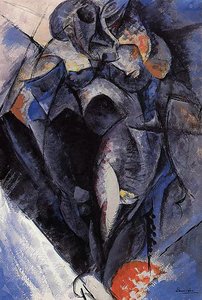
Boccioni’s artistic development was characterized by an increasingly radical approach to form. He moved away from traditional notions of perspective and composition, embracing fragmentation as a means of conveying movement and energy. Objects were broken down into their constituent parts, lines of force radiated outwards, and colors blended in swirling patterns—all designed to create a sense of visual vibration. This deconstruction wasn’t merely stylistic; it was rooted in Boccioni's belief that reality itself was fluid and constantly changing. He sought to represent not the static appearance of things, but their dynamic essence. Key themes emerged throughout his oeuvre: dynamism, the celebration of modernity, and a fascination with the human body as a vehicle for expressing energy and motion. This is powerfully illustrated in works like *Dynamism of a Human Body* (1913), where a figure is depicted not as a solid form but as a series of fragmented shapes suggesting movement through space. Perhaps his most iconic creation, *Unique Forms of Continuity in Space* (1913), transcends painting altogether—a bronze sculpture that embodies the Futurist ideal with breathtaking force. The figure appears to be caught mid-stride, its limbs and torso elongated and distorted, conveying a sense of unstoppable momentum.Legacy and Lasting Impact
Boccioni’s untimely death in 1916, during World War I, robbed the art world of a truly visionary talent. However, his ideas and artworks continued to resonate long after his passing. He profoundly influenced not only subsequent Futurist artists but also movements like Constructivism and Abstract Expressionism. His exploration of motion, dynamism, and the representation of modern life paved the way for new forms of artistic expression, challenging traditional notions of beauty and representation.- Influences: Giacomo Balla’s Divisionist techniques, Cubism's fragmentation of form, and the philosophical writings of Nietzsche.
- Notable Works: *Dynamism of a Human Body*, *Unique Forms of Continuity in Space*, *The City Rises*, *Dynamism of a Cyclist*.
- Historical Significance: A pivotal figure in 20th-century art, Boccioni challenged artistic conventions and helped shape the course of modern art. His theories on dynamism and the representation of motion continue to inspire artists today.
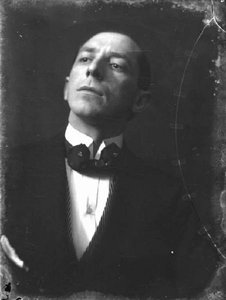
Umberto Boccioni
1882 - 1916 , Italy
Quick Facts
- Artistic Movement Or Style: Futurism
- Artists Or Movements Influenced By This Artist:
- Constructivism
- Abstract Expressionism
- Artists Who Influenced This Artist:
- Giacomo Balla
- Divisionism
- Cubism
- Date Of Birth: 1882-10-19
- Date Of Death: 1916-08-17
- Full Name: Umberto Boccioni
- Nationality: Italian
- Notable Artworks:
- Dynamism of a Human Body
- Unique Forms of Continuity
- The City Rises
- Dynamism of a Cyclist
- Place Of Birth: Reggio Calabria, Italy

