

 Preview
 Send
Send Share
Share
 Details

 Download
 Similars
 X-Ray
X-Ray Diaporama
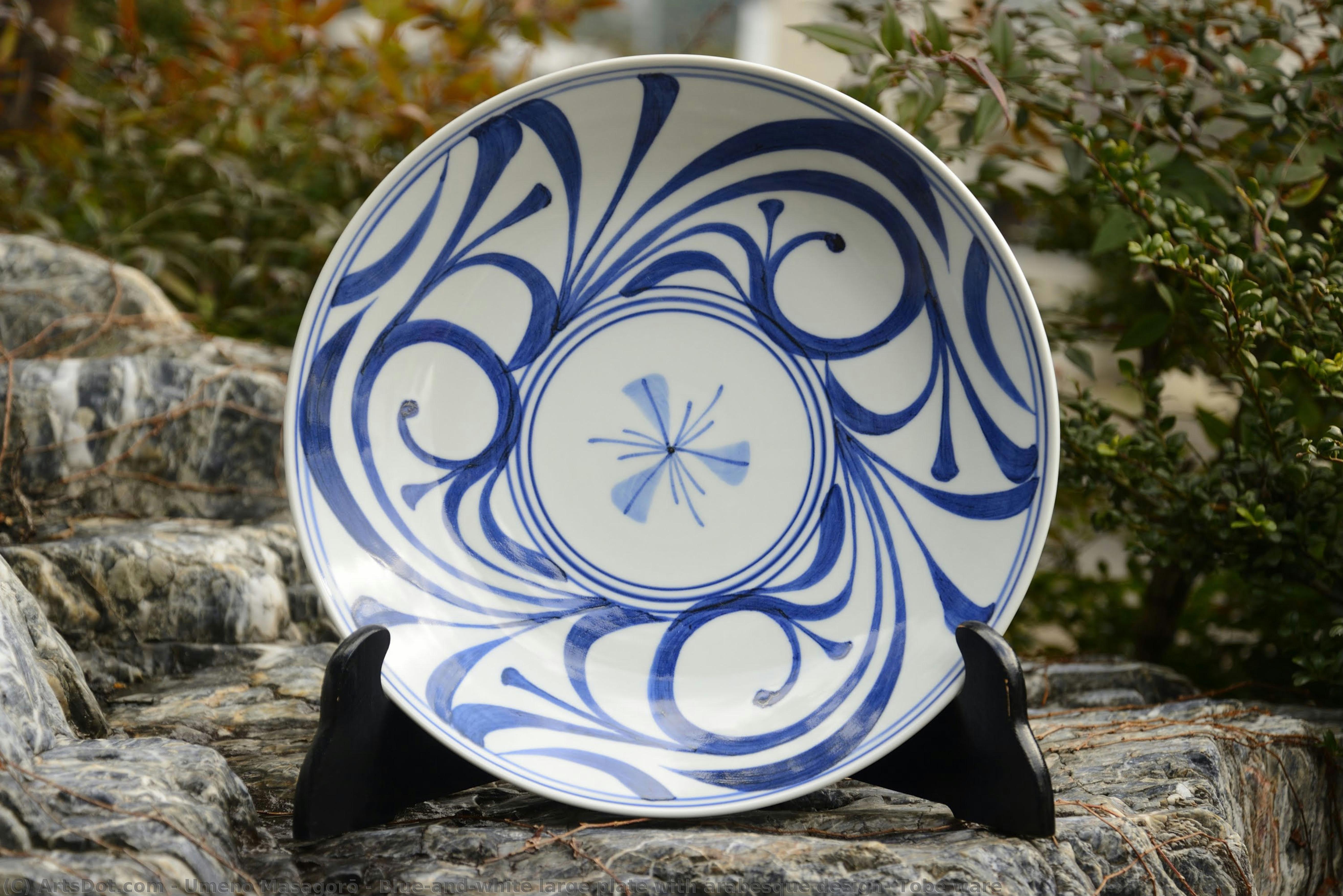
Blue-and-white large plate with arabesque design, Tobe ware
 Read More
Giclée / Art Print
Museum-quality giclée or canvas print with fast production and flexible finish options. ( Buy Hand Made Painting Buy Image)




































Pick from our preset sizes that match the artwork's original proportions.

You may enter your own dimensions to fit a specific frame or space. If your selected size does not match the original image's proportions, we will either crop the artwork or extend the image with a mirrored or solid-fill edge. A digital mockup will be sent for your approval before production begins.
Please note that the on-screen preview does not reflect the actual cropping or extension. Only the mockup will accurately show the final composition.
While custom sizes are available, we recommend selecting a dimension from the predefined list to preserve the original proportions.
Worldwide Delivery () in 2 weeks instead of standard 4/5 weeks. (23 August)

Free Worldwide Express Shipping

High-Quality Linen Canvas

Full Shipping Insurance

Customs Tax Refund Guarantee

True Color Matching Guarantee

60-Day Return Policy (Defects Only)

100% Money-Back Guarantee

Bulk Discount Offer
 Glass option is only available in size under 110 CM

Blue-and-white large plate with arabesque design, Tobe ware
Giclée / Art Print
Reproduction Size
-


Total Price
$ 63
Collectible Description
Related Artworks










Artist Biography
The Legacy of the White Mountain: Umeno Masagorō
The story of umeno masagorō is inextricably linked to the history of Tobe ware, arguably Japan’s most revered ceramic tradition. Born in 1882 in the serene Tobe City of Ehime Prefecture, Masagorō inherited a profound connection to this ancient craft from his father, who established the Baizan Kiln. The name itself, derived from “Bai Zan,” translates to “white mountain kiln,” a poetic reflection of the kiln's picturesque location nestled amidst the lush, mountainous landscape of Shikoku. This kiln was never merely a production facility; it served as a living testament to centuries of artistic refinement and an unwavering dedication to preserving techniques passed down through generations.
Masagorō’s formative years were spent immersed in the rhythmic traditions of the Baizan Kiln, where he diligently honed his skills under the watchful eye of his father. His apprenticeship was a deep dive into the elemental soul of pottery, as he absorbed the essential knowledge of clay preparation, complex firing methods, and delicate glaze formulations. These foundational skills would eventually coalesce into a unique artistic vision that balanced ancestral reverence with a subtle, forward-looking spirit.
Resilience and the Art of Revival
The mid-twentieth century brought profound shifts to the Japanese landscape, and Masagorō found himself at the helm of a significant cultural challenge. Following the hardships of World War II, he spearheaded a monumental revitalization effort for Baizan Kiln. He faced the daunting task of rebuilding the kiln’s infrastructure and, perhaps more critically, finding ways to attract younger artisans to a craft that required immense patience and discipline. Despite these considerable difficulties, Masagorō remained a steadfast champion of tradition.
His genius lay in his ability to navigate the tension between the old and the new. While he remained anchored in the preservation of time-honored techniques, he subtly introduced innovations designed to cater to contemporary tastes. This delicate balance ensured that the Baizan Kiln did not become a relic of the past, but rather a thriving, evolving entity capable of speaking to new generations of collectors and enthusiasts.
A Masterpiece in Blue and White
The signature aesthetic of Masagorō is characterized by a masterful command of blue and white porcelain, a palette deeply rooted in the storied legacy of Sue ware. His pieces are often celebrated for their intricate arabesque designs, which are meticulously rendered with exceptional precision. When viewing his work, one is struck by a sense of serene beauty; the flowing patterns seem to dance across the ceramic surface, captured forever in a moment of stillness.
Beyond the visual elegance, there is a profound technical integrity to his creations. The ceramics produced under his guidance possess remarkable durability, a result of the Baizan Kiln’s unique firing process. This ensures that each piece retains its luster and structural integrity for decades, allowing the artistry to endure as much as the material itself. Through his unwavering commitment to the heritage of Tobe ware, Umeno Masagorō secured his place as a guardian of tradition, leaving behind a legacy of beauty that continues to resonate within the heart of Japanese ceramic art.
umeno masagorō
1882 - , Japan
Quick Facts
- Artistic Movement Or Style: Tobe Ware Ceramics
- Date Of Birth: 1882
- Full Name: Umeno Masagorō
- Nationality: Japanese
- Notable Artworks: ['Blue-and-white large plate with arabesque design']
- Place Of Birth: Tobe, Japan

