

 Preview
 Send
Send Share
Share
 Details

 Download
 Similars
 X-Ray
X-Ray Diaporama
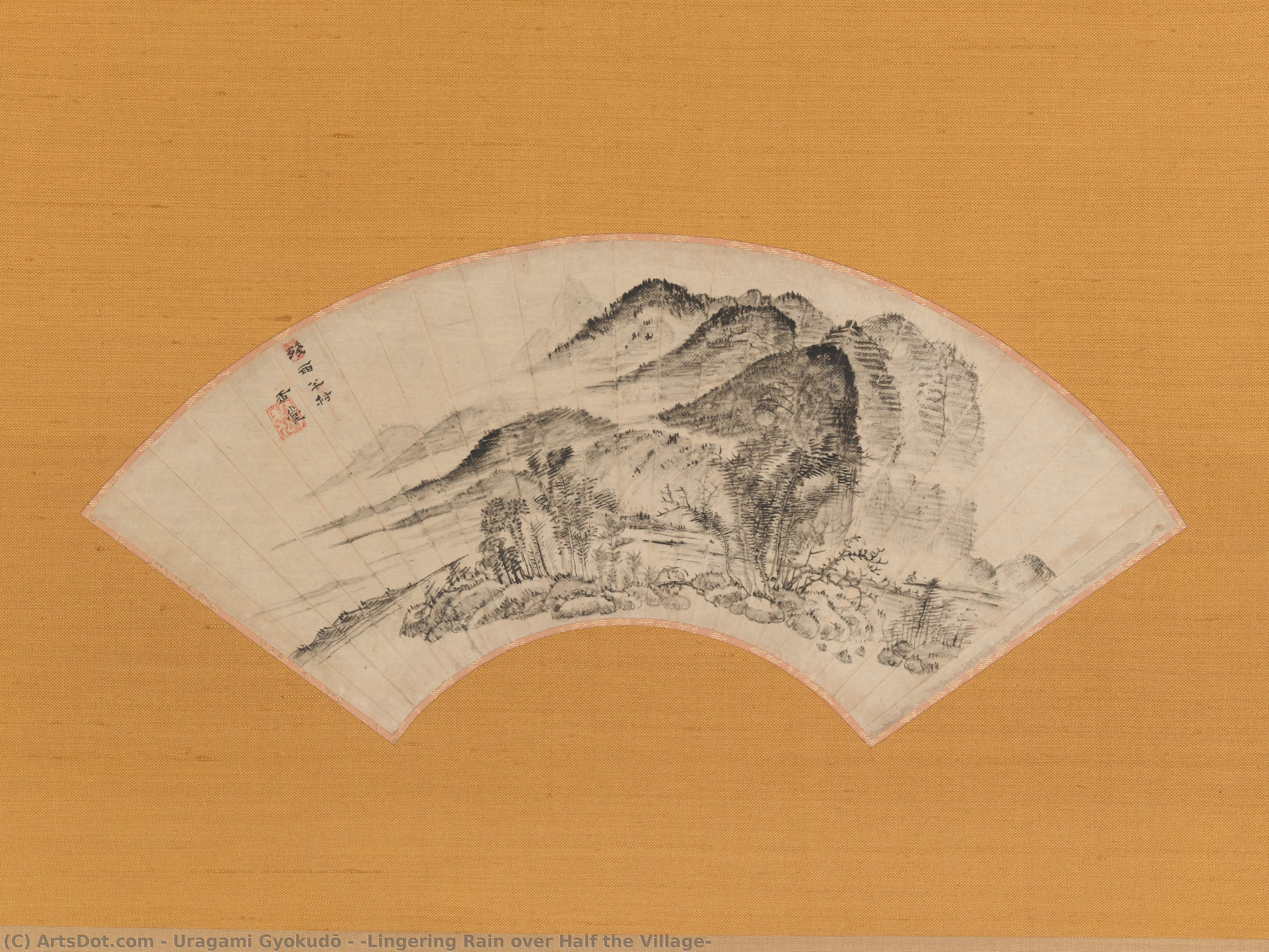
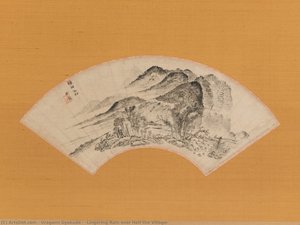
“Lingering Rain over Half the Village”
 1815
1815 22.0 x 48.0 cm
 Read More
Purchase a high-resolution, enhanced digital image, far superior to the online preview.
Each file is meticulously prepared by our in-house specialists using advanced tools and expert manual retouching. We ensure every image has exceptional clarity, precise color accuracy, and fine detail.
The final file is delivered via email within 72 hours, optimized for immediate use in professional, editorial, and print environments. This is the same quality trusted by top-tier design studios, publishers, and galleries.
Digital Image
Download a high-resolution file for personal display, printing, and creative projects. ( Buy Print Buy Hand Made Painting)
Included in Every Digital Image Order
Expert Digital Delivery, Guaranteed
When you choose ArtsDot.com, you're not just getting an image - you're receiving a professionally enhanced digital artwork, crafted with precision and backed by a satisfaction guarantee. Here's everything that comes with your order, automatically:

Fast Email Delivery
Your high-resolution digital image file will be emailed to you within 72 hours of ordering - ready for immediate use.

AI-Enhanced Digital File
Your artwork is professionally optimized using advanced AI tools and manual editing, ensuring maximum detail, clarity, and color accuracy.

Free Lifetime Re-Delivery
Accidentally deleted or lost your file? No worries - we'll resend it to you anytime, free of charge.

No Import Fees - Ever
Enjoy your artwork instantly with zero customs, duties, or delivery fees - digital downloads are always tax-free.

Color Accuracy Guarantee
We ensure your digital image reflects the original colors as closely as possible using professional tools and color management.

60-Day Satisfaction Guarantee
If you're not satisfied with your digital image, we'll revise it or refund 100% within 60 days - no questions asked.

100% Money-Back Guarantee
Not satisfied? Get a full refund within 60 days of receiving your digital file - no questions asked.

Bulk Order Discounts
Buy 3 images, save 10% - Buy 5, save 15% - Buy 10+, save 20%. Great for creative projects, galleries, and agencies.
Collectible Description
Related Artworks





Artist Biography
The Melodic Brush: The Life and Legacy of Uragami Gyokudō
In the vibrant tapestry of Japan’s Edo period, few figures possess a spirit as harmoniously integrated as Uragami Gyokudō. Born around 1745 in Kamogata, Okayama, Gyokudō was far more than a mere painter; he was a polymath whose soul resonated with the strings of the guqin and the delicate tip of the calligraphy brush. While history often categorizes artists by a single medium, Gyokudō defied such boundaries, existing as a musician, poet, and calligrapher whose visual art served as a profound extension of his musical compositions. His life was a journey from the structured duties of the samurai class to the liberated wanderings of an aesthetic sage, a transition that allowed him to infuse the landscape with a rhythmic vitality rarely seen in the nanga tradition.
Born into a family of high-ranking warrior-retainers serving the Ikeda clan, Gyokudō’s early years were steeped in the disciplined traditions of the Japanese elite. He received rigorous instruction in the art of the seven-string zither, a Chinese instrument that would become the heartbeat of his creative identity. However, the call of the arts proved more compelling than the obligations of the sword. Driven by deep philosophical convictions and an unquenchable thirst for artistic freedom, Gyokudō eventually made the radical decision to resign from his position as a samurai. This departure was not merely a career change but an ideological rebirth, allowing him to travel extensively across Japan and immerse himself in the intellectual currents of his time, ultimately shaping a style that blended personal introspection with the grandeur of nature.
A Symphony of Ink and Landscape
To gaze upon a Gyokudō landscape is to listen to a visual composition. His technique was famously influenced by his mastery of music; he viewed the brushstrokes not as static marks, but as rhythmic patterns that mirrored the ebb and flow of a musical score. Utilizing the sumi-e (ink wash) technique, he mastered the art of tonal variation, using layered washes to create atmospheric depth and a sense of profound mystery. His work often features a distinctive, bold brushwork—a series of energetic strokes that build a powerful, driving rhythm across the paper. It is said that his creative process was as much about temperament as it was about technique; legend suggests he would occasionally take up the brush after a few rounds of sake, allowing a sense of joyful intoxication to guide his hand in creating landscapes that felt alive with movement.
His thematic repertoire often centered on the quiet majesty of the natural world, yet these scenes were rarely mere imitations of reality. Instead, they were imbued with deep symbolism and emotional resonance:
- Rhythmic Landscapes: In works such as A Thousand Mountains in Deep Verdure, his use of an unusual octagonal format and wandering streams creates a sense of continuous motion, much like a recurring motif in a musical piece.
- Atmospheric Mystery: His ability to capture the ephemeral—such as the mist clinging to a village in Lingering Rain over Half the Village—demonstrates a mastery of the dry brush and meticulous strokes to evoke a sense of quietude and solitude.
- The Human Element: Small, solitary figures often appear on bridges or paths within his paintings, serving as silent observers that invite the viewer to join them in contemplating the vastness of the mountains.
Historical Significance and Enduring Resonance
Though Gyokudō was celebrated during his lifetime primarily as a master of the guqin, his reputation as a painter ascended to legendary heights following his death in 1820. His ability to bridge the gap between the auditory and the visual has earned him a place among the most compelling figures of the Edo period. One of his most significant achievements, the work Snow Sifted Through Frozen Clouds, is recognized as a National Treasure, standing as a testament to his unparalleled ability to capture the essence of the natural world through a lens of spiritual and musical harmony.
The legacy of Uragami Gyokudō lies in his refusal to separate the senses. By treating the landscape as a canvas for rhythm and the zither as an instrument of poetry, he created a unified aesthetic experience. His influence persists in the way we understand the intersection of different art forms, reminding us that true beauty is found when the boundaries between sound, sight, and spirit are dissolved into a single, breathtaking expression of life.
uragami gyokudō
1745 - 1820
Quick Facts
- Artistic Movement Or Style: Shanshui
- Date Of Death: 1820
- Full Name: Uragami Gyokudō
- Nationality: Japanese
- Notable Artworks:
- Snow sifted through frozen clouds
- A Thousand Mountains in Deep Verdure
- Old Trees in Lonely Springtime
- Place Of Birth: Japan

