 Preview
 Send
Send Share
Share
 Details

 Download
 Similars
 X-Ray
X-Ray Diaporama
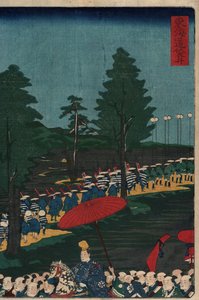
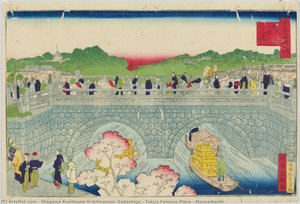
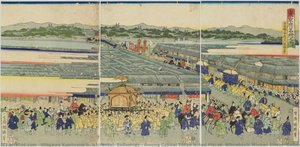
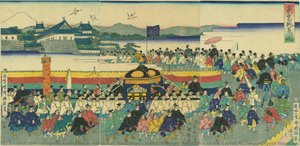
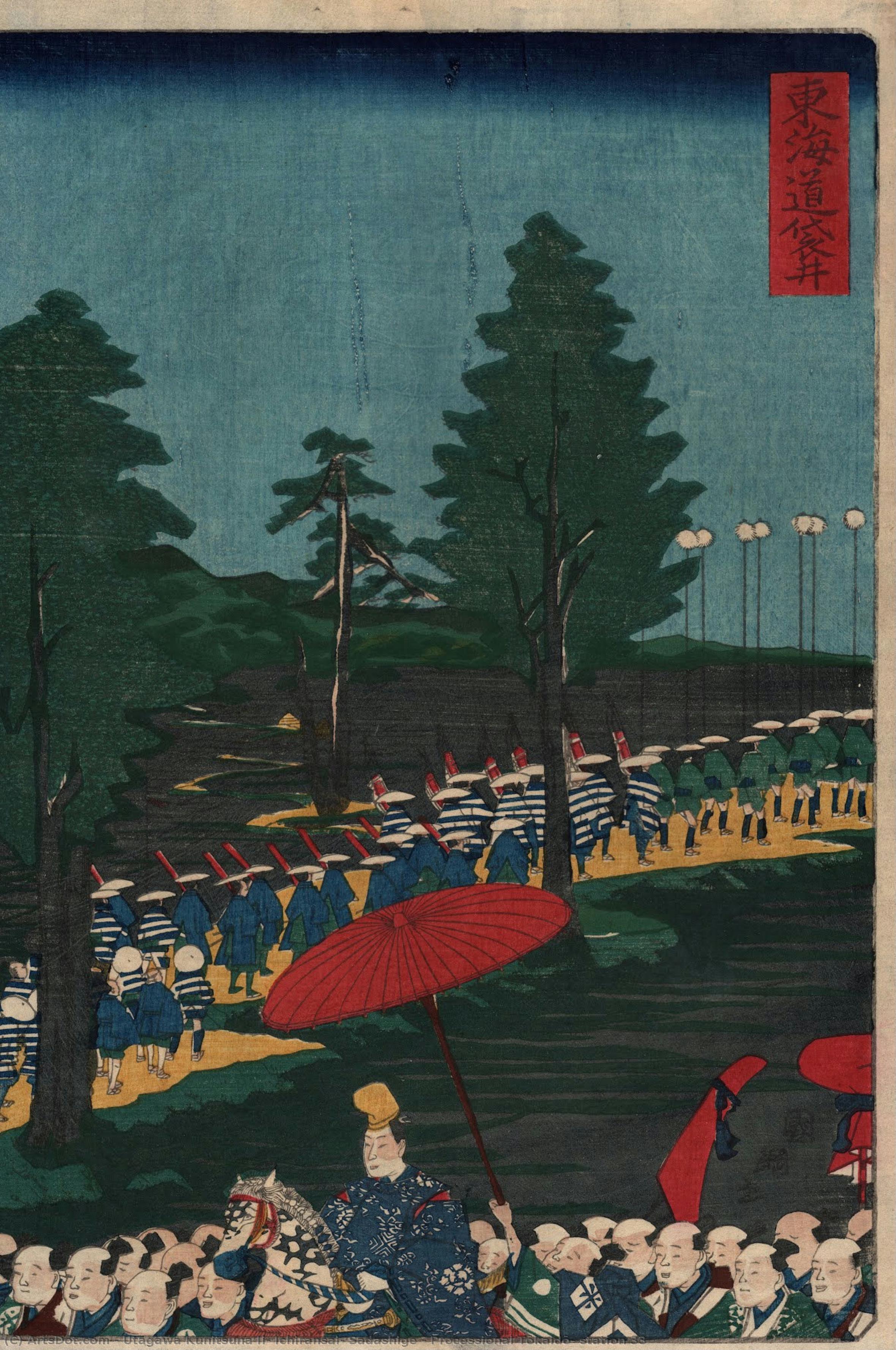
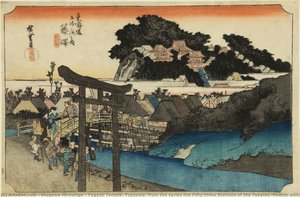
Processional Tōkaidō, station 33
 1863
1863 38.0 x 26.0 cm
 Bujalance Collection
 Read More
Hand Made Oil Reproduction
Hand-painted oil on canvas in your size and frame, made to order by our artists. ( Buy Print Buy Image)




































Pick from our preset sizes that match the artwork's original proportions.

You may enter your own dimensions to fit a specific frame or space. If your selected size does not match the original image's proportions, we will either crop the artwork or extend the painting with additional hand-painted elements. A digital mockup will be sent for your approval before production begins.
Please note that the on-screen preview does not reflect the actual cropping or extension. Only the mockup will accurately show the final composition.
While custom sizes are available, we recommend selecting a dimension from the predefined list to preserve the original proportions.
After order, ArtsDot.com team will email client for instructions and provide a mockup preview
Worldwide Delivery () in 3/4 weeks instead of standard 5 weeks. (26 August). No compromise on quality.

Free Worldwide Express Shipping

High-Quality Linen Canvas

Full Shipping Insurance

Customs Tax Refund Guarantee

True Color Matching Guarantee

60-Day Return Policy (Defects Only)

100% Money-Back Guarantee

Bulk Discount Offer
 Glass option is only available in size under 110 CM

Processional Tōkaidō, station 33
Reproduction Medium
Reproduction Size
-


Total Price
$ 263
Artwork Description
Related Artworks







Artist Biography
The Elusive Brush: Unraveling the Life and Art of Utagawa Kunitsuna Ii
Utagawa Kunitsuna Ii, a name that echoes through the annals of late Edo period ukiyo-e, remains a figure shrouded in intriguing mystery. Also known as Ichiransai Sadashige, his life is documented with frustrating sparseness, making him a compelling subject for art historians and enthusiasts alike. Born sometime during the early to mid-19th century – precise dates remain elusive – Kunitsuna Ii flourished primarily between 1840 and 1870, a period of significant social and artistic transition in Japan. Unlike many of his contemporaries whose lives are richly detailed through diaries and apprenticeships records, Kunitsuna’s origins are largely unknown. This lack of biographical information contributes to the unique allure surrounding his work; each print feels like a fragment of a larger, untold story. He was active during the late Edo period and early Meiji era, witnessing firsthand the decline of the shogunate and the rapid modernization that followed.A Master of Bijin-ga: Portraits of Beauty in a Changing World
Kunitsuna Ii is most celebrated for his exquisite bijin-ga – portraits of beautiful women. His depictions are characterized by an exceptional sensitivity to detail, particularly in the rendering of fabrics and hairstyles, reflecting the prevailing fashions of the time. He wasn’t merely replicating appearances; he captured a sense of inner life, a subtle emotionality that distinguished his work from more formulaic portrayals. While many ukiyo-e artists focused on idealized beauty or theatrical roles, Kunitsuna often presented women in everyday settings, engaged in quiet activities like reading, playing musical instruments, or simply enjoying the scenery. This focus on relatable moments resonated with a burgeoning middle class eager for depictions of contemporary life. His prints frequently feature interior scenes, showcasing the refined tastes and domestic comforts of urban dwellers. The delicate balance between realism and idealization is a hallmark of his style, creating images that are both captivatingly beautiful and subtly evocative.Influences and Artistic Development
Pinpointing Kunitsuna’s artistic lineage proves challenging due to the limited documentation surrounding his early career. However, scholars believe he was heavily influenced by earlier masters of bijin-ga such as Kitagawa Utamaro and Keisai Eisen. He absorbed their techniques for portraying feminine grace and elegance but developed a distinctive style that set him apart. His work demonstrates a keen understanding of color theory, employing sophisticated palettes to create atmospheric effects and highlight the textures of fabrics and skin tones. He also appears to have been influenced by the emerging trends in Western art, particularly in his use of perspective and shading – though he never fully abandoned the traditional conventions of ukiyo-e. His prints from the later part of his career show a growing experimentation with composition and subject matter, suggesting a willingness to push boundaries within the established artistic framework.Major Achievements and Historical Significance
While Kunitsuna Ii may not have achieved the widespread fame of some of his contemporaries like Hokusai or Hiroshige, his contributions to ukiyo-e are significant. He produced a prolific body of work – hundreds of prints depicting a diverse range of subjects, primarily focused on women but also including landscapes and historical scenes.- His series focusing on the “Eight Views of Omi” demonstrate his skill in landscape composition.
- Prints illustrating contemporary life provide valuable insights into the social customs and fashions of the late Edo period.
- The exceptional quality of his color printing techniques ensured that his images retained their vibrancy and beauty over time.
Quick Facts
- Artistic Movement Or Style: Ukiyo-e
- Artists Or Movements Influenced By This Artist: ['']
- Artists Who Influenced This Artist: ['']
- Date Of Death: Living
- Full Name: Utagawa Kunitsuna Ii, Ichiransai Sadashige
- Nationality: Japanese
- Notable Artworks: ['None listed']