

 Preview
 Send
Send Share
Share
 Details

 Download
 Similars
 X-Ray
X-Ray Diaporama
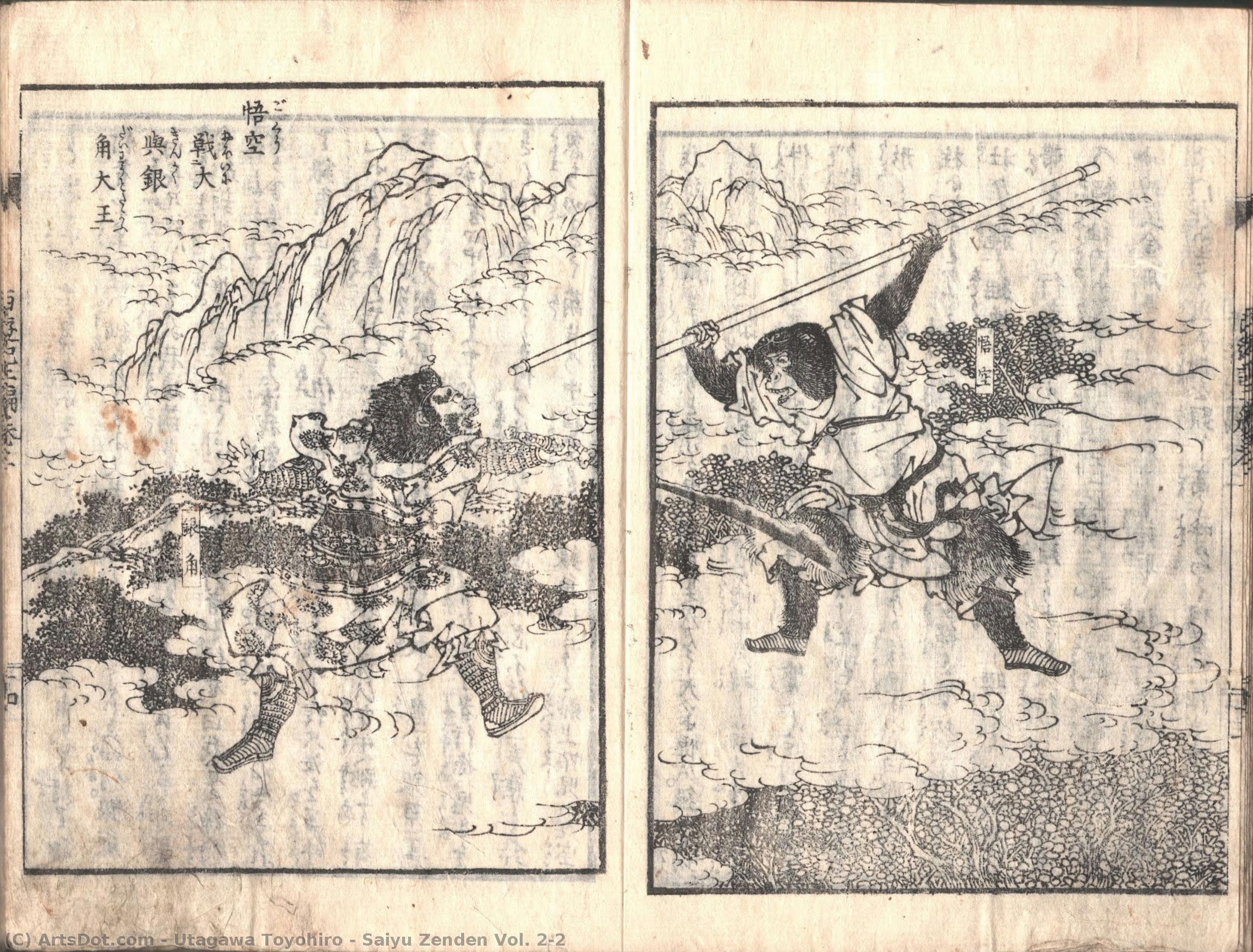
Saiyu Zenden Vol. 2-2
 Woodblock Print
- Ukiyo-e
 1827
1827- 19th Century
 22.0 x 28.0 cm
 Bujalance Collection
 Read More
Purchase a high-resolution, enhanced digital image, far superior to the online preview.
Each file is meticulously prepared by our in-house specialists using advanced tools and expert manual retouching. We ensure every image has exceptional clarity, precise color accuracy, and fine detail.
The final file is delivered via email within 72 hours, optimized for immediate use in professional, editorial, and print environments. This is the same quality trusted by top-tier design studios, publishers, and galleries.
Digital Image
Download a high-resolution file for personal display, printing, and creative projects. ( Buy Print Buy Hand Made Painting)
Included in Every Digital Image Order
Expert Digital Delivery, Guaranteed
When you choose ArtsDot.com, you're not just getting an image - you're receiving a professionally enhanced digital artwork, crafted with precision and backed by a satisfaction guarantee. Here's everything that comes with your order, automatically:

Fast Email Delivery
Your high-resolution digital image file will be emailed to you within 72 hours of ordering - ready for immediate use.

AI-Enhanced Digital File
Your artwork is professionally optimized using advanced AI tools and manual editing, ensuring maximum detail, clarity, and color accuracy.

Free Lifetime Re-Delivery
Accidentally deleted or lost your file? No worries - we'll resend it to you anytime, free of charge.

No Import Fees - Ever
Enjoy your artwork instantly with zero customs, duties, or delivery fees - digital downloads are always tax-free.

Color Accuracy Guarantee
We ensure your digital image reflects the original colors as closely as possible using professional tools and color management.

60-Day Satisfaction Guarantee
If you're not satisfied with your digital image, we'll revise it or refund 100% within 60 days - no questions asked.

100% Money-Back Guarantee
Not satisfied? Get a full refund within 60 days of receiving your digital file - no questions asked.

Bulk Order Discounts
Buy 3 images, save 10% - Buy 5, save 15% - Buy 10+, save 20%. Great for creative projects, galleries, and agencies.
Collectible Description
A Journey Through Ink and Legend
In the delicate interplay of line and shadow found within Saiyu Zenden Vol. 2-2, we are transported to a bygone era of mythic grandeur. This exquisite work, dating from approximately 1827, serves as a breathtaking window into the heart of East Asian storytelling. As part of the legendary Ehon Saiyou Zenden (Journey to the West), these pages capture the essence of one of the most profound epics in literary history. The artwork depicts a moment of high tension and martial prowess, where the boundaries between the human and the divine blur. Through the masterful hand of Utagawa Toyohiro, we witness a scene of movement and conflict, where characters wielding swords navigate a world populated by immortals, monks, and legendary creatures. It is not merely an illustration; it is a portal into a universe where every stroke of the brush carries the weight of destiny.
The technical brilliance of this piece lies in its ability to convey complex narratives through monochromatic precision. Created during the late Edo period, the work utilizes the traditional Japanese woodblock aesthetic, characterized by fluid, rhythmic lines that define form and motion without the need for color. The artist employs a sophisticated use of contrast, allowing the stark blacks to anchor the composition while the fine, pencil-like details suggest the texture of fabric, the glint of steel, and the intensity of a warrior's gaze. For the discerning collector or interior designer, this piece offers a profound sense of historical depth. The monochromatic palette provides a versatile elegance, making it an ideal centerpiece for a curated gallery wall or a sophisticated study where one seeks to evoke a sense of timelessness and contemplative strength.
The Soul of the Epic
Beyond its visual allure, Saiyu Zenden Vol. 2-2 resonates with deep symbolic significance. The characters depicted—drawn from the tales of the monk Xuanzang and his companions Sun Wukong, Sha Seng, and Zhu Bajie—represent a spiritual quest for enlightenment and the overcoming of worldly obstacles. Each figure in the composition acts as a symbol of different facets of the human struggle: courage, discipline, and the chaotic nature of desire. The presence of weaponry and the suggestion of warfare are not merely for spectacle; they represent the internal battles fought on the path to wisdom. To possess a reproduction of this work is to invite these themes of resilience and spiritual perseverance into one's personal space.
For those looking to inspire awe within a contemporary interior, this artwork offers an unparalleled emotional impact. It commands attention through its narrative complexity and historical gravity. Whether placed in a minimalist modern setting to provide a striking focal point or integrated into a classical arrangement of fine art, the piece breathes life into its surroundings. It serves as a conversation starter, a tribute to the enduring power of the classics, and a testament to the artistry of the Utagawa school. This reproduction allows the beauty of 19th-century Japanese printmaking to be experienced anew, bringing the legendary spirit of the Journey to the West into the modern home.
Related Artworks

Artist Biography
Scipio Moorhead: An Enslaved Artist’s Silent Legacy
The story of Scipio Moorhead is a poignant and largely untold chapter in American art history—a testament to the unrecognized talent that flourished within the confines of slavery. Active primarily between 1773 and 1775, Moorhead was an enslaved African-American artist who created remarkably sophisticated drawings, capturing scenes of everyday life with a keen eye for detail and a subtle understanding of human emotion. Despite his undeniable skill, Moorhead’s work remained largely unknown until the late 20th century, when art historian William H. Robinson meticulously pieced together fragments of evidence to reveal the identity of the artist behind Phillis Wheatley’s celebrated dedication poem.
Born into slavery in Boston, Massachusetts, Scipio Moorhead's early life remains shrouded in mystery. He was owned by Reverend John Moorhead and his wife, Sarah Parsons Moorhead, a woman who possessed artistic talent herself and served as his primary tutor. This privileged position—a rare opportunity for an enslaved person—allowed Moorhead to develop his artistic abilities under the guidance of a sympathetic educator. While the exact nature of his training is unknown, it’s believed he studied drawing techniques alongside Sarah, absorbing the principles of observation and representation that would later inform his work.
The most compelling evidence for Moorhead's identity comes from Phillis Wheatley’s 1773 poem, “Ode to Liberty,” dedicated to him. Wheatley, a celebrated African-American poet herself, described Moorhead as “a young African Painter, on seeing his Works.” This brief but significant acknowledgement provided the first concrete link to Moorhead's existence and established his artistic practice. Further corroboration emerged in 1773 when an advertisement appeared in the *Boston News-Letter*, announcing the sale of a “negro artist… A negro of extraordinary genius,” further solidifying the connection to the enslaved man who created the artwork Wheatley admired.
Although no original works by Moorhead have survived, scholars believe he may have been responsible for the engraving accompanying Wheatley’s poetry. The engraving, a portrait of a woman deeply engrossed in writing, bears striking similarities to Moorhead's style—particularly in its composition and attention to detail. The piece is considered a groundbreaking work, as it was one of the first depictions of an American woman engaged in intellectual pursuits, predating many later representations by decades. The engraving’s novelty and artistic merit were quickly recognized, with printers producing multiple copies for distribution.
Scipio Moorhead's story serves as a powerful reminder of the vast contributions made by African Americans to the development of American art—contributions that have often been overlooked or deliberately suppressed due to systemic racism. His legacy is not one of grand exhibitions or public acclaim, but rather a quiet testament to his skill, resilience, and the enduring power of artistic expression in the face of adversity. His existence challenges conventional narratives of artistic production and highlights the importance of uncovering marginalized voices within art history.
The Rococo World: Paolo Anesi’s Delicate Landscapes
Paolo Anesi (1697-1773) was an Italian painter who spent much of his career in France, becoming a prominent figure in the burgeoning Rococo movement. While not as widely celebrated as some of his contemporaries—such as Watteau or Boucher—Anesi’s work offers a unique and captivating glimpse into the aesthetics and sensibilities of 18th-century French art. His paintings are characterized by their delicate brushwork, vibrant colors, and an emphasis on capturing fleeting moments of beauty and leisure.
Born in Florence, Anesi received his early artistic training under Giuseppe Bartolomeo Chiari and Bernardino Fergioni, both established artists within the Florentine school. However, it was his time in Paris that truly shaped his style and propelled him to prominence. He gained access to the prestigious École des Élèves Protégés, a program established by the Académie Royale de Peinture et de Sculpture to provide French artists with direct instruction from the royal art establishment. This privileged position afforded Anesi invaluable opportunities to study under leading masters and immerse himself in the artistic culture of the era.
Anesi’s most celebrated works are his *vedute*, or landscape views, which he often combined with scenes of courtly life—a style known as *fête galante*. These paintings depict idyllic gatherings of elegantly dressed figures amidst picturesque landscapes, capturing a sense of refined leisure and aristocratic indulgence. His compositions are meticulously detailed, showcasing an impressive command of perspective and color. He frequently collaborated with Paolo Monaldi on these works, contributing the landscape elements while Monaldi focused on depicting the human figures.
Beyond his *vedute*, Anesi also produced a variety of other subjects, including still lifes, portraits, and historical scenes. His *casta* paintings—depictions of families comprised of European and indigenous ancestry—offer valuable insights into the social dynamics and cultural exchanges of colonial France. His work reflects the prevailing artistic trends of his time, blending elements of Baroque drama with the delicate elegance characteristic of Rococo style.
Despite his success in Paris, Anesi remained a relatively obscure figure during his lifetime. However, his paintings have since been recognized for their beauty and technical skill, offering a valuable contribution to our understanding of the Rococo movement and the artistic landscape of 18th-century France.
Jean Antoine Houdon: The Sculptor of Souls
Jean Antoine Houdon (1741–1828) stands as one of the most significant sculptors of the French Enlightenment, renowned for his remarkably lifelike portraits that captured not only a subject’s physical appearance but also their inner character and personality. Unlike many of his contemporaries who favored idealized representations or dramatic historical scenes, Houdon championed what he termed “truth to nature,” striving to translate the essence of living flesh into marble with unparalleled accuracy and psychological insight.
Born in Versailles, Houdon’s early artistic training was shaped by the influence of the royal art establishment. He gained access to the École des Élèves Protégés, a program established to provide young French artists with direct instruction from the masters at the Louvre. This privileged position exposed him to the works of antiquity and the Baroque, fostering his appreciation for classical forms and dramatic composition. However, Houdon quickly developed his own distinctive style—one characterized by an intense focus on observation, anatomical detail, and a subtle understanding of human expression.
Houdon’s most famous works are his portraits, which include depictions of prominent figures from the French court, intellectual circles, and the burgeoning American colonies. He meticulously studied his subjects, spending hours observing their gestures, expressions, and mannerisms. His sculptures capture a remarkable range of emotions—from quiet contemplation to lively engagement—revealing the inner lives of those he portrayed.
Beyond portraiture, Houdon also produced sculptures of religious figures, mythological scenes, and allegorical representations. However, it is his portraits that have secured his enduring legacy as one of France’s greatest sculptors. His ability to translate the complexities of human character into marble continues to fascinate and inspire art lovers today.
Scipio Moorhead: A Fragmentary Masterpiece
The story of Scipio Moorhead is inextricably linked to Phillis Wheatley's 1773 poem, “Ode to Liberty,” a poignant dedication to the young African-American artist whose drawings had deeply moved her. Wheatley’s poem provides the only known written record of Moorhead’s existence and offers tantalizing glimpses into his artistic practice. The poem describes Moorhead as “a young African Painter, on seeing his Works,” suggesting that Wheatley was directly inspired by his talent and artistry.
Despite this significant recognition, little else is definitively known about Moorhead's life or career. Historians have pieced together fragments of information from contemporary sources—including an advertisement in the *Boston News-Letter* announcing the sale of a “negro artist… A negro of extraordinary genius”—to reconstruct his story. It’s believed that Moorhead was enslaved by Reverend John Moorhead, who provided him with artistic training and opportunities for development.
The most compelling evidence for Moorhead's skill lies in the engraving accompanying Wheatley’s poem. The engraving, a portrait of a woman deeply engrossed in writing, bears striking similarities to Moorhead’s style—particularly in its composition, detail, and subtle expression of thought. Scholars widely believe that Moorhead created this engraving, marking it as one of the earliest depictions of an American woman engaged in intellectual pursuits.
Unfortunately, no original works by Moorhead have survived. He was sold at auction in 1775 as part of his owner’s estate, and his fate remains unknown. His story serves as a powerful reminder of the unrecognized contributions made by African Americans to American art history—a testament to the talent that flourished within the confines of slavery and the enduring legacy of an artist whose work was tragically lost to time.
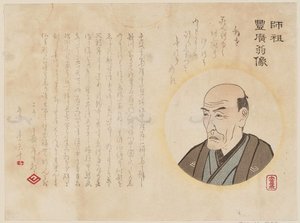
utagawa toyohiro
1773 - 1828 , Japan
Quick Facts
- Artists Or Movements Influenced By This Artist: ['Phillis Wheatley']
- Artists Who Influenced This Artist: ['John Singleton Copley']
- Date Of Birth: c. 1773
- Full Name: Scipio Moorhead
- Nationality: African-American
- Notable Artworks: ['Portrait of Phillis Wheatley']
- Place Of Birth: Boston, Massachusetts

