 Preview
 Send
Send Share
Share
 Details

 Download
 Similars
 X-Ray
X-Ray Diaporama
Woman Cooling Herself
 Woodblock Print
- Ukiyo-e
 1800
1800- 19th Century
 40.0 x 66.0 cm
 Read More
Giclée / Art Print
Museum-quality giclée or canvas print with fast production and flexible finish options. ( Buy Hand Made Painting Buy Image)




P118B $10

P118H $10

P118W $10

P438Z $10

P508JH $12

P508YH $12

P805H $10

P805Z $10

P919BZ $10

P919G $10

P919XJ $10

P959ZH $10

P968JZ $12

W106C $8

W218G $10

W218JH $8

W218Y $10

W307PJ $10

W316G $10

W316PJ $8

W316Y $10

W398PJ $8

W4111J $10

W500HY $15

W500JH $15

W692G $12

W849H $8

W940BG $15

W953PJ $8




Pick from our preset sizes that match the artwork's original proportions.

You may enter your own dimensions to fit a specific frame or space. If your selected size does not match the original image's proportions, we will either crop the artwork or extend the image with a mirrored or solid-fill edge. A digital mockup will be sent for your approval before production begins.
Please note that the on-screen preview does not reflect the actual cropping or extension. Only the mockup will accurately show the final composition.
While custom sizes are available, we recommend selecting a dimension from the predefined list to preserve the original proportions.
Worldwide Delivery () in 2 weeks instead of standard 4/5 weeks. (23 August)

Free Worldwide Express Shipping

High-Quality Linen Canvas

Full Shipping Insurance

Customs Tax Refund Guarantee

True Color Matching Guarantee

60-Day Return Policy (Defects Only)

100% Money-Back Guarantee

Bulk Discount Offer
 Glass option is only available in size under 110 CM

Woman Cooling Herself
Giclée / Art Print
Reproduction Size
-


Total Price
$ 63
Collectible Description
A Moment of Summer Serenity
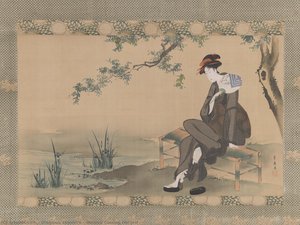
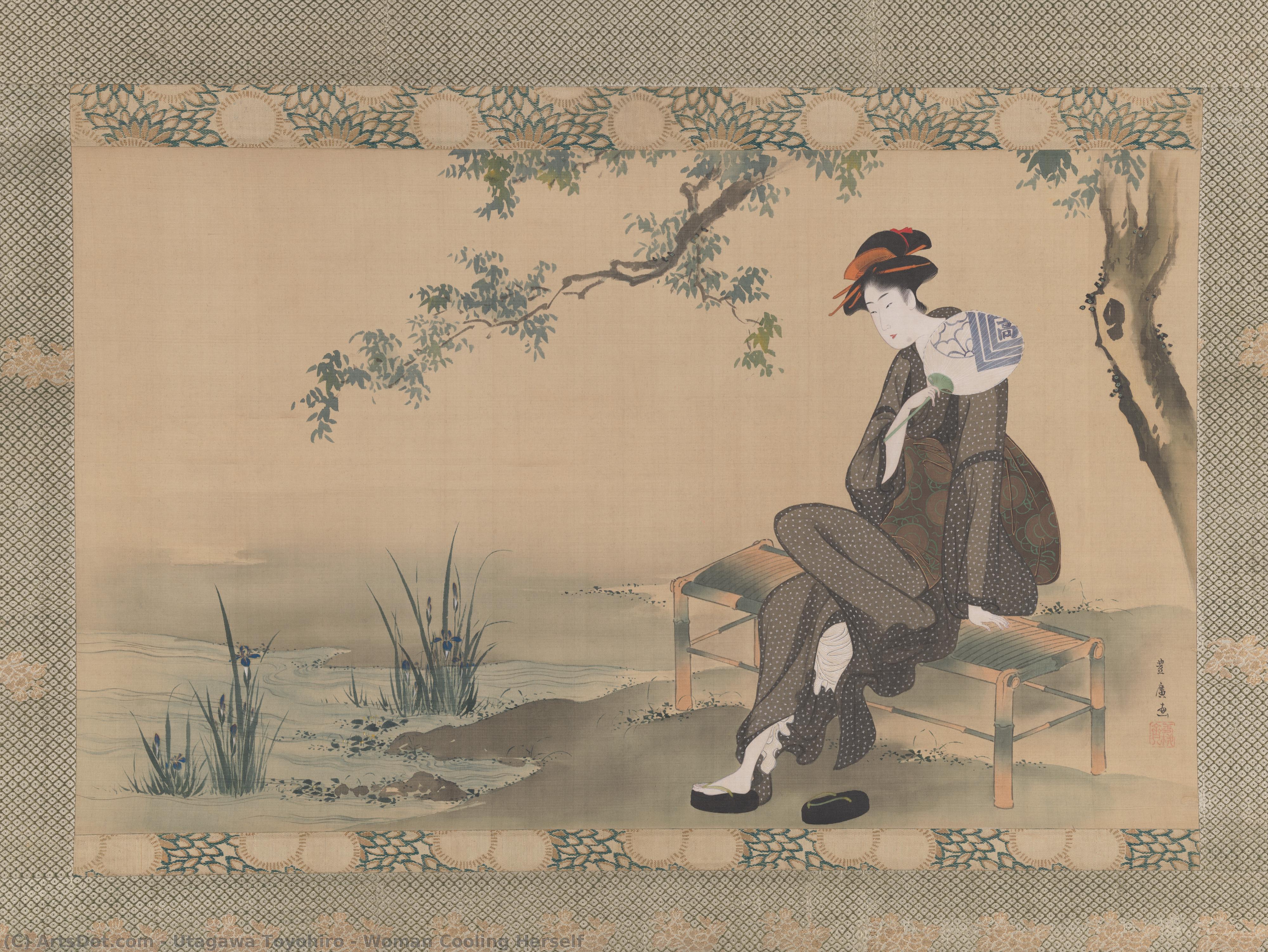
In the delicate strokes of Utagawa Toyohiro’s Woman Cooling Herself, we are transported to the lush, humid atmosphere of Japan around the year 1800. The scene unfolds with a profound sense of quietude, capturing a fleeting moment of respite amidst the sweltering heat of the fifth lunar month. A young woman, draped in a sheer, ethereal kimono, reclines upon a bamboo bench by the edge of a marshy pond. Her posture—one leg bent in a relaxed, casual pose and a single geta sandal discarded on the ground—speaks to an intimate, unobserved moment of personal comfort. As she fans herself to ward off the summer sun, the viewer is invited to feel the heavy, warm air and hear the gentle rustle of leaves near the water's edge.
The composition is a masterclass in the ukiyo-e tradition, where the beauty of the floating world is captured through exquisite detail and seasonal symbolism. The presence of fully bloomed irises rising from the pond serves as more than mere decoration; they are temporal markers that ground the artwork in the height of summer. Toyohiro’s late-career style is evident here, characterized by a more elongated, willow-like elegance in his female figures, lending the subject an air of sophisticated grace. Every element, from the texture of the silk to the subtle ripples in the pond, works in harmony to create a sensory experience that transcends the boundaries of the frame.
Historical Elegance and Hidden Narratives
Beyond its aesthetic charm, this masterpiece contains subtle historical clues that delight the keen observer. The fan held by the woman bears a specific crest—the character Kō (高) set within a triple mimasu motif. This is not merely a decorative flourish but a sophisticated nod to the celebrity culture of the Edo period, specifically referencing the famous Kabuki actor Ichikawa Komazō (Matsumoto Kōshirō V). By weaving these contemporary cultural markers into a scene of natural beauty, Toyohiro bridges the gap between the ephemeral world of theater and the timeless rhythms of nature.
For the collector or interior designer, this artwork offers a profound emotional resonance. It is a piece that embodies tranquility, nostalgia, and refined taste. The soft palette and fluid lines make it an ideal centerpiece for spaces designed for contemplation and relaxation. Whether displayed in a sunlit gallery or a sophisticated modern living room, the painting acts as a window into a lost era of Japanese refinement, offering a sense of calm that remains strikingly relevant in our fast-paced contemporary world.
Related Artworks
Artist Biography
Scipio Moorhead: An Enslaved Artist’s Silent Legacy
The story of Scipio Moorhead is a poignant and largely untold chapter in American art history—a testament to the unrecognized talent that flourished within the confines of slavery. Active primarily between 1773 and 1775, Moorhead was an enslaved African-American artist who created remarkably sophisticated drawings, capturing scenes of everyday life with a keen eye for detail and a subtle understanding of human emotion. Despite his undeniable skill, Moorhead’s work remained largely unknown until the late 20th century, when art historian William H. Robinson meticulously pieced together fragments of evidence to reveal the identity of the artist behind Phillis Wheatley’s celebrated dedication poem.
Born into slavery in Boston, Massachusetts, Scipio Moorhead's early life remains shrouded in mystery. He was owned by Reverend John Moorhead and his wife, Sarah Parsons Moorhead, a woman who possessed artistic talent herself and served as his primary tutor. This privileged position—a rare opportunity for an enslaved person—allowed Moorhead to develop his artistic abilities under the guidance of a sympathetic educator. While the exact nature of his training is unknown, it’s believed he studied drawing techniques alongside Sarah, absorbing the principles of observation and representation that would later inform his work.
The most compelling evidence for Moorhead's identity comes from Phillis Wheatley’s 1773 poem, “Ode to Liberty,” dedicated to him. Wheatley, a celebrated African-American poet herself, described Moorhead as “a young African Painter, on seeing his Works.” This brief but significant acknowledgement provided the first concrete link to Moorhead's existence and established his artistic practice. Further corroboration emerged in 1773 when an advertisement appeared in the *Boston News-Letter*, announcing the sale of a “negro artist… A negro of extraordinary genius,” further solidifying the connection to the enslaved man who created the artwork Wheatley admired.
Although no original works by Moorhead have survived, scholars believe he may have been responsible for the engraving accompanying Wheatley’s poetry. The engraving, a portrait of a woman deeply engrossed in writing, bears striking similarities to Moorhead's style—particularly in its composition and attention to detail. The piece is considered a groundbreaking work, as it was one of the first depictions of an American woman engaged in intellectual pursuits, predating many later representations by decades. The engraving’s novelty and artistic merit were quickly recognized, with printers producing multiple copies for distribution.
Scipio Moorhead's story serves as a powerful reminder of the vast contributions made by African Americans to the development of American art—contributions that have often been overlooked or deliberately suppressed due to systemic racism. His legacy is not one of grand exhibitions or public acclaim, but rather a quiet testament to his skill, resilience, and the enduring power of artistic expression in the face of adversity. His existence challenges conventional narratives of artistic production and highlights the importance of uncovering marginalized voices within art history.
The Rococo World: Paolo Anesi’s Delicate Landscapes
Paolo Anesi (1697-1773) was an Italian painter who spent much of his career in France, becoming a prominent figure in the burgeoning Rococo movement. While not as widely celebrated as some of his contemporaries—such as Watteau or Boucher—Anesi’s work offers a unique and captivating glimpse into the aesthetics and sensibilities of 18th-century French art. His paintings are characterized by their delicate brushwork, vibrant colors, and an emphasis on capturing fleeting moments of beauty and leisure.
Born in Florence, Anesi received his early artistic training under Giuseppe Bartolomeo Chiari and Bernardino Fergioni, both established artists within the Florentine school. However, it was his time in Paris that truly shaped his style and propelled him to prominence. He gained access to the prestigious École des Élèves Protégés, a program established by the Académie Royale de Peinture et de Sculpture to provide French artists with direct instruction from the royal art establishment. This privileged position afforded Anesi invaluable opportunities to study under leading masters and immerse himself in the artistic culture of the era.
Anesi’s most celebrated works are his *vedute*, or landscape views, which he often combined with scenes of courtly life—a style known as *fête galante*. These paintings depict idyllic gatherings of elegantly dressed figures amidst picturesque landscapes, capturing a sense of refined leisure and aristocratic indulgence. His compositions are meticulously detailed, showcasing an impressive command of perspective and color. He frequently collaborated with Paolo Monaldi on these works, contributing the landscape elements while Monaldi focused on depicting the human figures.
Beyond his *vedute*, Anesi also produced a variety of other subjects, including still lifes, portraits, and historical scenes. His *casta* paintings—depictions of families comprised of European and indigenous ancestry—offer valuable insights into the social dynamics and cultural exchanges of colonial France. His work reflects the prevailing artistic trends of his time, blending elements of Baroque drama with the delicate elegance characteristic of Rococo style.
Despite his success in Paris, Anesi remained a relatively obscure figure during his lifetime. However, his paintings have since been recognized for their beauty and technical skill, offering a valuable contribution to our understanding of the Rococo movement and the artistic landscape of 18th-century France.
Jean Antoine Houdon: The Sculptor of Souls
Jean Antoine Houdon (1741–1828) stands as one of the most significant sculptors of the French Enlightenment, renowned for his remarkably lifelike portraits that captured not only a subject’s physical appearance but also their inner character and personality. Unlike many of his contemporaries who favored idealized representations or dramatic historical scenes, Houdon championed what he termed “truth to nature,” striving to translate the essence of living flesh into marble with unparalleled accuracy and psychological insight.
Born in Versailles, Houdon’s early artistic training was shaped by the influence of the royal art establishment. He gained access to the École des Élèves Protégés, a program established to provide young French artists with direct instruction from the masters at the Louvre. This privileged position exposed him to the works of antiquity and the Baroque, fostering his appreciation for classical forms and dramatic composition. However, Houdon quickly developed his own distinctive style—one characterized by an intense focus on observation, anatomical detail, and a subtle understanding of human expression.
Houdon’s most famous works are his portraits, which include depictions of prominent figures from the French court, intellectual circles, and the burgeoning American colonies. He meticulously studied his subjects, spending hours observing their gestures, expressions, and mannerisms. His sculptures capture a remarkable range of emotions—from quiet contemplation to lively engagement—revealing the inner lives of those he portrayed.
Beyond portraiture, Houdon also produced sculptures of religious figures, mythological scenes, and allegorical representations. However, it is his portraits that have secured his enduring legacy as one of France’s greatest sculptors. His ability to translate the complexities of human character into marble continues to fascinate and inspire art lovers today.
Scipio Moorhead: A Fragmentary Masterpiece
The story of Scipio Moorhead is inextricably linked to Phillis Wheatley's 1773 poem, “Ode to Liberty,” a poignant dedication to the young African-American artist whose drawings had deeply moved her. Wheatley’s poem provides the only known written record of Moorhead’s existence and offers tantalizing glimpses into his artistic practice. The poem describes Moorhead as “a young African Painter, on seeing his Works,” suggesting that Wheatley was directly inspired by his talent and artistry.
Despite this significant recognition, little else is definitively known about Moorhead's life or career. Historians have pieced together fragments of information from contemporary sources—including an advertisement in the *Boston News-Letter* announcing the sale of a “negro artist… A negro of extraordinary genius”—to reconstruct his story. It’s believed that Moorhead was enslaved by Reverend John Moorhead, who provided him with artistic training and opportunities for development.
The most compelling evidence for Moorhead's skill lies in the engraving accompanying Wheatley’s poem. The engraving, a portrait of a woman deeply engrossed in writing, bears striking similarities to Moorhead’s style—particularly in its composition, detail, and subtle expression of thought. Scholars widely believe that Moorhead created this engraving, marking it as one of the earliest depictions of an American woman engaged in intellectual pursuits.
Unfortunately, no original works by Moorhead have survived. He was sold at auction in 1775 as part of his owner’s estate, and his fate remains unknown. His story serves as a powerful reminder of the unrecognized contributions made by African Americans to American art history—a testament to the talent that flourished within the confines of slavery and the enduring legacy of an artist whose work was tragically lost to time.
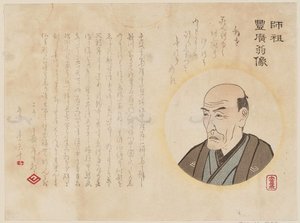
utagawa toyohiro
1773 - 1828 , Japan
Quick Facts
- Artists Or Movements Influenced By This Artist: ['Phillis Wheatley']
- Artists Who Influenced This Artist: ['John Singleton Copley']
- Date Of Birth: c. 1773
- Full Name: Scipio Moorhead
- Nationality: African-American
- Notable Artworks: ['Portrait of Phillis Wheatley']
- Place Of Birth: Boston, Massachusetts
Related Articles

From Digital Dreams to Tangible Treasures: The Rise of Modern Fan Art
Explore the vibrant world of modern fan art! Discover its evolution, cultural impact, and growing market. From digital creations to commissioned pieces, we delve into the artistry & passion driving fandoms today.
From Posters to Palettes: The Ascendance of Hand-Painted Fan Art & the Redefinition of Collectible Fandom
Explore the fascinating world of hand-painted fan art! Discover its rise as a collectible art form, market trends, artist collaborations & investment potential. Expert insights for discerning collectors.
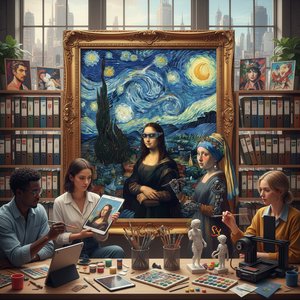
Beyond Reproduction: Fan Art, Interpretation & Artistic Engagement with 's Customization Options
Explore the evolving world of art reproduction & customization with . Discover museum-quality reproductions, personalized paintings from photos, and expert art licensing options. Empower your creative vision today!

Beyond Emotes: Leveraging Exclusive Artwork for Community Building and Fan Engagement on Twitch
Elevate your Twitch channel with exclusive artwork! Learn how to build stronger communities, commission unique pieces, & navigate art licensing. Expert advice for streamers.

From Fan Favorite to Fine Art: A Comprehensive Guide to Commissioning Custom Pop Culture Paintings
Transform your fandom into stunning art! Our guide covers commissioning custom pop culture paintings – from artist selection & copyright to care tips. Get expert advice and create a unique masterpiece today!