 Preview
 Send
Send Share
Share
 Details

 Download
 Similars
 X-Ray
X-Ray Diaporama
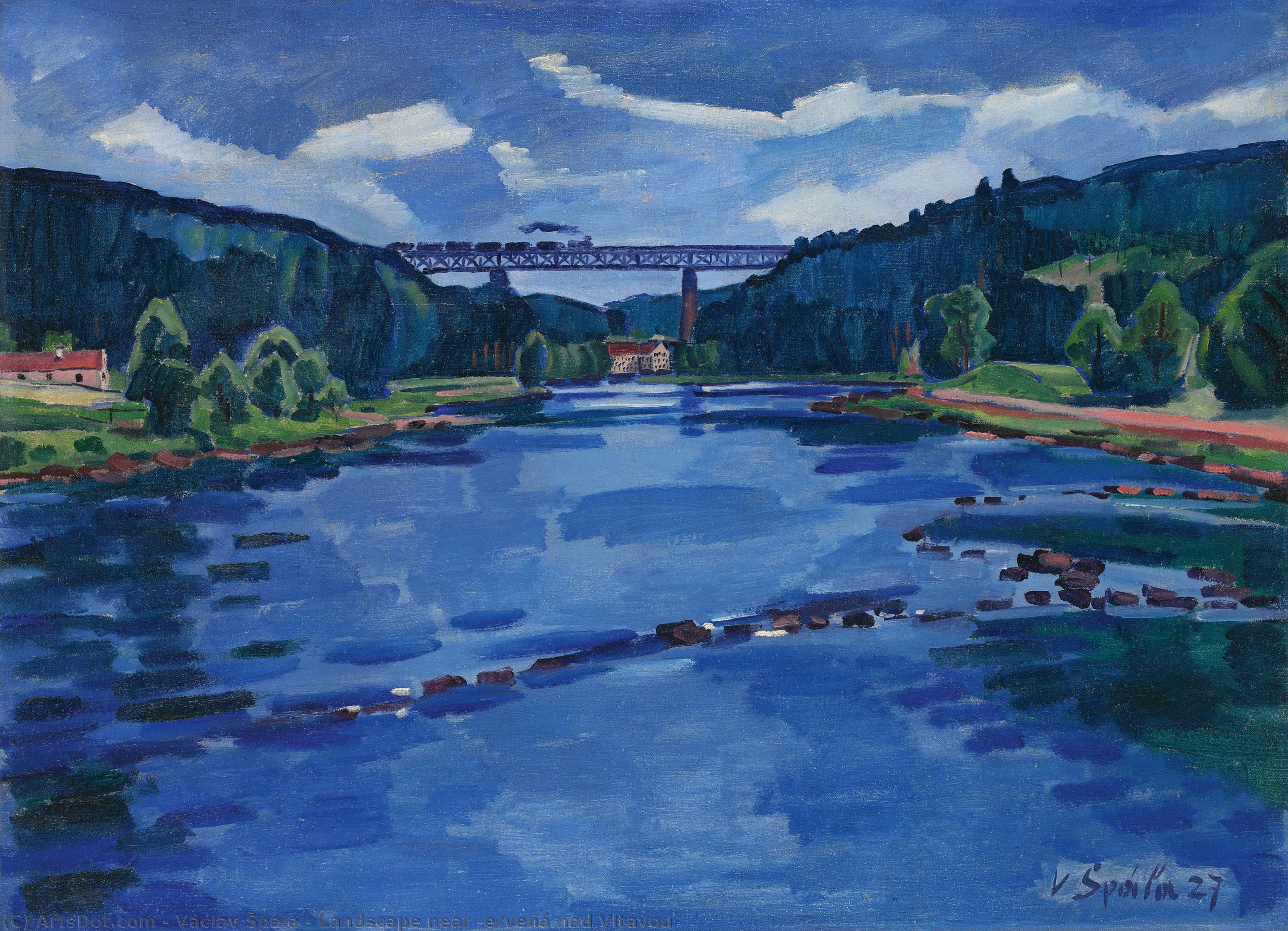
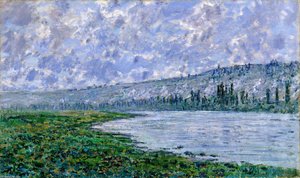
Landscape near Červená nad Vltavou
 5.0 x 115.0 cm
 Read More
Hand Made Oil Reproduction
Hand-painted oil on canvas in your size and frame, made to order by our artists. ( Buy Print Buy Image)




































Pick from our preset sizes that match the artwork's original proportions.

You may enter your own dimensions to fit a specific frame or space. If your selected size does not match the original image's proportions, we will either crop the artwork or extend the painting with additional hand-painted elements. A digital mockup will be sent for your approval before production begins.
Please note that the on-screen preview does not reflect the actual cropping or extension. Only the mockup will accurately show the final composition.
While custom sizes are available, we recommend selecting a dimension from the predefined list to preserve the original proportions.
After order, ArtsDot.com team will email client for instructions and provide a mockup preview
Worldwide Delivery () in 3/4 weeks instead of standard 5 weeks. (23 August). No compromise on quality.

Free Worldwide Express Shipping

High-Quality Linen Canvas

Full Shipping Insurance

Customs Tax Refund Guarantee

True Color Matching Guarantee

60-Day Return Policy (Defects Only)

100% Money-Back Guarantee

Bulk Discount Offer
 Glass option is only available in size under 110 CM

Landscape near Červená nad Vltavou
Reproduction Medium
Reproduction Size
-


Total Price
$ 263
Artwork Description
Related Artworks



Artist Biography
Václav Špála: A Symphony of Color and Czech Spirit
In the heart of Central Europe, amidst the shifting political tides of the early twentieth century, emerged a painter whose brushstrokes captured not just the light of the Bohemian landscape, but the very soul of a nation in transition. Václav Špála (1885–1946) was far more than a mere chronicler of scenery; he was a pioneer of Czech modernism, an artist who dared to marry the radical abstractions of the European avant-garde with a profound, localized tenderness. Born in the quiet village of Žlunice, Špála’s journey from humble beginnings to the heights of artistic prominence is a narrative of rebellion and refinement. His early years at the Prague Academy were marked by a restless spirit—a defiance so potent that he was famously expelled for pursuing "deviant artistic goals," a testament to his refusal to be bound by the dusty conventions of academic realism.
The evolution of Špála’s style serves as a vibrant map of the modernist movement itself. His early explorations were drenched in the feverish, non-naturalistic hues of Fauvism, where color was liberated from its descriptive duties to serve purely emotional ends. As his gaze turned toward the broader European stage, particularly following transformative visits to Paris, the influence of Cubism began to settle into his compositions. He did not merely mimic the fragmentation of form seen in the works of masters like Picasso; rather, he integrated geometric structures and multiple perspectives to lend a rhythmic, architectural strength to his subjects. This period of intense experimentation was bolstered by his association with the Tvrdošíjní (The Obstinate) group, a collective of radicals dedicated to shattering established norms and pushing the boundaries of what Czech art could represent.
A Legacy Written in Light and Landscape
As the decades progressed, Špála’s work underwent a beautiful maturation, moving away from the sharp edges of Cubism toward a more lyrical and atmospheric approach. He became a master of what are often called his "color periods," where he would immerse entire canvases in monochromatic explorations of blue or green, using subtle shifts in shade to evoke the depth of a summer pond or the heavy humidity of a forest glade. His devotion to the Czech landscape was absolute; he found infinite complexity in the simplest subjects—women working in sun-drenched fields, the quiet stillness of rural ponds, and the undulating rhythms of the countryside. This deep connection to the land allowed him to create works that felt both cosmically modern and intimately ancestral.
Beyond the canvas, Špála’s creative impulse extended into the very fabric of visual culture. His versatility as an artist was truly boundless, encompassing:
- Graphic Design and Illustration: Bringing a modern aesthetic to book covers and posters that defined the visual language of his era.
- Scenography: Designing theatrical environments that utilized light and space to tell stories.
- Decorative Arts: Contributing to the Artěl cooperative through the creation of unique toys and artist-designed objects, bridging the gap between fine art and daily life.
Ultimately, the significance of Václav Špála lies in his ability to remain authentically Czech while speaking a universal language of modernism. Though his career was occasionally shadowed by the political turbulence of the Nazi occupation and periods of critical rejection, his enduring impact is undeniable. He remains one of the most sought-after figures in Czech art history, a master whose vibrant still lifes and evocative landscapes continue to resonate with a timeless emotional power, reminding us that true modernism is found where bold innovation meets an unbreakable bond with the natural world.
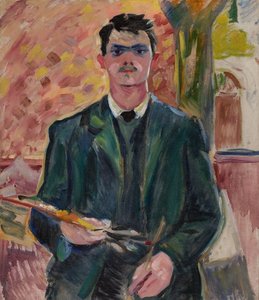
václav špála
1885 - 1946 , Czech Republic
Quick Facts
- Artistic Movement Or Style:
- Fauvism
- Cubism
- Artists Or Movements Influenced By This Artist: ['Modern art Czech']
- Artists Who Influenced This Artist:
- Fauves
- Cubists
- Date Of Birth: August 24, 1885
- Date Of Death: May 13, 1946
- Full Name: Václav Špála
- Nationality: Czech
- Notable Artworks:
- Still life
- Landscape
- Place Of Birth: Žlunice, Czech Republic