 Preview
 Send
Send Share
Share
 Details

 Download
 Similars
 X-Ray
X-Ray Diaporama
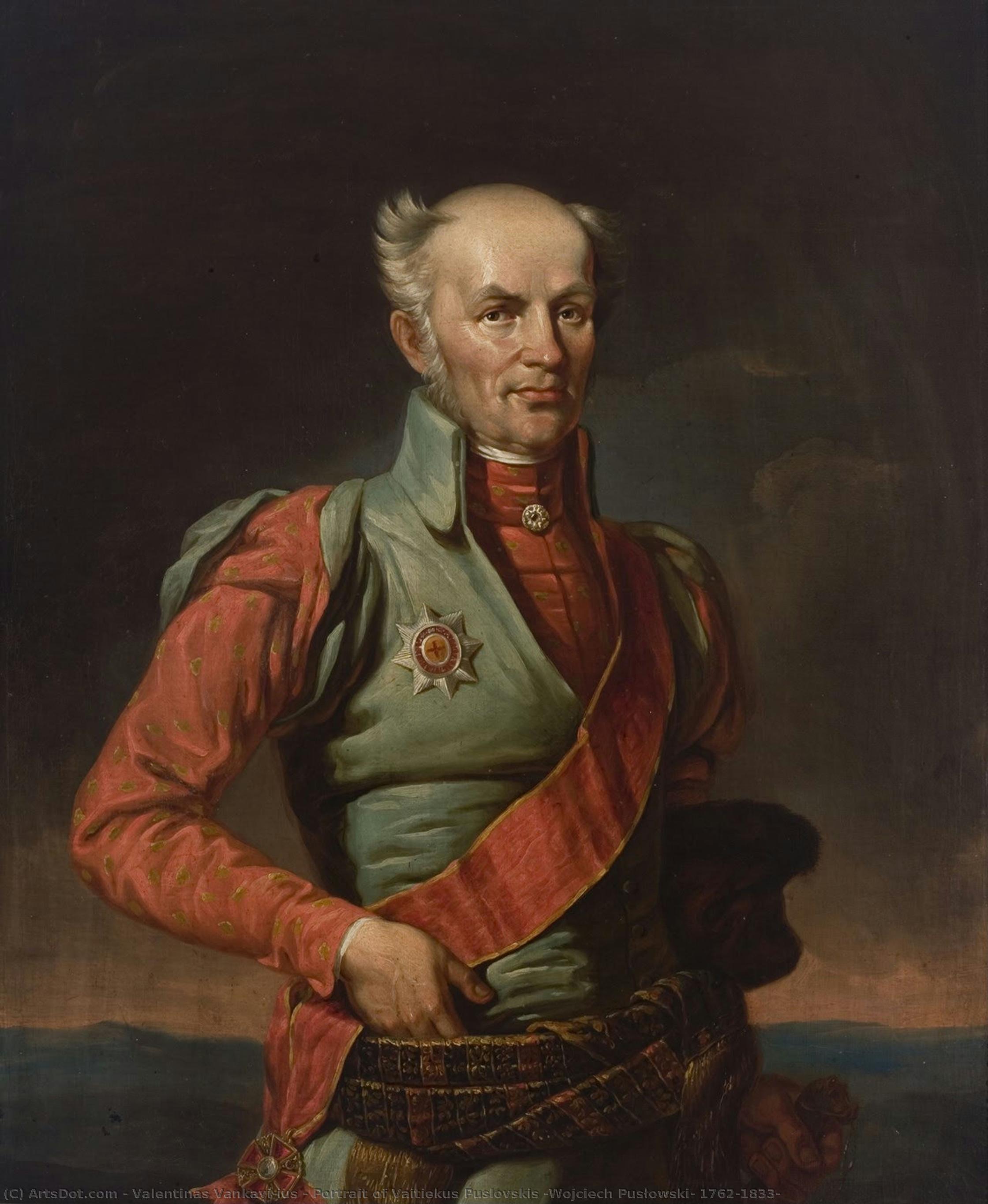
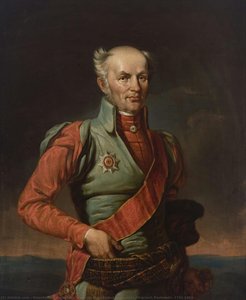
Portrait of Vaitiekus Puslovskis (Wojciech Pusłowski, 1762–1833)

 Read More
Giclée / Art Print
Museum-quality giclée or canvas print with fast production and flexible finish options. ( Buy Hand Made Painting Buy Image)




































Pick from our preset sizes that match the artwork's original proportions.

You may enter your own dimensions to fit a specific frame or space. If your selected size does not match the original image's proportions, we will either crop the artwork or extend the image with a mirrored or solid-fill edge. A digital mockup will be sent for your approval before production begins.
Please note that the on-screen preview does not reflect the actual cropping or extension. Only the mockup will accurately show the final composition.
While custom sizes are available, we recommend selecting a dimension from the predefined list to preserve the original proportions.
Worldwide Delivery () in 2 weeks instead of standard 4/5 weeks. (6 September)

Free Worldwide Express Shipping

High-Quality Linen Canvas

Full Shipping Insurance

Customs Tax Refund Guarantee

True Color Matching Guarantee

100-Day Return Policy (Defects Only)

100% Money-Back Guarantee

Bulk Discount Offer
 Glass option is only available in size under 110 CM

Portrait of Vaitiekus Puslovskis (Wojciech Pusłowski, 1762–1833)
Giclée / Art Print
Reproduction Size
-


Total Price
$ 63
Related Artworks








Artist Biography
The Soul of a Romantic Era: The Life and Art of Valentinas Vankavičius
In the sweeping, turbulent landscape of nineteenth-century Eastern Europe, few artists captured the poignant intersection of nobility and melancholy as gracefully as Valentinas Vankavičius. Known also by his Polish name, Walenty Wańkowicz, this master of the brush was a figure whose very existence bridged the cultural heartlands of Belarus, Lithuania, and Poland. Born in 1799 near Minsk, within the quiet village of Kalyuzhitsy, Vankavičius was raised in an aristocratic environment that provided him with both the intellectual depth and the social connections necessary to flourish. His lineage, rooted in the nobility, allowed him to move through the most vibrant cultural circles of his time, connecting him to influential poets and thinkers who were then shaping the Romantic movement.
His artistic journey was one of rigorous academic discipline met with profound emotional exploration. After beginning his studies at the prestigious Vilnia University in 1818, he sought further refinement at the Saint Petersburg Academy of Arts. It was here, under the guidance of masters like Yury Rustem, that Vankavičius honed a technique that would become his hallmark: a seamless marriage between the structured precision of Classicism and the evocative, emotive spirit of Romanticism. This duality allowed him to render the physical world with startling clarity while simultaneously imbuing his subjects with an inner life—a sense of longing or quiet dignity that transcends the mere pigment on canvas.
A Mastery of Portraiture and Landscape
The oeuvre of Vankavičius is perhaps most celebrated for its intimate portraiture, which serves as a window into the social fabric of the nineteenth-century landed gentry. He possessed an uncanny ability to capture the psychological depth of his sitters, moving beyond simple likeness to reveal character and status. His portraits of the nobility were not merely exercises in vanity but were studies in human presence, often characterized by a subtle, melancholic beauty that mirrored the shifting political tides of his era. One of his most enduring achievements remains the “Portrait of Vaitiekus Puslovskis,” a work that exemplifies his skill in capturing the commanding yet sensitive nature of the Belarusian aristocracy.
Beyond the faces of the elite, Vankavičius found profound inspiration in the natural world. His landscapes are far more than topographical records; they are atmospheric meditations on the beauty and sorrow of the Belarusian and Lithuanian countryside. Through his brush, a simple forest or a sweeping meadow becomes a stage for Romantic sentiment, where light and shadow dance to evoke a sense of nostalgia and timelessness. This connection to the land was deeply personal, as his life frequently brought him back to the estates and cities of his homeland, such as Vilnius, where he maintained close ties with the intellectual elite.
Legacy and Historical Significance
The historical significance of Valentinas Vankavičius lies in his role as a cultural bridge-builder during an era of profound upheaval. As the political borders of Eastern Europe shifted and the 1831 uprising altered the academic landscape of Vilnius, Vankavičius’s work remained a steadfast testament to a shared regional identity. His ability to synthesize the artistic traditions of the Russian Academy with the local sensibilities of the Polish-Lithuanian heritage helped create a unique visual language for his homeland.
Today, his legacy is preserved in the prestigious collections of museums across Lithuania and beyond, serving as a vital link to the Romantic period. To study his work is to encounter the very essence of nineteenth-century spirit:
- Technical Brilliance: A sophisticated command of light, shadow, and classical composition.
- Emotional Depth: The ability to translate the Romantic ideal of sublime emotion into tangible imagery.
- Cultural Resonance: An enduring contribution to the shared artistic heritage of Belarus, Lithuania, and Poland.
valentinas vankavičius
1800 - 1842 , Belarus
Quick Facts
- Artistic Movement Or Style: Classicism & Romanticism
- Artists Or Movements Influenced By This Artist: ['Romantic Painting']
- Artists Who Influenced This Artist: ['Y. Rustem']
- Date Of Birth: February 14, 1799
- Date Of Death: May 12, 1842
- Full Name: Valentinas Vankavičius (Walenty Wańkowicz)
- Nationality: Polish
- Notable Artworks: ['Portrait of Vaitiekus Puslovskis']
- Place Of Birth: Homyel' (Gomel), Belarus