 Preview
 Send
Send Share
Share
 Details

 Download
 Similars
 X-Ray
X-Ray Diaporama
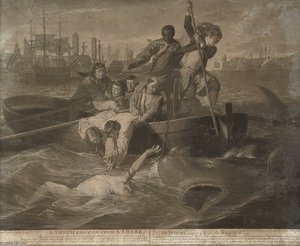
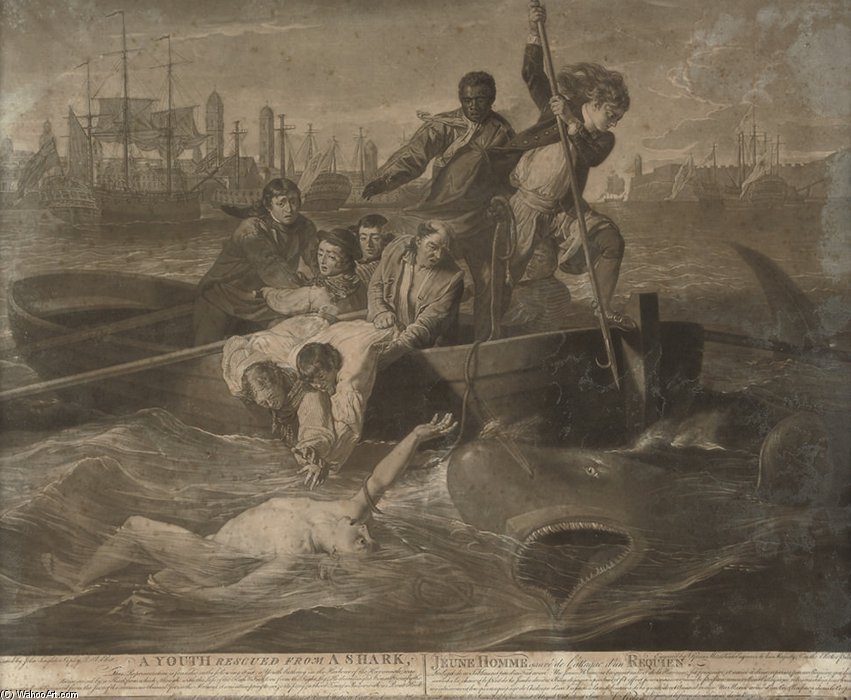
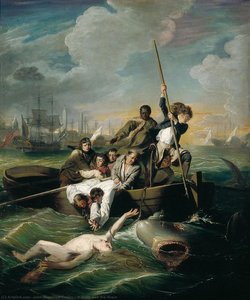
A Youth Rescued From A Shark

 Read More
Hand Made Oil Reproduction
Hand-painted oil on canvas in your size and frame, made to order by our artists. ( Buy Print Buy Image)




P118B $10

P118H $10

P118W $10

P438Z $10

P508JH $12

P508YH $12

P805H $10

P805Z $10

P919BZ $10

P919G $10

P919XJ $10

P959ZH $10

P968JZ $12

W106C $8

W218G $10

W218JH $8

W218Y $10

W307PJ $10

W316G $10

W316PJ $8

W316Y $10

W398PJ $8

W4111J $10

W500HY $15

W500JH $15

W692G $12

W849H $8

W940BG $15

W953PJ $8




Pick from our preset sizes that match the artwork's original proportions.

You may enter your own dimensions to fit a specific frame or space. If your selected size does not match the original image's proportions, we will either crop the artwork or extend the painting with additional hand-painted elements. A digital mockup will be sent for your approval before production begins.
Please note that the on-screen preview does not reflect the actual cropping or extension. Only the mockup will accurately show the final composition.
While custom sizes are available, we recommend selecting a dimension from the predefined list to preserve the original proportions.
After order, ArtsDot.com team will email client for instructions and provide a mockup preview
Worldwide Delivery () in 3/4 weeks instead of standard 5 weeks. (21 August). No compromise on quality.

Free Worldwide Express Shipping

High-Quality Linen Canvas

Full Shipping Insurance

Customs Tax Refund Guarantee

True Color Matching Guarantee

60-Day Return Policy (Defects Only)

100% Money-Back Guarantee

Bulk Discount Offer
 Glass option is only available in size under 110 CM

A Youth Rescued From A Shark
Reproduction Medium
Reproduction Size
-


Total Price
$ 263
Related Artworks
Artist Biography
Valentine Green: A Master of Mezzotint’s Rich Embrace
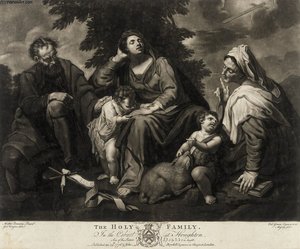
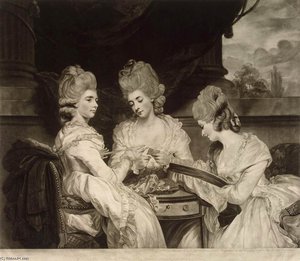
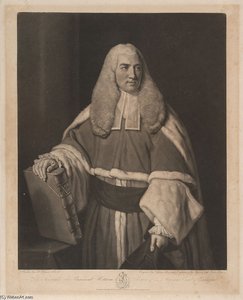
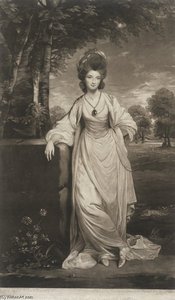
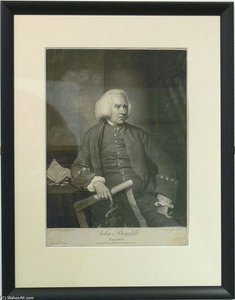
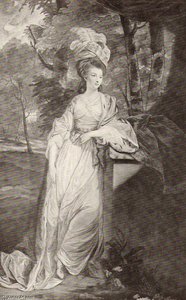
Valentine Green, born in Salford, England, in 1739, stands as a pivotal figure in the history of British engraving during the late 18th and early 19th centuries. His life story is one interwoven with artistic ambition, financial hardship, and ultimately, a quiet dedication to preserving the legacy of art. Green’s career unfolded against the backdrop of burgeoning London's vibrant artistic scene, a period marked by experimentation in printmaking techniques and a growing appreciation for portraiture and historical subjects. He wasn’t simply an engraver; he was a craftsman who meticulously coaxed tonal depth and nuanced detail from the seemingly simple medium of mezzotint.
Green's early training began under Robert Hancock, a Worcester engraver, providing him with a foundational understanding of the craft. However, it was his relocation to London in 1765 that truly ignited his career. He quickly mastered the intricacies of mezzotint, a process demanding both technical skill and artistic sensitivity. This technique, utilizing a roughened metal plate and ink distribution, allowed for incredibly rich blacks and subtle gradations – qualities that Green exploited with remarkable effect. Initially, he collaborated with Francis Jukes, another prominent aquatint engraver, establishing a partnership that produced some of the era’s most celebrated prints. Their combined efforts showcased a dynamic interplay between light and shadow, capturing the essence of their subjects with astonishing realism.
The Rise to Prominence and Royal Recognition
By 1766, Green had joined the Incorporated Society of Artists, marking his formal entry into London’s artistic circles. His talent quickly garnered recognition, culminating in his election as an Associate Engraver with the Royal Academy in 1775 – a prestigious honor signifying his acceptance by the highest echelons of British art. This period witnessed a flourishing of his work, largely focused on portraiture and engravings based on paintings from the Düsseldorf Gallery, a collection that offered unparalleled access to Old Master works. The Duke of Bavaria granted Green exclusive rights to reproduce these images, a lucrative arrangement that fueled his success for nearly a decade.
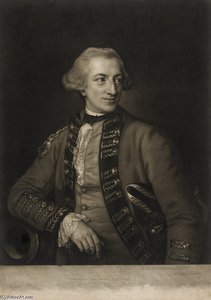
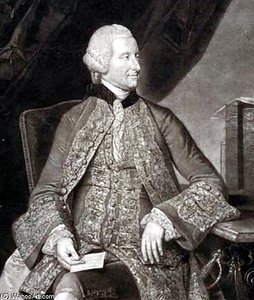
Green’s ability to faithfully replicate the details and atmospheric qualities of Reynolds, Romney, and other masters was remarkable. He wasn't merely copying; he was translating the spirit of the original paintings onto paper. His portraits possessed an immediacy and psychological depth rarely seen in contemporary engravings. He understood how to capture not just a likeness but also the character and emotion of his subjects – a skill that cemented his reputation as one of Britain’s foremost engravers.
Financial Ruin and a New Purpose
The 1790s proved to be a devastating period for Green. A series of international speculations, including ventures related to the Düsseldorf Gallery plates, ultimately failed spectacularly. The French siege of Düsseldorf in 1793 effectively halted his lucrative engraving business, plunging him into financial ruin. Despite his diminished circumstances, Green remained dedicated to his craft, continuing to work diligently until 1805. In this year, he accepted a position as Keeper of the British Institution, a role that provided a modest income and allowed him to focus on cataloging and preserving the institution’s collection.
This shift in responsibility marked a significant turning point in Green's life. It represented a move away from commercial success towards a more contemplative pursuit – safeguarding artistic heritage for future generations. While his financial woes were considerable, he never abandoned his passion for engraving, continuing to produce works of exceptional quality until his death in 1813. His later years were characterized by a quiet dignity and a profound appreciation for the enduring power of art.
Legacy and Enduring Influence
Valentine Green’s contribution to British printmaking is undeniable. He elevated mezzotint engraving to an art form, demonstrating its capacity for nuanced tonal expression and capturing the subtleties of human character. His meticulous attention to detail, combined with his deep understanding of painting techniques, resulted in engravings that remain highly valued today. His work serves as a testament to the enduring appeal of traditional printmaking methods and the skill of a craftsman dedicated to his art. The influence of Green’s approach can be seen in subsequent generations of engravers who followed, solidifying his place as a true master of the mezzotint.
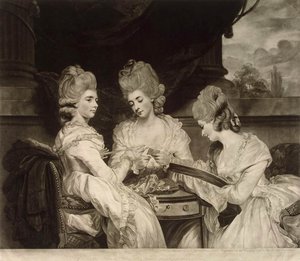
Valentine Green
1739 - 1813 , United Kingdom
Quick Facts
- Artistic Movement Or Style: Mezzotint engraving
- Artists Who Influenced This Artist: ['Robert Hancock']
- Date Of Birth: 1739
- Date Of Death: 1813
- Full Name: Valentine Green
- Nationality: British
- Notable Artworks:
- Reynolds portraits
- Romney engravings
- Old Masters prints
- Place Of Birth: Salford, United Kingdom
Related Articles
Verdant Visions: Exploring the Symbolism & Aesthetic Impact of Green in Art History
Explore the rich history & symbolism of green in art! Discover iconic paintings, techniques, and how to bring verdant harmony into your home with ArtsDot's expert guide.

Giclée Prints: Archival Quality & Aesthetic Nuances for the Discerning Collector
Explore the world of giclée prints with ArtsDot. Learn about archival quality, aesthetic nuances & investment potential. Expert guidance for discerning art collectors seeking museum-quality reproductions and lasting value.

Dark Masterpieces: 10 Iconic Paintings Dominated by Black Tones |
Explore 10 iconic paintings dominated by black tones, from Rembrandt’s chiaroscuro to Goya's dark expressions. Discover the stories behind these masterpieces & find museum-quality art reproductions for your home at .

The Enduring Legacy of Fine Art Prints: Technique, History & Aesthetic Impact
Explore the rich history & techniques of fine art prints. Discover investment potential, assess authenticity, and learn how to preserve your collection with expert guidance. Trusted insights for discerning collectors.
Emerald Visions: Top 10 Paintings Dominated by Cadmium Green |
Explore 10 iconic paintings where cadmium green reigns supreme! From Monet to Van Gogh, discover the stories behind these masterpieces & the power of color. Find museum-quality art reproductions and elevate your home decor on .