 Preview
 Send
Send Share
Share
 Details

 Download
 Similars
 X-Ray
X-Ray Diaporama
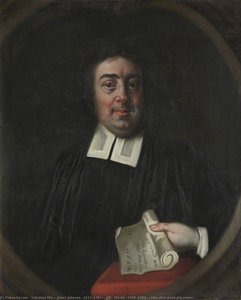
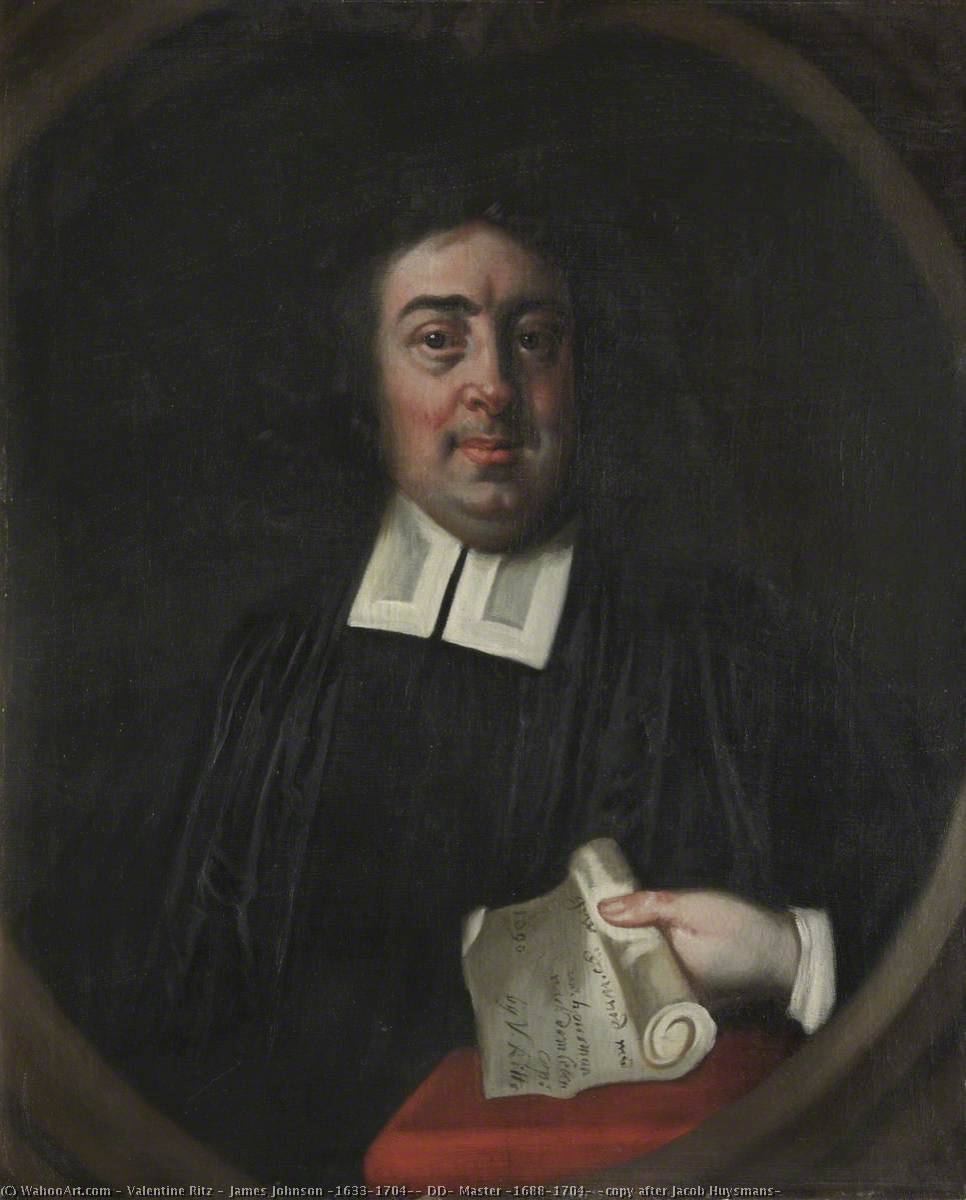
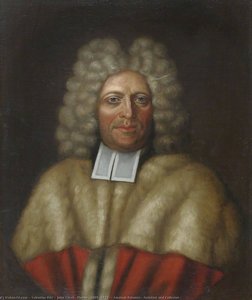
James Johnson (1633–1704), DD, Master (1688–1704) (copy after Jacob Huysmans)
 1690
1690 74.0 x 62.0 cm
 Sidney Sussex College
 Read More
Hand Made Oil Reproduction
Hand-painted oil on canvas in your size and frame, made to order by our artists. ( Buy Print Buy Image)




































Pick from our preset sizes that match the artwork's original proportions.

You may enter your own dimensions to fit a specific frame or space. If your selected size does not match the original image's proportions, we will either crop the artwork or extend the painting with additional hand-painted elements. A digital mockup will be sent for your approval before production begins.
Please note that the on-screen preview does not reflect the actual cropping or extension. Only the mockup will accurately show the final composition.
While custom sizes are available, we recommend selecting a dimension from the predefined list to preserve the original proportions.
After order, ArtsDot.com team will email client for instructions and provide a mockup preview
Worldwide Delivery () in 3/4 weeks instead of standard 5 weeks. (20 August). No compromise on quality.

Free Worldwide Express Shipping

High-Quality Linen Canvas

Full Shipping Insurance

Customs Tax Refund Guarantee

True Color Matching Guarantee

60-Day Return Policy (Defects Only)

100% Money-Back Guarantee

Bulk Discount Offer
 Glass option is only available in size under 110 CM

James Johnson (1633–1704), DD, Master (1688–1704) (copy after Jacob Huysmans)
Reproduction Medium
Reproduction Size
-


Total Price
$ 263
Related Artworks
Artist Biography
A Life Etched in Brushstrokes: The World of Valentine Ritz
Valentine Ritz, a name perhaps less familiar than those of his contemporaries, stands as a quietly significant figure within the landscape of 18th-century portraiture. Born around 1695 – though precise dates remain elusive – in ArtsDot, he emerged during a period of burgeoning artistic ambition and aristocratic patronage in Europe. His life was inextricably linked to the rise of the British Empire’s influence on the continent, particularly through his association with Trinity College, Cambridge, and his commissions from prominent figures within the Church and intellectual circles of England.
Ritz's early years remain shrouded in some mystery, though it is believed he received a foundational artistic education likely influenced by the prevailing styles of the Dutch Golden Age – masters like Rembrandt and Frans Hals – which had exerted a profound impact on European painting. His career gained momentum through his work for Trinity College, where he was entrusted with capturing the likenesses of esteemed scholars, bishops, and philosophers. This role wasn’t merely one of simple representation; Ritz possessed an uncanny ability to distill character, imbuing his subjects with a sense of intellect, dignity, and often, a subtle hint of melancholy – qualities that would become hallmarks of his distinctive style.
- Early Commissions: Initial works focused on capturing the likenesses of figures like Samuel Ward (a prominent theologian) and Isaac Barrow (a pivotal mathematician), demonstrating an early aptitude for portraying intellectual gravitas.
- The Influence of John Covel: His collaboration with John Covel, a botanist and architect, further broadened his artistic horizons, exposing him to the intricacies of natural history illustration – a skill that subtly informed his later portraits.
A Style Defined by Subtlety and Psychological Depth
Ritz’s artistic approach distinguished itself from the more flamboyant styles prevalent at the time. He eschewed dramatic lighting and theatrical poses, instead favoring a restrained palette of muted tones – browns, greys, and ochres – that created an atmosphere of quiet contemplation. His portraits weren't merely visual records; they were carefully constructed psychological studies, revealing the inner lives of his subjects through subtle shifts in expression, posture, and gaze.
He was a master of capturing fleeting moments, imbuing his figures with a sense of immediacy and vulnerability. His use of chiaroscuro – the interplay of light and shadow – wasn’t employed for dramatic effect but rather to subtly sculpt the faces and bodies of his subjects, drawing attention to their features and conveying a profound sense of realism. The portraits are not simply likenesses; they are windows into the souls of those depicted.
- Emphasis on Detail: Ritz paid meticulous attention to detail, particularly in rendering fabrics, textures, and facial expressions.
- Psychological Realism: His portraits were renowned for their ability to capture the inner thoughts and emotions of his subjects.
- Restrained Palette: The use of muted colors created a sense of quiet dignity and introspection.
Notable Works and Patronage
Among Ritz’s most celebrated portraits are those of Bishop Isaac Newton, a commission that solidified his reputation as a skilled portraitist capable of capturing the intellectual intensity of a renowned scientist. His depiction of Newton is particularly noteworthy for its subtle portrayal of the scholar's contemplative nature – a far cry from the heroic depictions often favored at the time.
He also produced portraits of prominent figures such as Samuel Ward, Thomas Nevile, and Francis Bacon, each reflecting the individual character and status of the subject. These works were largely commissioned by Trinity College, demonstrating the institution’s commitment to supporting artistic talent and preserving its intellectual heritage. The collection at Trinity College provides a valuable insight into Ritz's oeuvre.
- Bishop Isaac Newton (1642–1725): A seminal portrait capturing the scholar’s contemplative nature.
- Samuel Ward (c.1572–1643): A testament to Ritz's ability to portray spiritual gravitas.
- Thomas Nevile and Barrow: Early portraits commissioned by Trinity College, showcasing Ritz’s early style.
Legacy and Historical Significance
Valentine Ritz’s contribution to 18th-century portraiture is often overlooked, yet his work represents a significant departure from the prevailing trends of the era. His portraits are not merely representations of likenesses; they are profound explorations of human character and intellect. His legacy lies in his ability to capture the essence of his subjects – their thoughts, emotions, and aspirations – with remarkable subtlety and psychological depth.
While he didn’t achieve widespread fame during his lifetime, Ritz's portraits continue to be admired for their quiet dignity, intellectual intensity, and enduring beauty. They offer a valuable glimpse into the world of 18th-century England—a world of scholarship, patronage, and artistic innovation.
valentine ritz
1695 - 1745
Quick Facts
- Artistic Movement Or Style: Portraiture
- Artists Or Movements Influenced By This Artist: ['Renaissance Art Style']
- Artists Who Influenced This Artist: ['Jacob Huysmans']
- Date Of Birth: c. 1695-1745
- Full Name: Valentine Ritz
- Notable Artworks:
- Isaac Newton
- Samuel Ward
- John Covel
- Place Of Birth: WahooArt