 Preview
 Send
Send Share
Share
 Details

 Download
 Similars
 X-Ray
X-Ray Diaporama
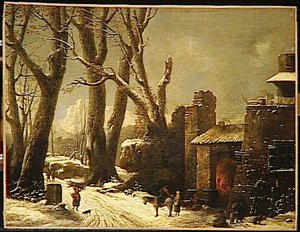
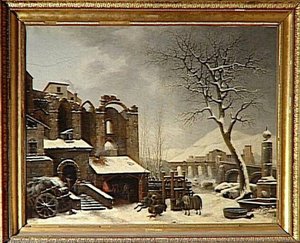
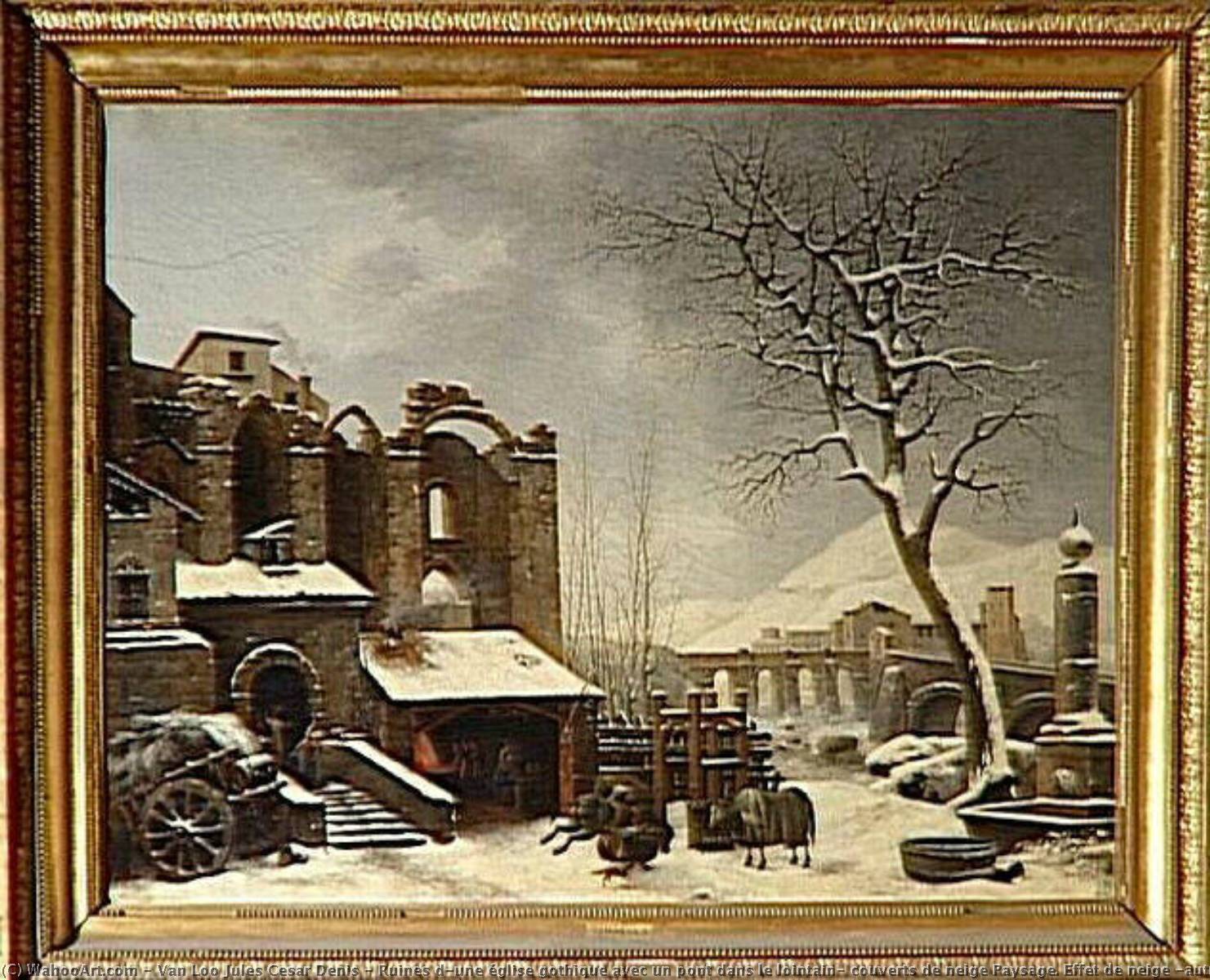
Ruines d'une église gothique avec un pont dans le lointain, couverts de neige Paysage. Effet de neige (autre titre)
 Read More
Giclée / Art Print
Museum-quality giclée or canvas print with fast production and flexible finish options. ( Buy Hand Made Painting Buy Image)




































Pick from our preset sizes that match the artwork's original proportions.

You may enter your own dimensions to fit a specific frame or space. If your selected size does not match the original image's proportions, we will either crop the artwork or extend the image with a mirrored or solid-fill edge. A digital mockup will be sent for your approval before production begins.
Please note that the on-screen preview does not reflect the actual cropping or extension. Only the mockup will accurately show the final composition.
While custom sizes are available, we recommend selecting a dimension from the predefined list to preserve the original proportions.
Worldwide Delivery () in 2 weeks instead of standard 4/5 weeks. (22 August)

Free Worldwide Express Shipping

High-Quality Linen Canvas

Full Shipping Insurance

Customs Tax Refund Guarantee

True Color Matching Guarantee

60-Day Return Policy (Defects Only)

100% Money-Back Guarantee

Bulk Discount Offer
 Glass option is only available in size under 110 CM

Ruines d'une église gothique avec un pont dans le lointain, couverts de neige Paysage. Effet de neige (autre titre)
Giclée / Art Print
Reproduction Size
-


Total Price
$ 63
Related Artworks









Artist Biography
A Parisian Scion of Snow: The Life and Art of Jules César Denis van Loo
Born in Paris in 1743, Jules César Denis van Loo entered a world steeped in artistic tradition. He was not merely an artist but the heir to a dynasty—a lineage tracing back to Flemish masters, most notably his uncle Jean-Baptiste and father Charles-André van Loo. This familial connection provided both a foundation and a subtle pressure; he wasn’t simply forging a path, but continuing one already richly defined. However, Van Loo would carve out a distinct identity for himself, becoming celebrated not for grand historical narratives or aristocratic portraiture like his predecessors, but for the quiet beauty of winter landscapes—scenes imbued with a delicate sensitivity that foreshadowed the Romantic movement. His early life was also marked by a familial link to Italy through his mother’s origins, a connection that would later subtly influence his artistic sensibilities and subject matter.From Parisian Beginnings to Piedmontese Courts
Van Loo's initial training likely occurred within the family workshop, absorbing the techniques and aesthetic principles of Rococo painting. However, he soon gravitated towards a different muse—the stark, crystalline allure of winter. This shift led him to Turin, where he secured a position at the Piedmontese court of the Savoy dynasty. It was here that his artistic voice truly began to blossom. While adhering to the eighteenth-century conventions of landscape painting, Van Loo infused his work with a unique emotional depth. He wasn’t simply depicting snow and ice; he was capturing a feeling—a sense of solitude, tranquility, and the sublime power of nature. The influence of Francesco Foschi, an Italian artist known for his evocative snowscapes, is evident in this period, but Van Loo quickly transcended imitation, developing a style that was distinctly his own.The Poetics of Winter: Technique and Themes
Van Loo’s paintings are characterized by their masterful use of light and atmosphere. He possessed an exceptional ability to render the nuances of snow—its shimmering brilliance, its subtle shadows, and its capacity to transform familiar landscapes into ethereal realms. His compositions often feature figures traversing these wintry scenes, adding a human element to the vastness of nature. These aren’t heroic or dramatic encounters; rather, they are quiet moments of observation, suggesting a contemplative relationship between humanity and the natural world. Ruines d'une église gothique avec un pont dans le lointain, couverts de neige Paysage, exemplifies this approach—the crumbling remnants of human architecture juxtaposed with the enduring power of nature, creating a poignant meditation on time and mortality. Une Première Neige dans le Piémont showcases his skill in capturing the delicate first snowfall, transforming an ordinary landscape into something magical and serene.Legacy and Historical Significance
Though not as widely celebrated during his lifetime as some of his contemporaries, Van Loo’s work has experienced a resurgence in recent appreciation. He occupies a fascinating position within art history—a bridge between the Rococo elegance of the eighteenth century and the burgeoning Romanticism of the nineteenth. His landscapes prefigure the emotional intensity and focus on nature that would become hallmarks of the Romantic movement. He demonstrated a sensitivity to atmosphere and light that anticipated artists like J.M.W. Turner, and his quiet contemplation of the natural world resonates with the themes explored by Caspar David Friedrich. While he signed his works simply as “Cesar van Loo,” his artistic legacy extends far beyond his modest signature—it lives on in the evocative beauty of his snow-covered landscapes, a testament to the enduring power of observation and emotional expression.
Quick Facts
- Artistic Movement Or Style: Rococo
- Artists Or Movements Influenced By This Artist: ['French Rococo']
- Artists Who Influenced This Artist: ['Charles-André van Loo']
- Date Of Death: 1821
- Full Name: Jules César Denis van Loo
- Nationality: French
- Notable Artworks:
- Winterlandschaft mit Händlerkarawane
- Ruines de l'ancienne porte de Véroli (dans les Etats du Pape)
- Une première neige dans le Piémont
- Place Of Birth: Paris, France