Menu
FREE ART CONSULTATION
PreviewPreview AR previewAR preview Buy Print Buy PrintBuy Image Buy Image SendSend
DetailsDetails Add to favorites Add to favorites DownloadDownload SimilarsSimilars X-RayX-Ray DiaporamaDiaporama

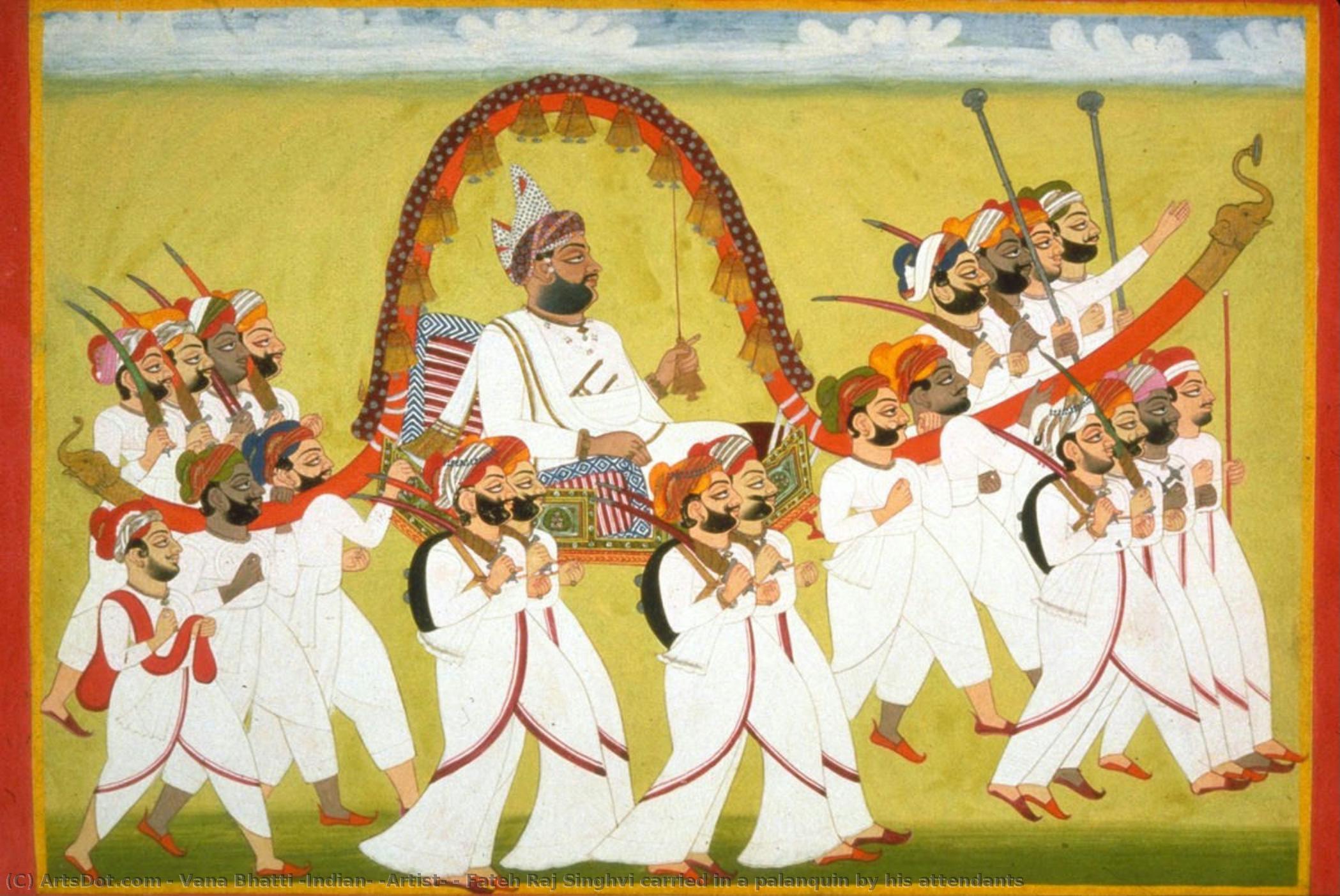
Fateh Raj Singhvi carried in a palanquin by his attendants

An Indian master of traditional portraiture known for capturing the grandeur of the Jodhpur court in works like Fateh Raj Singhvi carried in a palanquin by his attendants, inviting you to discover a lost era of royal splendor.

Hand Made Oil Reproduction

Hand-painted oil on canvas in your size and frame, made to order by our artists. (Buy Print Buy PrintBuy Image Buy Image)

Standard
custom
CM
INCH

Pick from our preset sizes that match the artwork's original proportions.

width
height

You may enter your own dimensions to fit a specific frame or space. If your selected size does not match the original image's proportions, we will either crop the artwork or extend the painting with additional hand-painted elements. A digital mockup will be sent for your approval before production begins.
Please note that the on-screen preview does not reflect the actual cropping or extension. Only the mockup will accurately show the final composition.
While custom sizes are available, we recommend selecting a dimension from the predefined list to preserve the original proportions.

Examples of what can be changed: Replace face with customer photo; Add pet (e.g., replace cat with dog); Include hidden message in background; Change background landscape or elements.
After order, ArtsDot.com team will email client for instructions and provide a mockup preview

Worldwide Delivery () in 3/4 weeks instead of standard 5 weeks. (5 September). No compromise on quality.

why_choose_icon
Free Worldwide Express Shipping
why_choose_icon
High-Quality Linen Canvas
why_choose_icon
Full Shipping Insurance
why_choose_icon
Customs Tax Refund Guarantee
why_choose_icon
True Color Matching Guarantee
why_choose_icon
60-Day Return Policy (Defects Only)
why_choose_icon
100% Money-Back Guarantee
why_choose_icon
Bulk Discount Offer

Total Price

$ 263

reproduction

Fateh Raj Singhvi carried in a palanquin by his attendants

Reproduction Medium

Reproduction Size

-

Total Price

$ 263

Before the Age of Profile Pictures: Indian Portraiture A portrait, typically an image of an individual showing a likeness, conveys information about who they are, or perhaps, how they want to be seen. Portraits combine aspects of the “real” and the observed with the idealized and the imaginary, to make for powerful messages about one’s identity and self-image. Before the twentieth century, portraits in India were mainly of kings, politicians, or important teachers—people whose skills, achievements, or contributions were considered worthy of memorializing. It was a high privilege to have one’s portrait made as it required resources to acquire the artistic talent and expensive materials. Numerous portraits of Indian rulers and noblemen survive from after the 1700s. They were included in dynastic or family histories, exchanged as personal and diplomatic gifts, and seen in public and private settings. Through an artist’s eye—and conveyed by clothing, accessories, and settings— portraits emphasized an individual’s character, abilities, status, and role in society. Today, with the easy access to smart phones and social media, portraits as selfies and profile pictures proliferate in ways not seen before. They have become democratized in many respects, as each person can independently control the message and circulate it widely and quickly without the mediation of an artist’s interpretation. Yet, like the paintings on view here, ideas about who we are and what we want others to see about us remain key features of the art of the selfie. , A high-ranking minister at the Jodhpur royal court, Fateh Raj Singhvi is seen here traveling with his impressive entourage. He is the unmistakable focus of the painting: his crowned and seated figure is the largest in size; it is positioned at the center of the image and framed by the palanquin canopy. He is well protected by his private army and his arrival is announced by standard-bearers. Such symbols and protocols are established conventions for Indian rulers. But here, a visual association is made between the power and privileges of royalty and Fateh Raj—who was a minister and not a king. An inscription on this painting’s reverse gives the name of Fateh Raj, and the rendering of his face, although stylized, suggests his distinctive features, giving the portrait a specificity.

Explore artworks organized by themes, styles, and characteristics.